Table of Contents
Published: May 18, 2026 | Reviewed by JadeGuide Editorial Team
Gua Sha vs Jade Roller: How to Choose Based on Your Skin Type
If you have been exploring facial massage tools, you have probably encountered both the gua sha and the jade roller. They look different, feel different, and deliver different results — yet both have roots in traditional Chinese wellness practices and have become staples of modern skincare routines.
The question is not which one is better overall. It is which one is better for your skin. In this guide, we break down everything from the philosophy behind each tool to the specific techniques that make them effective, so you can make an informed decision about which one — or both — belongs on your vanity.
Quick summary: Gua sha delivers deeper tissue work with intentional pressure, best for contouring and tension relief. A jade roller offers gentler daily massage with temperature therapy benefits, ideal for sensitive or puffy skin. Keep reading for the full breakdown.
Two Tools, Two Philosophies
Before diving into the technical differences, it helps to understand the underlying philosophy of each tool.
The jade roller is rooted in the idea of daily, gentle maintenance. Think of it like skincare is version of a daily walk — low intensity, sustainable, and beneficial over time. It was historically used by Chinese royalty as part of morning and evening beauty rituals, prized for its cooling stone and calming effect on the skin.
Gua sha, on the other hand, is more like a targeted workout for your face. The word "gua" means scrape, and "sha" refers to the temporary redness that can appear on the skin after treatment — a sign of increased circulation. Gua sha is a therapeutic practice that aims to release tension, reduce puffiness, and contour the face through firmer, more deliberate strokes.
Research published on Mayo Clinic is page on migraine and tension relief has explored the benefits of scraping techniques for easing muscle tension, which is relevant to how gua sha works on facial muscles.
The right choice depends largely on your skin is needs, your lifestyle, and how much time you can realistically dedicate to your routine each day.
What Is Gua Sha?
Gua sha is a scraping massage technique that has been used in Traditional Chinese Medicine for centuries. While it was originally applied to the body to relieve muscle pain and internal tension, it has since been adapted for the face as a targeted skincare tool.
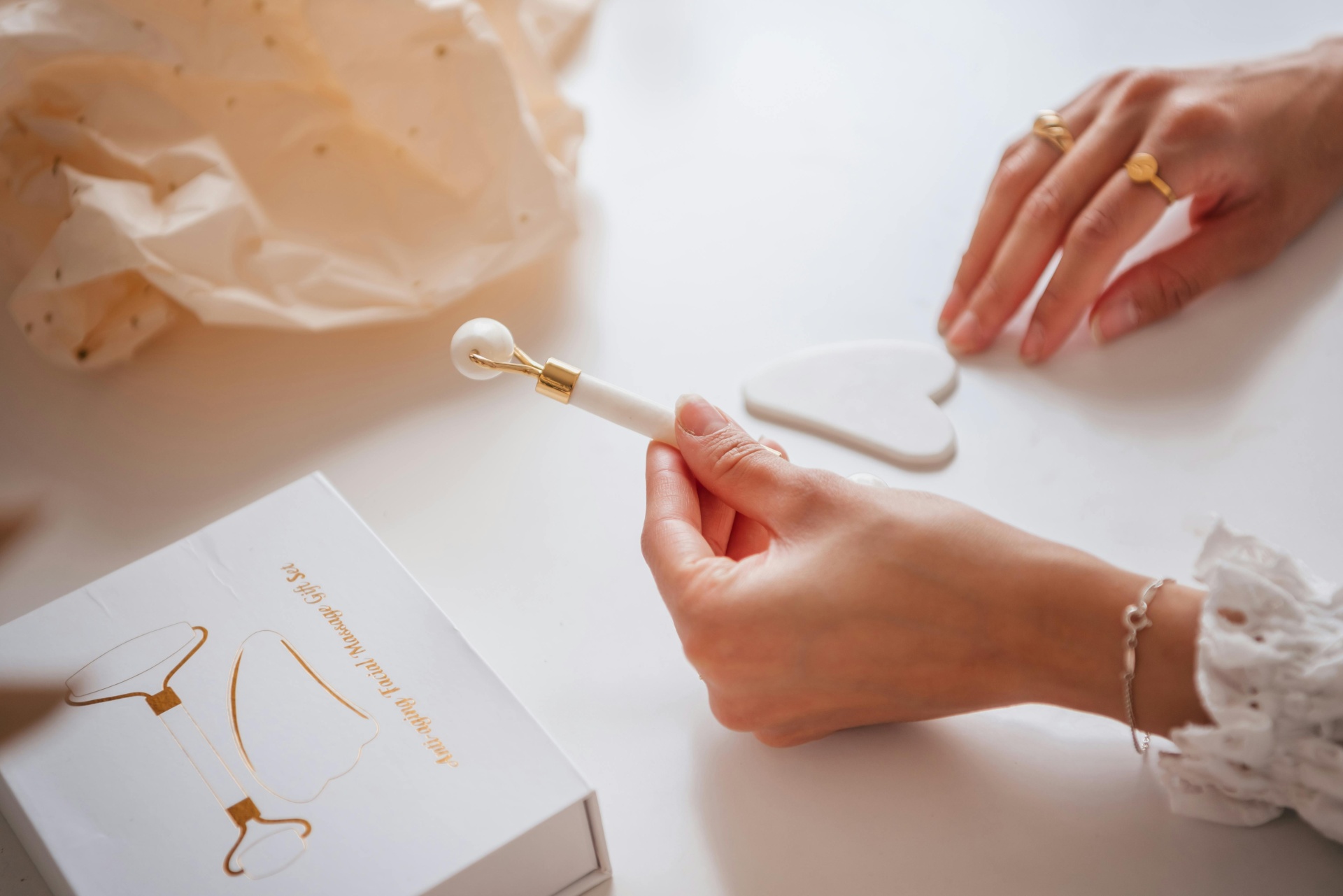
A typical gua sha tool is a smooth, contoured stone — often made from rose quartz, jade, or amethyst — with edges that are designed to be pressed firmly against the skin. Unlike a jade roller, which relies on a rolling motion, gua sha is used with short, intentional strokes that follow the natural contours of your face and lymphatic pathways.
The pressure involved is significantly greater than what you would use with a jade roller. This is intentional: the firm scraping motion stimulates blood flow closer to the surface, and when done correctly, can temporarily reduce the appearance of puffiness and leave skin looking more sculpted. The "sha" that appears — a faint redness or minor bruising in some cases — is simply increased circulation and is not harmful.
Common gua sha strokes include upward lifts along the jawline and cheekbones, outward sweeps from the centre of the face, and gentle glides along the forehead. The tool is almost always used with a facial oil or serum to provide slip and protect the skin from friction.
Key benefits of gua sha include:
- Improved facial contouring — regular use can help define the jawline and cheekbones over time
- Release of muscle tension — particularly beneficial for people who clench their jaw or experience frequent headaches
- Enhanced circulation — the scraping motion promotes blood flow to the skin surface
- Temporary de-puffing — results can be visible immediately after a session
What Is a Jade Roller?
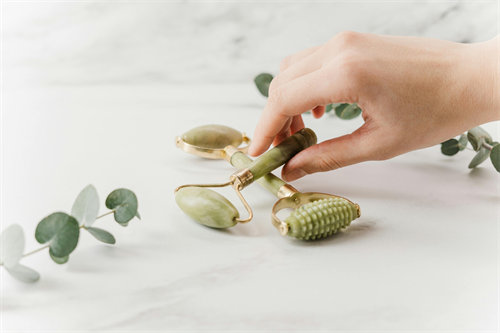
The jade roller is a handheld facial tool with a smooth stone at each end — typically one larger roller for the cheeks and forehead, and a smaller one for the delicate under-eye area. Like gua sha, it traces its roots to ancient Chinese skincare rituals, where jade was believed to hold protective and harmonising properties.
The defining characteristic of a jade roller is its cooling effect. Natural jade has a consistently cool temperature, which feels refreshing on the skin, especially in the morning or after a long day. Many people store their jade roller in the refrigerator to amplify this cooling sensation.
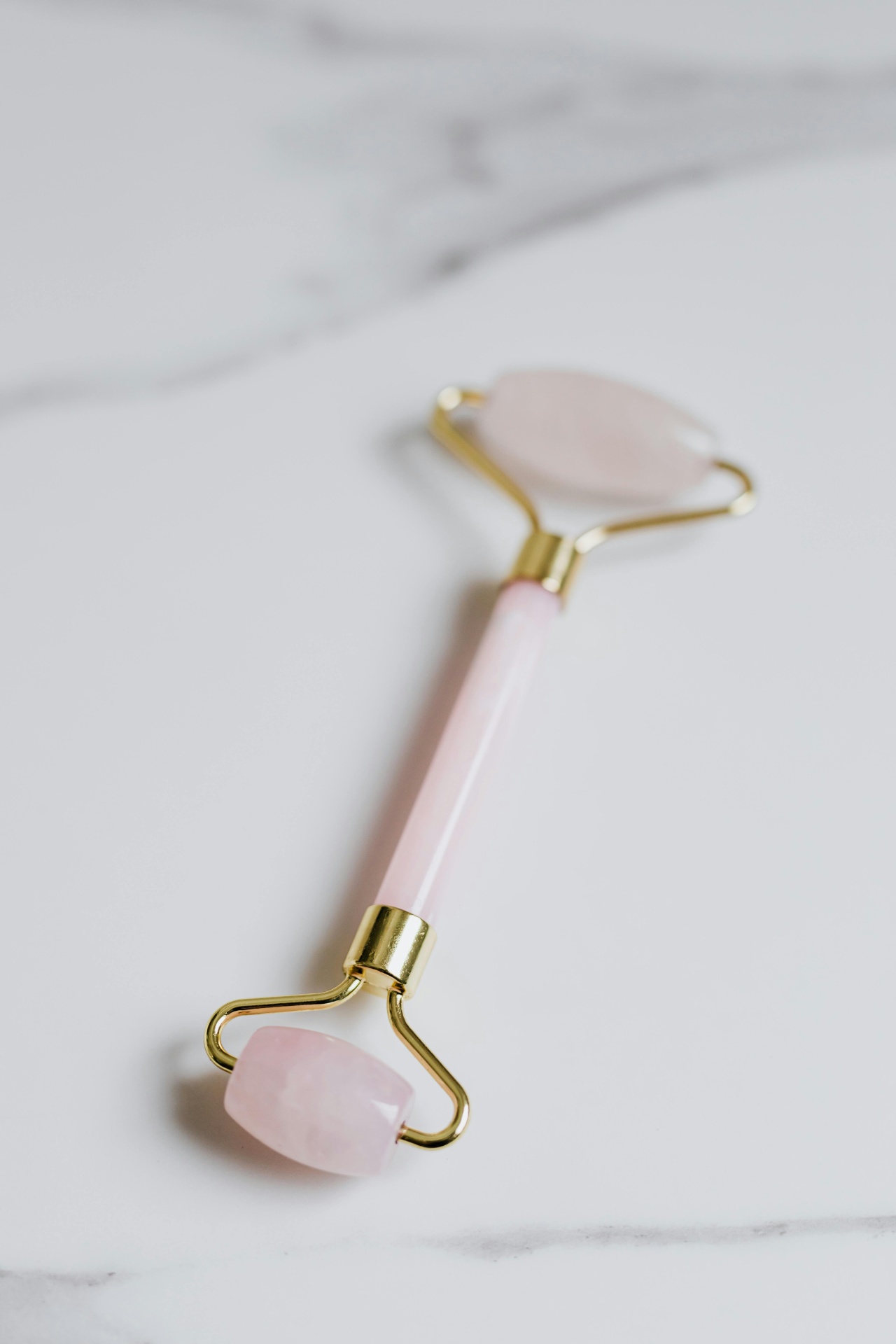
Using a jade roller is straightforward. You simply roll the stone across your face in gentle, upward motions — no pressing, no scraping, just a smooth glide. The gentle pressure encourages lymphatic drainage, which can reduce puffiness over time, especially when used consistently.
The key advantages of a jade roller include:
- Temperature therapy — the cool stone soothes skin and reduces inflammation
- Beginner-friendly — easy to use with a minimal learning curve
- Daily maintenance — suitable for everyday use, morning and evening
- Gentle on sensitive skin — light pressure makes it safe for most skin types
Head-to-Head Comparison
The table below summarises the key differences between gua sha and jade roller to help you decide which is right for you.
| Feature | Gua Sha | Jade Roller |
|---|---|---|
| Primary benefit | Deep tissue contouring | Gentle daily massage |
| Pressure | Firm, intentional strokes | Light to medium rolling |
| Best for skin type | Oily, combination, sagging | Sensitive, dry, puffy |
| Learning curve | Steeper | Beginner-friendly |
| Time per session | 3–5 minutes | 5–10 minutes |
| Temperature therapy | Limited | Excellent (hot/cold) |
Note: Individual results vary. Both tools work best when used consistently as part of a balanced skincare routine. If you have a specific skin condition such as rosacea, eczema, or active acne, consult a dermatologist before introducing either tool.
Which Should You Choose Based on Your Skin?
The best tool for you depends on your skin type, your primary skin concerns, and how you want to feel after each session. Here is a breakdown to help you decide:
Choose Gua Sha if:
- You have oily or combination skin that can tolerate firm pressure
- You want to sculpt and define your facial contours over time
- You experience tension in your jaw, temples, or forehead and want relief
- You are comfortable with a steeper learning curve and want to master a technique
- You have used gua sha before and enjoyed the immediate contouring effect
Choose a Jade Roller if:
- You have sensitive, dry, or reactive skin that needs gentle care
- You deal with morning puffiness and want a quick, soothing solution
- You are new to facial massage tools and want something simple to use
- You prefer a tool that can be cooled or warmed for temperature therapy
- You want something you can use twice daily without much preparation
Skin Type Guide
If you are still unsure, consider this: gua sha is generally better suited for skin that is not reactive to pressure and can benefit from circulation-boosting stimulation. A jade roller is more universally accessible, particularly for those with sensitive or easily irritated skin.
For more on how jade rollers work with your skin is lymphatic system, see our guide on lymphatic drainage and what happens under your skin.
Can You Use Both in the Same Routine?
Yes — and many skincare enthusiasts do exactly that. Using both tools in the same routine can actually be complementary, as they target different aspects of skin health.
Here is a simple way to combine them:
- Start with your jade roller — Use it first to gently stimulate lymphatic drainage and reduce morning puffiness. This prepares your skin for deeper work.
- Follow with gua sha — After your skin is prepped and you have applied a facial oil or serum, use gua sha for targeted contouring and tension release.
This sequence works particularly well for people who want the immediate cooling and de-puffing benefits of a jade roller along with the deeper tissue work of gua sha. The jade roller warms up the skin and encourages fluid movement, while gua sha takes over from there with more structural work.
Tip: Do not use both tools on the same area in quick succession. Give each tool space to do its job. If you are short on time, choose one — either tool is better than none.
For a comparison between cooling tools, see our article on ice roller vs jade roller, which explores another temperature-based option for puffy skin.
Summary
Both gua sha and jade roller are legitimate, beneficial facial tools — but they serve different purposes and suit different people. Here is a quick recap:
- Gua sha uses firm, scraping strokes for deep tissue contouring, tension release, and improved circulation. It is best for people with oily or combination skin who want visible contouring results and are willing to invest time in learning the technique.
- Jade roller uses gentle rolling motions with a naturally cooling stone for daily de-puffing, lymphatic drainage, and skin calming. It is beginner-friendly and works well for sensitive, dry, or puffy skin types.
- Both tools can be used together in a complementary routine, with the jade roller typically used first to prep the skin and gua sha following for deeper work.
- Your ideal choice depends on your skin type, your goals, and how much time you can commit to your skincare routine each day.
Start with the tool that matches your current skin needs, pay attention to how your skin responds, and do not be afraid to add the second tool later if you want to deepen your practice.
For more guidance on choosing the right jade roller for your needs, explore our full range of jade roller basics and product reviews.