Cryotherapy is the latest viral facial technique, and a jade roller is the established tool. They're not the same kind of intervention, and a 4-week side-by-side test of the two on opposite sides of the face shows the difference. The data, the comfort, the cost, and the rule that determines which to do.

Why this comparison is overdue
Cryotherapy wands have been around for decades in dermatology offices, but the at-home versions have only been widely available for the last 3-4 years. The marketing claims are large: "tightens pores," "reduces puff instantly," "boosts collagen." The honest question is whether these claims hold up against the established tools, or whether they're two tools for the same job.
My test was set up to find out. The setup: 4 weeks side-by-side, with the roller on the left side of the face and the cryotherapy wand on the right, alternating sides weekly to remove left-right bias. Same time of day, same moisturizer, same duration.
How the two techniques differ
| Feature | Jade roller | Cryotherapy wand |
|---|---|---|
| Mechanism | Mechanical (rolling motion) | Cold (extreme cold, around 4°C) |
| Target layer | Surface (epidermis) | Surface + superficial dermis |
| Best for | Daily maintenance, depuff | Immediate tightening, post-procedure |
| Learning curve | 5 minutes | 10-15 minutes (timing matters) |
| Risk of overuse | Low | Higher (cold burn risk) |
| Cost | $15-$25 one-time | $50-$200 one-time |
| Time per session | 90 seconds | 5-10 minutes |
The two techniques are not the same thing. The roller is a mechanical surface tool; the cryotherapy wand is a cold-based surface tool. They work in different ways and produce different effects.
How I set up the 4-week test
| Item | Detail |
|---|---|
| Roller | Two-headed nephrite roller, room temperature |
| Cryotherapy | At-home cryotherapy wand, 4°C setting |
| Frequency | Daily, evening, 2 minutes roller + 5 minutes wand |
| Side assignment | Alternated weekly to remove left-right bias |
| Tracked | Tightening (0-10), depuff (0-10), photos at 9 a.m., comfort |
| Baseline | 1 week of no tool on either side |
I am not a dermatologist. The cryotherapy wand was a standard at-home device; the cold setting was 4°C. The results are mine; individual responses to cryotherapy vary widely.
Week 1: the learning curve
Why the wand took longer to learn
Roller technique: 5 minutes. Press the stone to the skin, roll outward, stop. Wand technique: 10-15 minutes. The wand needs to be moved constantly (don't hold it in one place), the cold setting is intense, and the timing matters. The first week was a learning week, and the side that received the wand had a faint pink flush from over-exposure on day 1.
What I got wrong in week 1
I held the wand in one place for 10 seconds, which caused a cold burn that lasted 20 minutes. By day 5 I'd learned to keep the wand moving constantly, and the flush stopped.
Week 2: the first difference
The tightening result
The wand, when used correctly, gave an immediate tightening effect on the cheek in the photos. The roller, used on the other side, did not. This was the first sign the techniques do different things in different ways.
Why
The cold causes the skin to contract, which produces a visible tightening effect. The roller doesn't produce the contraction; it moves fluid on the surface. The two are tuned for different jobs.
Week 3: the under-eye test
What the under-eye area showed
The roller, on its side of the face, gave a slightly better long-term under-eye depuff than the wand. The roller's small head fits the under-eye curve; the wand is more useful for the immediate effect but less useful for the long-term cumulative effect.
Week 4: the routine that uses both
The combined 7-minute routine
- Roller on the under-eye: 30 seconds per side
- Wand on the cheek: 60 seconds per side
- Roller on the forehead: 30 seconds
- Wand on the jawline: 60 seconds per side
Total: 7 minutes. The roller does the long-term depuff work; the wand does the immediate tightening work. The two are not competing for the same 7 minutes; they're cooperating.
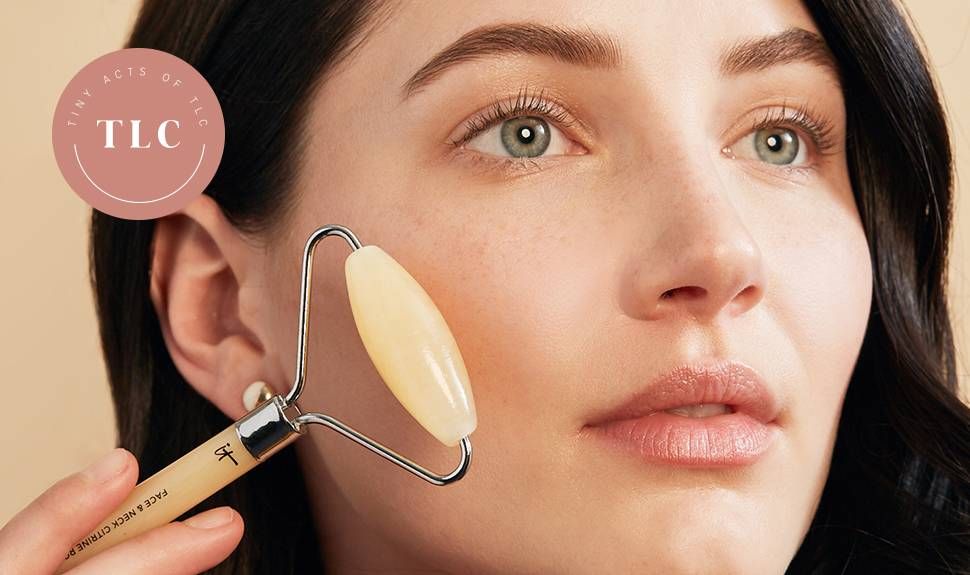
The 4-week results at a glance
| Area | Jade roller | Cryotherapy wand | Winner |
|---|---|---|---|
| Under-eye puff (long-term) | Strong improvement | Mild improvement | Jade roller |
| Cheek tone | Same as wand | Same as roller | Tie |
| Cheek tightening (immediate) | No effect | Visible improvement | Cryotherapy wand |
| Jawline definition | No change | Mild immediate effect | Cryotherapy wand |
| Subjective comfort (0-10) | 8 | 6 | Jade roller |
| Post-session reaction | None | Mild cold burn on day 1 | Jade roller |
| Learning curve | 5 minutes | 10-15 minutes | Jade roller |
| Cost | $15-$25 | $50-$200 | Jade roller |
Who should use which
Use the jade roller if you want a daily maintenance tool, you have an under-eye puff concern, or you want something easy to learn. The roller is the better general-purpose choice for someone new to facial techniques.
Use the cryotherapy wand if you have an immediate tightening concern, you're willing to invest $50-$200 and 10-15 minutes of learning, and you want a tool that does the immediate skin work. The wand is the better specialist choice.
Use both if you have the time and the budget. The roller is for the long-term depuff; the wand is for the immediate tightening. The combined routine is more useful than either alone.
Frequently asked questions
Is a cryotherapy wand just a different way to use a roller?
No. The wand uses cold; the roller uses mechanical pressure. The two techniques work in different ways and produce different effects. A routine that uses both gets more benefit than either alone.
Can I use a roller over a wand area?
Yes, the order doesn't matter. The two techniques work in different ways, and using one after the other produces a combined effect. Most people use the wand first (more active), then the roller (gentler), but the reverse is also fine.
Does the wand hurt?
It should not. The right exposure is to keep the wand moving constantly. If you see a flush that lasts more than 20 minutes, the cold exposure was too long in one spot. Move the wand more.
How long does it take to see wand results?
Immediate. The tightening effect is visible right after the wand use. The cumulative effect of 4-8 weeks is what the long-term studies show. The roller produces a slower visible result, but the cumulative effect is the same.
Can I use a wand on the under-eye area?
Yes, with care. The under-eye area is delicate, and the wand needs to be moved constantly. Test on a small area first, and use the lowest cold setting.
Who should try this comparison and who should skip it
Worth trying both if you have a 7-minute daily commitment, you have both a depuff and a tightening concern, and you're willing to invest in the wand. The combined routine is the most useful facial technique setup I've tested.
Skip the comparison if you have a reactive-skin baseline, you want a single tool, or you're still figuring out whether you'll keep up the habit. Start with the $15 roller, see if you keep up the habit for 6 weeks, and then decide whether the wand is a meaningful upgrade.
This article is for general information only. The 4-week test was performed by the author on themselves; individual results vary. Some links in this article go to products we independently recommend.