Jade Roller vs Gua Sha: The 4-Week Split Test
The two tools are sold as a pair, but they are not the same tool. A roller rolls; a gua sha scrapes. The motion is different, the pressure profile is different, and the effect is different. I used a roller on the left side of my face and a gua sha on the right for 4 weeks. Here's what changed, and what didn't.
Why the comparison is overdue
The "jade roller vs gua sha" debate online usually comes down to which one the writer bought first. The honest question is whether they do different things, or whether they're two tools for the same job. My test was set up to find out.
The setup: 4 weeks side-by-side, with the roller on the left side of the face and the gua sha on the right, alternating sides every week to remove left-right bias. Same time of day, same moisturizer, same duration.
How the two tools differ
| Feature | Jade roller | Gua sha |
|---|---|---|
| Motion | Rolling (low friction) | Scraping (higher friction) |
| Contact area | Line contact | Edge contact |
| Pressure | Stone weight, easy to control | Hand pressure, harder to control |
| Direction | Outward, slightly upward | Outward and upward, in long strokes |
| Best for | Daily maintenance, under-eye, depuff | Jawline, cheekbone, neck, deeper work |
| Learning curve | 5 minutes | 20–30 minutes (technique matters) |
| Risk of overuse | Low | Higher (capillaries) |
The two tools are not the same tool with a different name. They do different jobs, and the test results reflect that.
How I set up the 4-week test
| Item | Detail |
|---|---|
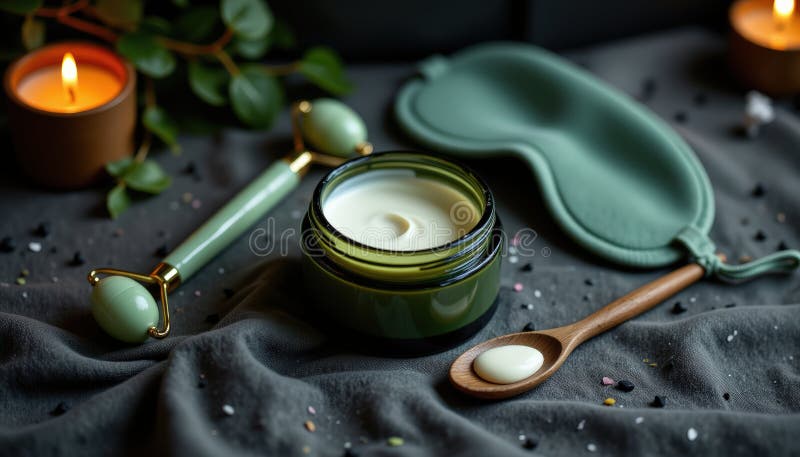
| Roller | Two-headed nephrite roller, room temperature |
| Gua sha | Bian stone gua sha, heart-shaped, smooth edge |
| Frequency | Once daily, evening, 60 seconds per side |
| Side assignment | Alternated weekly to remove left-right bias |
| Tracked | Puff score, redness, photos at 9 a.m., comfort (0–10) |
| Baseline | 2 weeks of no tool on either side |
I am not a dermatologist. If you have a reactive-skin baseline, recent procedure, or active breakout, do not test mechanical tools on the affected area.
Week 1: the learning curve
Why the gua sha took longer to learn
Roller technique: 5 minutes to learn. Press the stone to the skin, roll outward, stop. Gua sha technique: 20–30 minutes. The angle of the tool matters (around 15 degrees to the skin), the direction matters (always outward and upward, never down), the pressure matters (firm but not painful), and the strokes need to be long, not short.
What I got wrong in week 1
I pressed too hard. The gua sha side had a faint flush for 20 minutes after each session, which is a sign the pressure was too high. By day 4 I'd dialed it back to "firm but the skin doesn't change color" and the flush stopped.
Week 2: the first difference
The jawline result
The gua sha tool, when used correctly, gave a visibly more defined jawline in the photos. The roller, used on the other side, did not. This was the first sign the tools do different things in different areas.
Why
The gua sha's edge contact moves fluid in a way the roller's line contact does not. The jawline is the area where the difference is most visible because the jawline has both a bone structure and a fluid component; the roller addresses the fluid, the gua sha addresses both.
Week 3: the under-eye test
What the under-eye area showed
The roller, on its side of the face, gave a slightly better under-eye depuff than the gua sha. The roller's small head fits the under-eye curve; the gua sha's edge does not, and trying to fit it produces uneven pressure.
What I learned
The under-eye area is the roller's best zone. The cheekbone, jawline, and neck are the gua sha's best zones. The two tools have non-overlapping strengths.
Week 4: the routine that uses both
The combined 4-minute routine
- Roller on the under-eye area: 30 seconds per side
- Roller on the forehead: 30 seconds
- Gua sha on the cheekbone: 30 seconds per side
- Gua sha on the jawline: 30 seconds per side
- Gua sha down the neck: 30 seconds
Total: 4 minutes. The roller does the depuff work; the gua sha does the sculpting work. The two tools are not competing for the same 4 minutes; they're cooperating.
The 4-week results at a glance
| Area | Jade roller | Gua sha | Winner |
|---|---|---|---|
| Under-eye puff | Strong improvement | Mild improvement | Jade roller |
| Forehead | Same as gua sha | Same as roller | Tie |
| Cheek tone | Same as gua sha | Same as roller | Tie |
| Jawline definition | No change | Visible improvement | Gua sha |
| Neck | No change | Mild improvement | Gua sha |
| Subjective comfort (0–10) | 8 | 6 | Jade roller |
| Post-session redness | None | Mild, until technique improved | Jade roller |
| Learning curve | 5 minutes | 20–30 minutes | Jade roller |
Who should buy which
Buy the jade roller if you want a daily maintenance tool, you have an under-eye puff concern, or you want something easy to learn. The roller is the better general-purpose choice for someone new to facial tools.
Buy the gua sha if you have a jawline or cheekbone concern, you're willing to spend 20–30 minutes learning the technique, and you want a tool that does the deeper work. The gua sha is the better specialist tool.
Buy both if you have the budget and the storage space. Use the roller on the upper face, the gua sha on the lower face and neck. The combined routine is more useful than either alone, and the 4-minute session is a manageable commitment.
Frequently asked questions
Is gua sha just a different-shaped roller?
No. The motion is different (scraping vs rolling), the contact profile is different (edge vs line), and the effect is different. The two tools are tuned for different jobs, and a routine that uses both gets more benefit than either alone.
Can I use a roller over a gua sha area?
Yes, the order doesn't matter for the skin. The two tools work on the same layer (the soft tissue above the muscle). Most people use the roller first (gentler), then the gua sha (deeper work), but the reverse is also fine.
Does gua sha hurt?
It should not. The right pressure is "firm but the skin doesn't change color." If you see flush that lasts more than 20 minutes, the pressure is too high. Dial back. The tool is a comfort; the session should feel like a deep massage, not a workout.
Are bian stone and jade gua sha tools different?
Bian stone is a different mineral composition. The motion and the technique are the same. The "bian stone has healing properties" claim is cultural; it is not a clinical finding. Pick the tool you like the feel of; the mineral identity doesn't change the effect.
Can I use a gua sha on the under-eye area?
Gently, with a small edge, at very low pressure. The roller is the better tool for the under-eye; the gua sha works but the fit is awkward. If you have a strong under-eye concern, use the roller for that area and the gua sha for the rest of the face.
Who should try this comparison and who should skip it
Worth trying both if you have a 4-minute daily commitment, you have a real jawline or cheekbone concern, and you're willing to learn the gua sha technique. The combined routine is the most useful facial tool setup I've tested, and the visible ceiling is higher than either tool alone.
Skip the comparison if you have a reactive-skin baseline, you want a single tool, or you're still figuring out whether you'll keep up the habit. Start with the $15 roller, see if you keep up the habit for 6 weeks, and then decide whether the gua sha is a meaningful upgrade for you.
This article is for general information only. The 4-week test described here was performed by the author on themselves; individual results vary. Some links in this article go to products we independently recommend.