Jade vs Rose Quartz Roller: Which Is Better for Your Skin Type?
You have been going back and forth for twenty minutes in the skincare aisle. Jade roller or rose quartz? Both look beautiful. Both promise glowing, depuffed skin. But they are not the same — and choosing wrong can mean your roller ends up in a drawer, never to be used again. Here is how to figure out which one is actually right for you.
How the Two Stones Actually Differ
Before getting into benefits, it helps to understand what you are actually choosing between. Jade and rose quartz are fundamentally different minerals with different physical properties — and those properties affect how they behave on your skin.
Jade (Nephrite) — What You Need to Know:
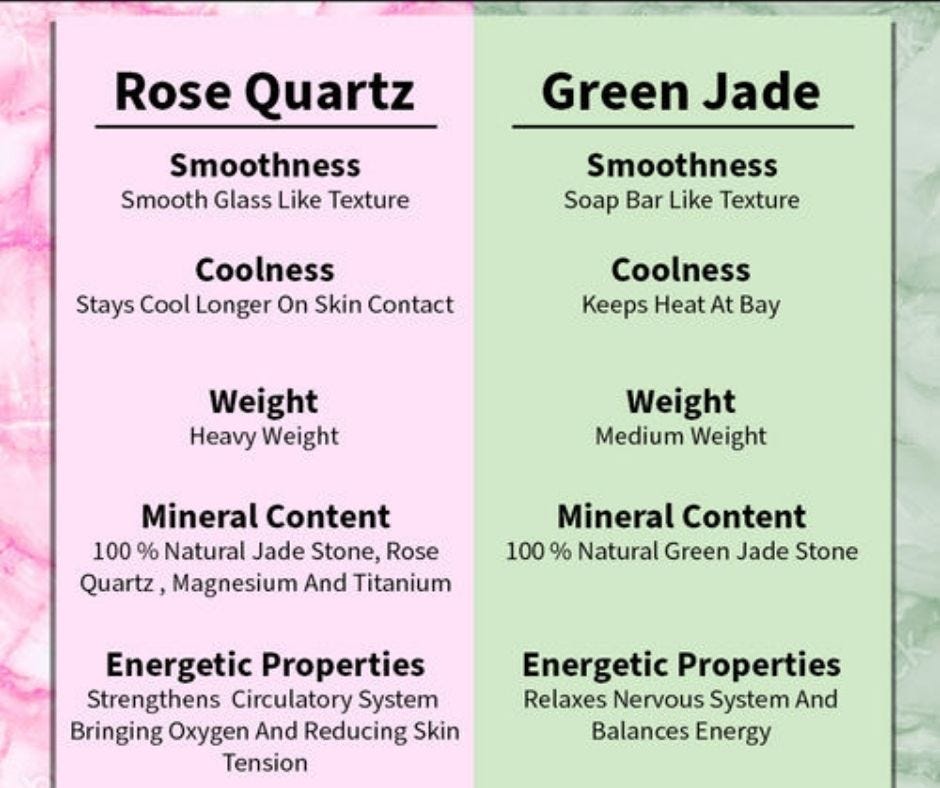
Nephrite jade is a tough, dense mineral that stays cool for longer. It has a smoother, more glass-like surface when polished. The stone is traditionally associated with Chinese beauty rituals going back thousands of years. Its cooling effect is more pronounced and longer-lasting than rose quartz.
Rose Quartz — What You Need to Know:
Rose quartz is a softer stone (6-7 on the Mohs scale vs jade at 6-7.5) that adjusts to skin temperature faster. It does not stay cool as long, but it is gentler on the skin surface. It is associated with love, compassion, and emotional healing in crystal healing traditions — and for skincare, the softer texture makes it more comfortable for people who find jade too firm.
Direct Comparison: Jade vs Rose Quartz
Property
Jade Roller
Rose Quartz Roller
Cooling effect
Stays cool longer, more pronounced
Adjusts to skin temperature faster, gentler
Texture
Dense, firm, smooth glass-like surface
Softer, slightly more porous feel
Best for
Depuffing, lymphatic drainage, inflammation
Self-care ritual, sensitive skin, relaxation
Firmness
Firmer — requires more careful pressure control
More forgiving on pressure
Temperature retention
Excellent — stays cool 10-15 minutes
Moderate — warms to skin temp in 3-5 minutes
Traditional use
Chinese beauty ritual, jade rolling since Ming dynasty
Western crystal healing, self-love rituals
Price range
Wide range — $15 to $200+
Similar range — often slightly less expensive
Which Should You Choose? The Decision Framework
Choose Jade If:
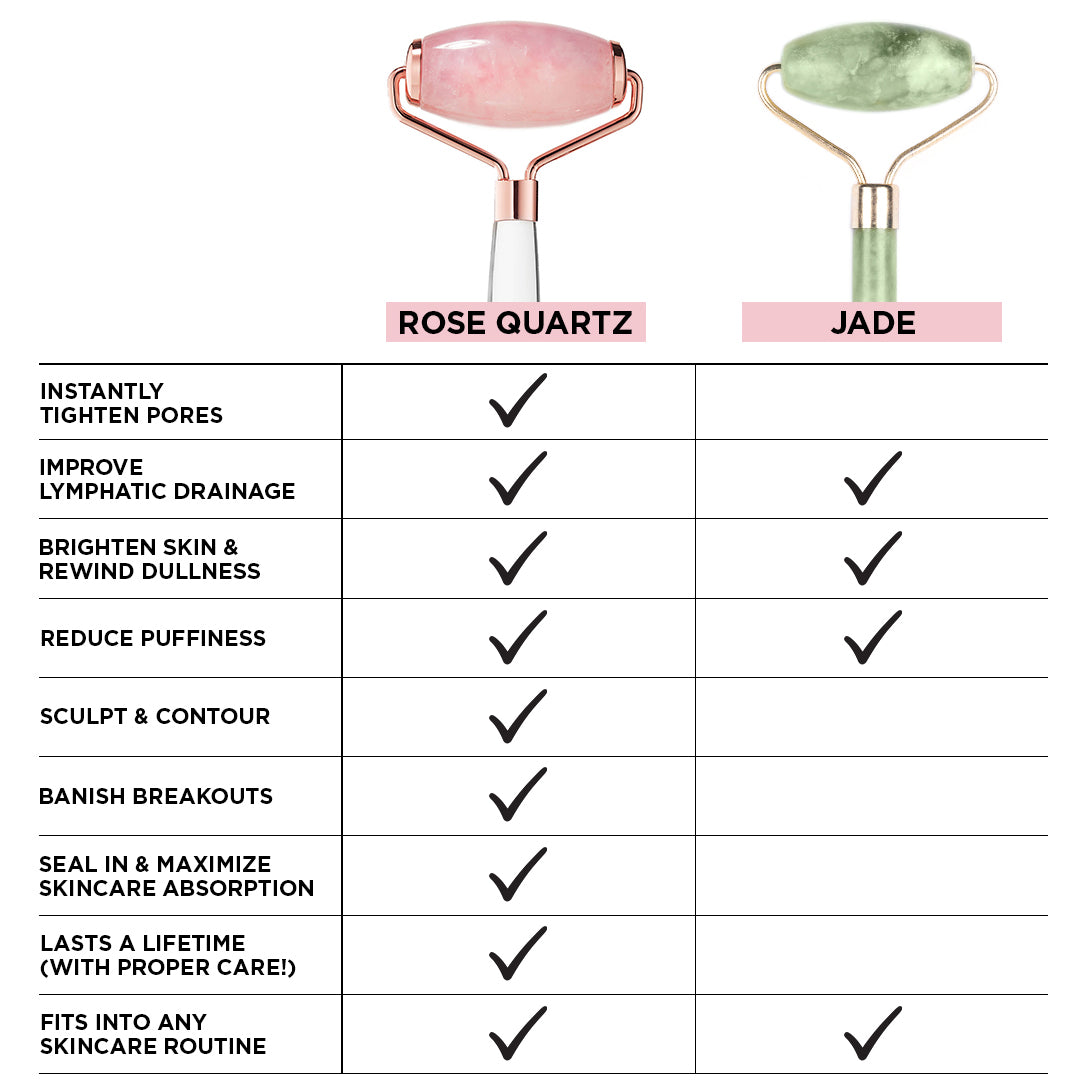
Depuffing is your primary goal — The superior cooling effect constricts blood vessels more effectively, reducing morning puffiness faster
You have normal to oily skin — Jade works well with normal-to-oily skin types that tolerate cooler temperatures
You want longer sessions — Jade stays cool throughout a 5-7 minute session; rose quartz warms up and loses the cooling benefit sooner
You are targeting lymphatic drainage — The firmer surface and sustained coolness make it more effective for moving stagnant fluid
Choose Rose Quartz If:
You have sensitive or reactive skin — The softer stone is less likely to cause irritation or capillary damage
You are a beginner — The gentler pressure requirement makes rose quartz more forgiving for техникаnew users
You are drawn to the emotional ritual — The warming quality feels more like a self-care ritual than a clinical treatment
You have very dry or mature skin — Rose quartz feels gentler and less aggressive on fragile, aging skin
You are using it primarily for relaxation — The faster warming to body temperature feels more comforting and nurturing
Can You Use Both?
Yes — and many skincare enthusiasts do exactly that. The practical approach is to keep both and use them for different purposes:
Morning: Jade roller for aggressive depuffing and waking up the skin
Evening: Rose quartz for a slower, more meditative self-care ritual
The two stones complement each other rather than compete. If you can only afford one and your primary goal is functional (depuffing, drainage, reduced puffiness), start with jade. If your goal is emotional and experiential (self-care, relaxation, gentle ritual), start with rose quartz.
"I recommend rose quartz to beginners and jade to people who have been rolling for a while and understand their pressure. The worst outcome is someone bruising their face because they bought a firm jade roller before they understood light pressure." — Dr. Ava Shamban, board-certified dermatologist
The Bottom Line on Stone Choice
The "best" roller is the one you will actually use consistently. Both jade and rose quartz have legitimate skincare benefits — and both are better than no roller at all. The stone matters less than the technique, consistency, and whether your roller is made of real, high-quality material.
If you are torn, rose quartz is the more forgiving starting point. Once you have built the habit and understand your pressure threshold, you can add jade to your routine.
The Quick Decision Guide:
⭐ Depuffing / morning routine → Jade
⭐ Sensitive skin / beginner → Rose Quartz
⭐ Relaxation / evening ritual → Rose Quartz
⭐ Lymphatic drainage goal → Jade
⭐ Dry / mature skin → Rose Quartz
⭐ Normal/oily skin → Either works
⭐ Budget on both → Start with Rose Quartz, add Jade later
Frequently Asked Questions
Is rose quartz less effective than jade for depuffing?
Rose quartz is slightly less effective for aggressive depuffing because it does not stay cool as long as jade. The cooling effect is the primary mechanism for constricting blood vessels and reducing puffiness. However, it still provides lymphatic stimulation and improved circulation — just at a slower pace. For mild puffiness or maintenance, rose quartz works well. For significant morning puffiness, jade is more effective.
Can I use both jade and rose quartz rollers?
Yes — and this is actually the approach most skincare professionals recommend. Use jade in the morning for its superior depuffing effect, and rose quartz in the evening for a slower, more meditative self-care experience. They serve slightly different functions and complement each other well.
Which is better for sensitive skin?
Rose quartz is generally better for sensitive skin because it is a softer stone that adjusts to skin temperature faster and requires less careful pressure control. The gentler texture is less likely to cause irritation, redness, or capillary damage on reactive skin types. If you have rosacea, eczema, or easily irritated skin, start with rose quartz.
How do I know if my roller is real jade or rose quartz?
Real jade (nephrite) is dense, cool to the touch, and stays cool for several minutes. It has a smooth glass-like surface with no air bubbles. Rose quartz has a slightly softer feel and is typically translucent or cloudy pink. Fake versions (glass, plastic, dyed stone) are often lighter, may have air bubbles visible, and adjust to room temperature quickly. Buy from reputable sources that specify the mineral type.
Does the color of rose quartz affect its efficacy?
The color intensity of rose quartz depends on the amount of magnesium and titanium traces in the stone. Deeper pink does not necessarily mean more effective — what matters is that the stone is real and properly polished. Avoid dyed rose quartz that appears unnaturally bright or uniform in color, as the dye may leach into your skin during use.