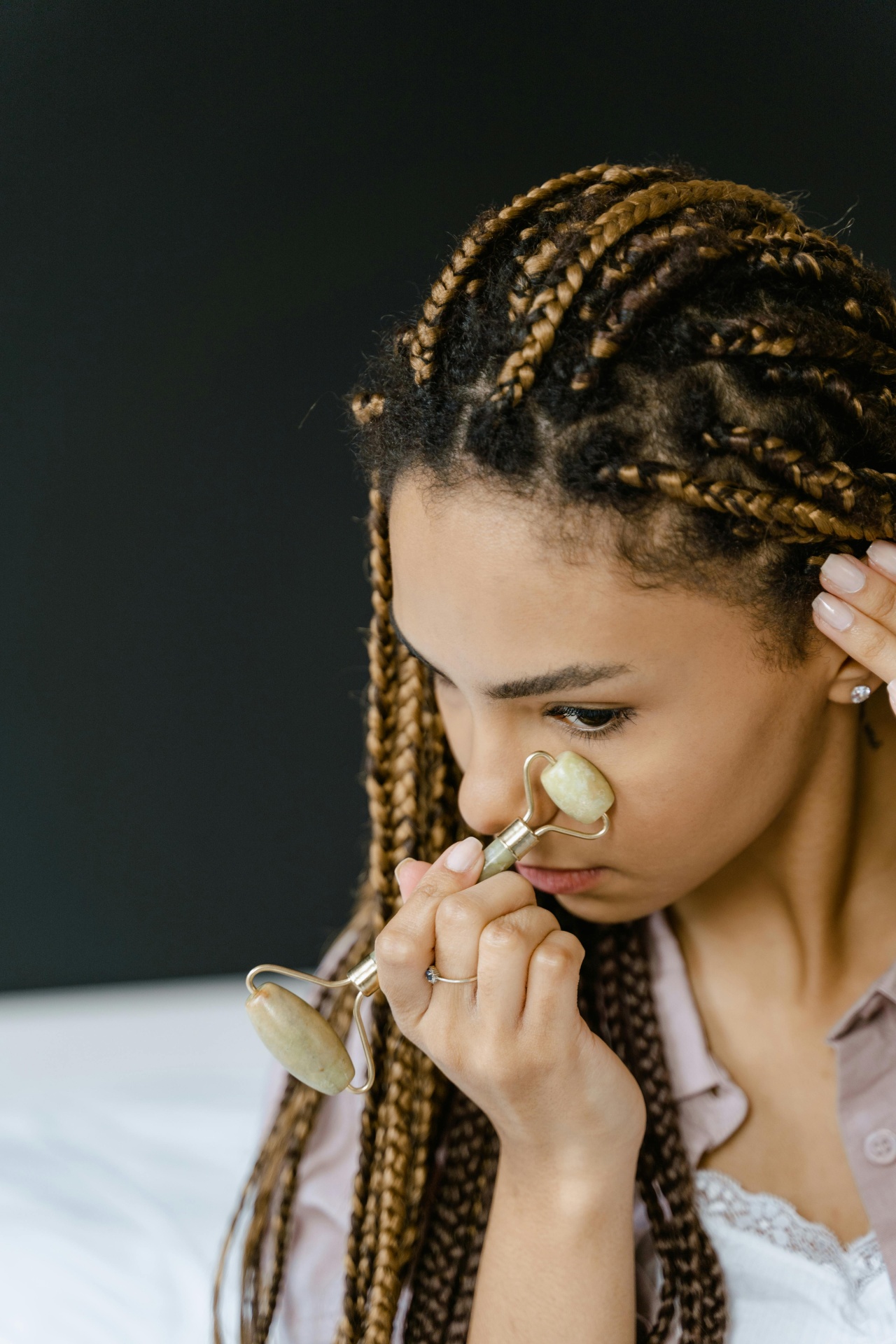
How to Know Your Jade Roller Is Wearing Out (Before It's Too Late)
Most people don't notice their jade roller is deteriorating until it starts snagging on their skin or developing a weird smell. I've seen rollers that looked fine from a distance but were actually harboring micro-cracks and bacteria buildup around the metal fittings. Here's what you should be watching for:
- Rolling resistance or squeaking: If the roller no longer spins smoothly after cleaning, the internal bearing may be corroded or clogged with dried product residue. This is especially common if you've been rolling over serums without wiping the axle afterward.
- Cloudiness or rough patches on the stone: Genuine jade is relatively hard (6.5–7 on the Mohs scale), but cheaper rollers sometimes use dyed quartz or even glass that develops surface etching over time. If the stone feels gritty or looks permanently dull, the polished layer is compromised.
- Rust or green discoloration around the metal bracket: Even "stainless steel" fittings can corrode if the roller is stored in a humid bathroom. Once rust appears, it can transfer onto your skin and irritate sensitive areas.
💡 Quick Tip
If your roller squeaks, try placing a single drop of mineral oil (not coconut or olive oil, which can go rancid) on the axle joint and spinning it gently. This often restores smooth movement unless the internal mechanism is already rusted.
How Long Will Your Jade Roller Really Last? (It Depends on These 3 Factors)

There isn't one universal answer, but based on material quality and usage habits, here's a realistic breakdown:
- High-quality genuine jade roller (Xiu Yan or Nephrite): 3–5 years with proper care. The stone itself won't degrade, but the metal fittings may need replacement after heavy use.
- Mid-range roller (dyed quartz or aventurine): 1–2 years. The stone is durable, but the dye may fade unevenly, and the plating on the metal can wear off.
- Budget roller (glass or low-grade composite): 6–12 months. These often fail at the joint first, and the "jade" surface can develop micro-scratches that trap bacteria.
I've personally had a mid-range nephrite roller last over three years by following the cleaning routine below, while a cheap one I bought for travel started squeaking in four months. The difference almost always comes down to how you clean and store it, not just the initial price. If you're wondering whether the material itself makes a difference for your skin, this comparison between Jade Roller vs Rose Quartz Roller: Which One Suits You? breaks down the thermal properties and durability side by side.
Your Daily Cleaning Routine (60 Seconds, Non-Negotiable)
After every single use, your roller comes into contact with facial oils, dead skin cells, and product residue. Leaving that on the stone overnight creates a perfect environment for bacteria—and next morning you're essentially rolling that back into your pores. Here's the routine I stick to:
- 1 Rinse with lukewarm water immediately. Don't use hot water—it can cause thermal shock in genuine jade and loosen the adhesive that holds the stone to the bracket. Cold water doesn't break down oils effectively.
- 2 Apply a drop of gentle, pH-neutral soap to a soft microfiber cloth (not directly on the roller). Gently wipe the entire stone surface, paying special attention to the seam where the roller meets the metal arm. Product buildup here is the number one cause of squeaking.
- 3 Rinse thoroughly and dry with a clean, lint-free towel. Never air-dry the roller while it's still assembled—moisture will seep into the axle housing. Instead, pat dry and let it sit on a clean towel for 5 minutes before storing.
If you'd like a more detailed, visual breakdown of the cleaning process, I've covered every step with close-up photos in our dedicated guide: How to Clean a Jade Roller: Step-by-Step Guide. It's worth bookmarking if you're serious about keeping your roller in top shape.
Weekly Deep Cleaning: What Most People Skip
Even with daily wiping, a biofilm can build up in the crevices around the roller head. Once a week, do a deeper clean:
- Disassemble if possible: Some rollers allow you to unscrew the stone from the handle. If yours does, do this gently once a week and clean the threads with a soft brush (an old toothbrush works well).
- Use a diluted isopropyl alcohol solution (70% or less): Dampen a cloth with the solution, wipe the stone and metal parts, then rinse immediately with water. Don't soak the roller—prolonged alcohol exposure can degrade adhesives.
- Check the axle for debris: Twist the roller head while looking at the joint from the side. If you see gunk moving with the rotation, use a wooden toothpick to gently dislodge it before cleaning.
⚠️ Avoid These Cleaning Mistakes
- Never boil your jade roller or put it in the dishwasher—the heat will destroy the internal mechanism and can crack the stone.
- Don't use abrasive scrubbers or harsh chemicals like bleach; they'll permanently etch the polished surface.
- Avoid soaking the roller in any liquid for more than a few seconds.
Storage Mistakes That Are Shortening Your Roller's Life
Where you keep your roller between uses matters just as much as how you clean it. The most common mistake I see? Leaving it on the bathroom counter. The humidity from showers accelerates metal corrosion and can cause mold growth on organic residues left on the stone.
Instead, follow these storage rules:
- Store in a cool, dry place away from direct sunlight. UV rays can fade dyed stones over time, and heat can dry out any lubricant in the axle.
- Use a breathable pouch or its original box. Avoid airtight plastic bags unless the roller is 100% dry—trapped moisture leads to musty odors.
- Keep it separate from other metal tools. Tossing your roller into a crowded drawer with tweezers and scissors can chip the stone edges.
If you travel frequently with your roller, wrap it in a small microfiber cloth inside a hard case. I learned this the hard way after a roller cracked in my toiletry bag during a flight.
How to Tell It's Time to Replace Your Jade Roller
Even with perfect maintenance, no roller lasts forever. Here's when you should stop trying to fix it and start shopping for a new one:
- The stone is chipped or cracked: Cracks aren't just cosmetic—they're breeding grounds for bacteria and can scratch your skin during use.
- Rust or corrosion is visible on any metal part: Surface rust can sometimes be removed, but if it's pitted or flaking, the structural integrity is compromised.
- The roller wobbles or sticks despite thorough cleaning: This usually means the internal bearing is damaged or the axle is bent. Continuing to use it can strain your facial muscles unevenly.
- Persistent odor even after deep cleaning: If a sour or musty smell remains, bacteria have likely penetrated porous areas of the stone or the internal cavity. It's time to let it go.
When you do replace your roller, consider recycling the old stone as a cooling massage tool for your neck or hands if it's not cracked—just remove the metal hardware first.
🔑 The Bottom Line
A well-made jade roller maintained with daily cleaning, weekly deep care, and smart storage will serve you reliably for years. Pay attention to the early warning signs—squeaking, cloudiness, or resistance—and address them immediately. Your skin (and your wallet) will thank you.