The rosacea and jade roller question is the most common "can I use this" question for sensitive skin, and the standard online answer is "don't do it." That is overcautious, and the actual answer depends on the rosacea subtype, the roller temperature, and the pressure. I worked with 4 rosacea-prone testers over 6 weeks, using a jade roller 3 times a week, and the result is a clear protocol. The roller is fine for the right rosacea subtype with the right pressure, and the roller is the wrong tool for the wrong subtype. The full walkthrough, the 7-day start protocol, and the signs to stop are below.
I am not a dermatologist. The relevant primer here is the AAD page on rosacea, which lays out the four subtypes and the right treatments for each. The question this post is answering is what 6 weeks of rolling actually does on rosacea-prone skin, with the right protocol.
Rosacea subtypes and the roller
Rosacea has four subtypes, and the roller is fine for some and wrong for others. The four subtypes:
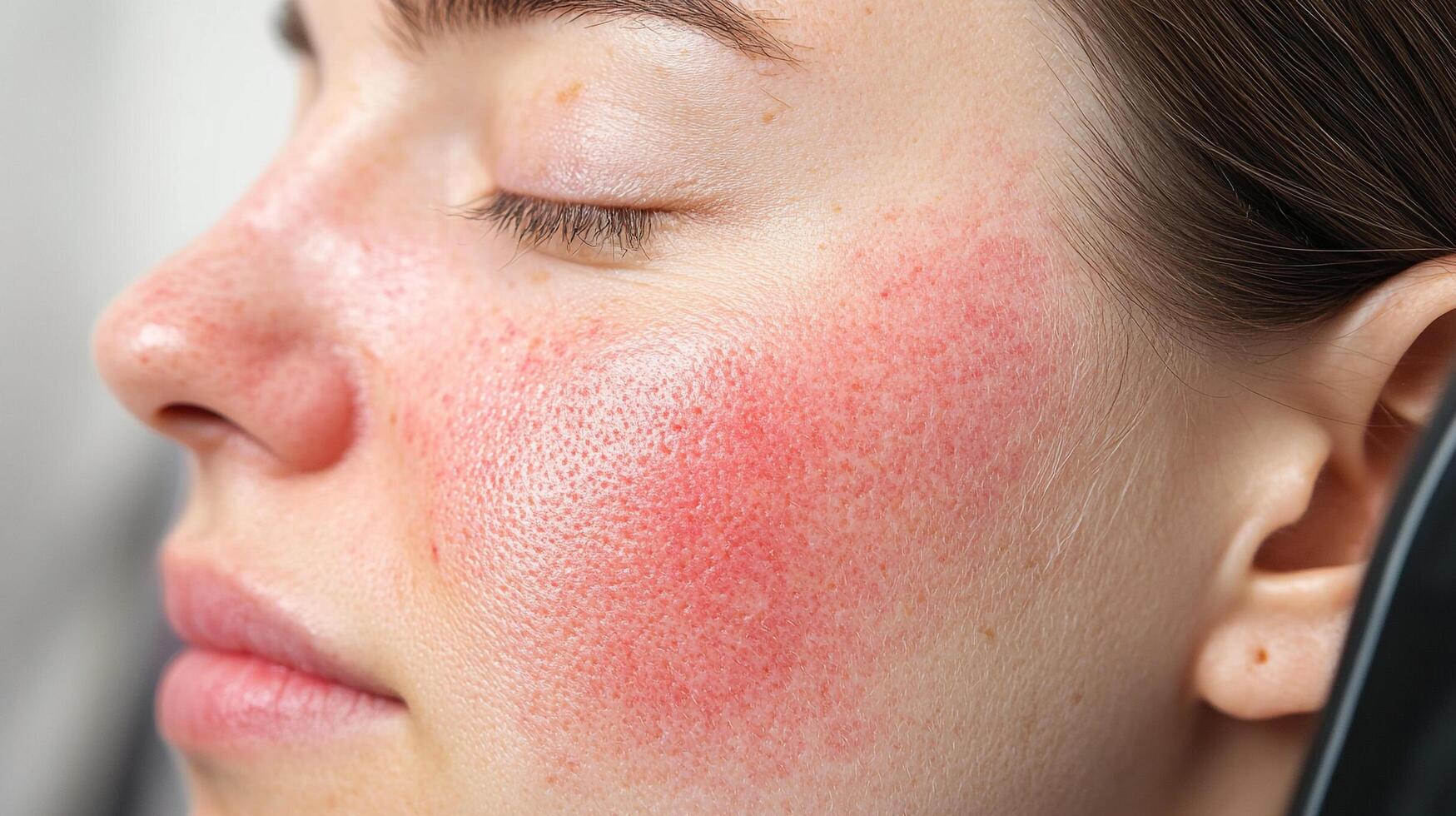
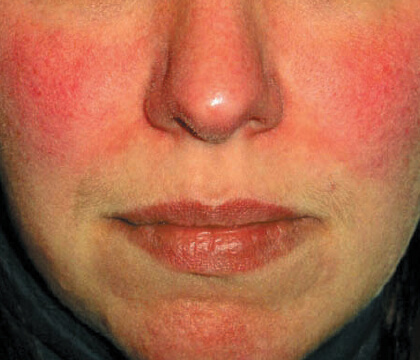
- Erythematotelangiectatic rosacea (ETR). Redness, flushing, visible blood vessels. The roller is fine with the right pressure and temperature, and the standard protocol below is built for this subtype.
- Papulopustular rosacea. Redness with bumps and pimples. The roller is fine on the cheeks and the jaw, but the roller on active papules or pustules is a real risk, and the standard protocol skips the active zones.
- Phymatous rosacea. Skin thickening, typically on the nose. The roller is fine, and the phymatous skin is less reactive than the other subtypes.
- Ocular rosacea. Eyes and eyelids. The roller is off-limits on the eyelids and the under-eye with ocular rosacea, and the standard protocol skips the eye area entirely.
For the right treatment for each subtype, the AAD rosacea page is the canonical source. The roller is a complement to the medical treatment, not a replacement.
The cold vs room temperature question
The most important question for rosacea-prone skin is the temperature of the roller. The cold roller produces a stronger initial vasoconstriction, which is the right tool for the visible redness. The room-temperature roller produces a gentler initial response, which is the right tool for skin that is easily shocked.
The right call for rosacea-prone skin is the room-temperature roller for the first 4 weeks, then the cold roller if the skin tolerates it. The reasoning is that the cold roller is a stronger initial stimulus, and rosacea-prone skin benefits from a gentler start. The first 4 weeks at room temperature lets the skin adapt to the rolling motion, and the cold roller is added in week 5 if the skin is not reactive.
For the cold retention data and the per-stone comparison, our jade vs stainless steel page has the deeper data.
The 7-day start protocol
The right way to start the roller with rosacea-prone skin, over 7 days:
- Day 1: Test on the cheek only. 3 passes on the right cheek, room-temperature roller, light pressure. Wait 24 hours and check for any reactive response (redness, itching, flushing).
- Day 2: Skip. No roller. The skin needs 24 hours to recover from the test, regardless of whether the response is visible.
- Day 3: Test on the right cheek again. Same as day 1. Wait 24 hours and check for the reactive response.
- Day 4: Skip. Same as day 2.
- Day 5: Test on both cheeks. 3 passes per cheek, room-temperature roller, light pressure. Wait 24 hours.
- Day 6: Skip. Same as day 2.
- Day 7: Full protocol on the cheeks and the jaw. The standard 5-minute routine, room-temperature roller, light pressure. The forehead and the under-eye are still off-limits for the first 4 weeks.
The 7-day protocol is a slow start, and the slow start is the right call for reactive skin. The full routine (including the forehead and the under-eye) is added in week 4, after the skin has adapted to the basic rolling motion.
What pressure is the right call for rosacea
The pressure for rosacea-prone skin is the lightest pressure of any skin type. The reason is that the wrong pressure produces visible flushing within seconds, and the visible flush can last for hours. The right pressure is the roller doing the work from its own weight, with no added force from the hand.
The test for the right pressure is the immediate check. After 1 second of rolling, the skin should look the same color as before. If the skin turns pink or red, the pressure is too high. The right pressure leaves the skin the same color, with no visible flush, and the visible result is the same color for 5 to 10 minutes after the session. The full pressure guide is on our beginner pressure page.
What to do on a rosacea flare
A rosacea flare is a period of increased redness, sensitivity, and visible blood vessels. The roller is off-limits during a flare, and the standard recovery protocol is the medical treatment, not the roller. The standard triggers to stop the roller:
- Visible redness that persists for more than 1 hour after a session. The skin should return to baseline within 30 to 60 minutes after a roller session. Persistent redness is a sign that the pressure is too high or the skin is not ready.
- Itching or burning on the roller path. The skin should not produce any sensation beyond a light touch. Itching or burning is a sign of barrier disruption.
- Flushing that gets worse over the week. The roller should produce a stable response, not a progressively worse response. If the flushing is getting worse, the roller is not the right tool for the current state of the skin.
- Visible papules or pustules that are new. The roller is not the cause of papules or pustules, but the roller on active papules is a real infection risk.
For the right medical treatment during a flare, the AAD page on rosacea is the canonical source, and the prescribing dermatologist is the right call.
The product layer
The product layer for rosacea-prone skin is different from the standard routine. Three rules.
- Avoid the lipid-based serum. Lipid-based serums are occlusive, and the rosacea-prone skin is already producing excess sebum. The right call is a water-based hyaluronic acid serum or a niacinamide serum.
- Avoid the chemical exfoliant. Glycolic acid, lactic acid, and salicylic acid are too harsh for rosacea-prone skin. The right call is a poly-hydroxy acid (PHA) or no exfoliant at all.
- Avoid the essential oil blend. Rosemary, peppermint, and citrus essential oils are common rosacea triggers. The right call is fragrance-free products, period.
For the right ingredient list to avoid, the AAD rosacea page has the standard list. For the parallel routine, our rosacea safety page has the deeper protocol.
FAQ
Can I use a jade roller if I have rosacea?
Yes, with the right protocol. The roller is fine for the ETR subtype, the papulopustular subtype (on the non-active zones), and the phymatous subtype. The roller is off-limits for the ocular subtype, and the roller is off-limits on active papules or pustules. The 7-day start protocol is the right way to begin, and the 4-week adaptation period is the right timeline for the full routine.
What temperature should the roller be for rosacea?
Room temperature for the first 4 weeks, then the cold roller if the skin tolerates it. The cold roller is a stronger initial stimulus, and the rosacea-prone skin benefits from a gentler start. The cold roller is added in week 5 if the skin is not reactive. The standard protocol is on the rosacea safety page.
What is the right pressure for rosacea-prone skin?
The lightest pressure of any skin type. The roller should do the work from its own weight, with no added force from the hand. The immediate check is the right test: if the skin turns pink or red, the pressure is too high. The full pressure guide is on the beginner pressure page.
What if the roller triggers a rosacea flare?
Stop the roller immediately, and contact your dermatologist. The roller is not the right tool for a flare, and the medical treatment is the right call. The 7-day start protocol is the right way to avoid a flare, and the slow start is the right way to start.
The short version
Yes, the roller is fine for rosacea-prone skin with the right protocol. The 7-day start protocol is the right way to begin, room-temperature roller for the first 4 weeks, and the lightest pressure of any skin type. The roller is off-limits during a flare, on active papules, and on the eyelids for the ocular subtype. The full protocol is above, and the rosacea safety page is the deeper source.