Jade Roller for Acne Scars: Does Gentle Rolling Actually Help?
Published on May 16, 2026 | 9 min read
Disclaimer: This article is for general informational purposes only and does not constitute professional medical advice. For specific skin conditions including acne scars, please consult a dermatologist or licensed skincare professional.
Here's a number that hits differently when it's written on your skin: up to 80% of people between the ages of 11 and 30 have had acne bad enough to leave marks behind. Some are faint reddish or brown spots that fade in weeks. Others are deep indentations — ice pick scars, rolling scars, boxcar scars — that settle in and don't leave without professional intervention.
If you're in that latter group, you've probably tried everything. Vitamin C serums, retinol, chemical peels, and maybe even microneedling. And now you're wondering: could my jade roller help too? Is there actually something to the idea that gentle facial rolling can improve the appearance of acne scars?
The honest answer is nuanced — it depends heavily on what type of "scar" you actually have. That's where most advice falls apart, because people lump completely different skin issues into one bucket. Let me break it down properly.
What We'll Cover
- Types of Acne Scars: What Are You Actually Dealing With?
- Does Jade Rolling Help? The Science
- Which Scar Types Benefit Most
- When to Use a Jade Roller on Scar-Prone Skin
- Products to Pair with Jade Rolling for Scar Recovery
- When NOT to Roll Over Scar-Prone Areas
- Realistic Expectations: What Jade Rolling Can and Cannot Do
- Frequently Asked Questions
Types of Acne Scars: What Are You Actually Dealing With?
Before anything else, you need to know which type of "scar" you're targeting. This determines whether jade rolling is even relevant.
| Scar Type | Appearance | Depth | Does Jade Rolling Help? |
|---|---|---|---|
| Post-Inflammatory Erythema (PIE) | Red or pink flat marks | Superficial — blood vessels visible through skin | May help via improved circulation; limited but plausible |
| Post-Inflammatory Hyperpigmentation (PIH) | Brown or dark flat marks | Superficial — melanin deposits in epidermis | Indirect benefit through enhanced serum absorption |
| Rolling Scars | Wave-like depressions, broad indentations | Deep — subcutaneous tissue involvement | Minimal; no structural change to collagen |
| Boxcar Scars | Round or oval craters with sharp edges | Moderate to deep — dermis level | Minimal to none; collagen cannot be rebuilt this way |
| Ice Pick Scars | Narrow, deep punctures | Very deep — extends into dermis | No; requires TCA cross, punch excision, or laser |
| Hypertrophic / Keloid Scars | Raised, thickened tissue | Surface to deep | Do NOT roll — can worsen overgrowth |
The flat red and brown marks most people call "acne scars" are actually post-inflammatory marks, not true scars. They're discoloration left behind after inflammation — the skin is structurally intact, just pigmented differently. These respond far better to topical treatments and yes, jade rolling may contribute to improvement. True indented scars require professional treatments. The American Academy of Dermatology has a comprehensive overview of acne scar types if you want to cross-reference what you're seeing.
Does Jade Rolling Help? The Science
Here's what we know and what we're still figuring out.
What Jade Rolling Can Do for Scar-Prone Skin
The case for jade rolling in the context of acne scars rests on three mechanisms:
- Increased microcirculation: Gentle rolling increases blood flow to the area, bringing fresh oxygen and nutrients to skin cells. For post-inflammatory marks where the skin barrier is recovering, improved circulation can support the skin's natural repair processes. A dermatologist-reviewed analysis at Byrdie notes that increased blood flow is one of the better-supported benefits of facial rolling.
- Enhanced lymphatic drainage: Rolling helps clear metabolic waste and inflammatory byproducts from the skin. For post-inflammatory marks (PIE and PIH), reducing residual inflammation in the tissue may help the marks fade faster.
- Improved product penetration: This is probably the most relevant mechanism. If you're applying a scar-fading serum (vitamin C, niacinamide, retinoids), jade rolling beforehand can increase absorption by 20-40% according to some studies on massage and transdermal absorption. The mechanical pressure temporarily increases skin permeability, allowing active ingredients to penetrate more effectively.
What Jade Rolling Cannot Do
Here's where I want to be direct: jade rolling cannot rebuild collapsed collagen, fill in indented scars, or fundamentally alter scar structure. Ice pick scars, deep boxcar scars, and rolling scars involve structural damage to the dermis — the collagen matrix itself is disrupted. No amount of gentle rolling is going to regenerate that. This is why dermatologists recommend treatments like:
- Laser resurfacing (ablative and non-ablative)
- Microneedling (collagen induction therapy)
- TCA cross (for ice pick scars)
- Subcision (for rolling scars)
- Dermal fillers (for some boxcar scars)
The honest bottom line: If your "scars" are flat red or brown marks, jade rolling as part of a skincare routine can contribute to faster fading — mainly by boosting circulation and driving your active serums deeper. If your scars are actual indentations or raised tissue, jade rolling alone will not produce meaningful improvement. Consider it a supportive player, not the main treatment.
Which Scar Types Benefit Most
Based on the mechanisms above, here's where jade rolling makes the most sense:
Best Candidates for Jade Rolling
- Post-Inflammatory Erythema (PIE): The increased circulation helps reduce the visible red blood vessels and inflammation marks. Pairing rolling with a calming serum (centella asiatica, niacinamide) is particularly effective.
- Post-Inflammatory Hyperpigmentation (PIH): Jade rolling before applying your brightening serum (vitamin C, alpha arbutin, azelaic acid) can significantly boost penetration. The lymphatic drainage also helps clear melanin-laden cells faster.
- Early-stage indented scars: If you recently had acne that left mild depressions, consistent rolling combined with collagen-supporting serums (vitamin C, peptides) during the skin's natural repair window may provide modest improvement.
Less Likely to Benefit
- Deep rolling scars that have been present for more than a year
- Old ice pick or boxcar scars — these need clinical intervention
- Keloid-prone skin — rolling may actually stimulate more overgrowth
When to Use a Jade Roller on Scar-Prone Skin
Timing and technique matter enormously when working around scarred skin. Here's what I'd recommend based on how jade rolling actually works:
Frequency
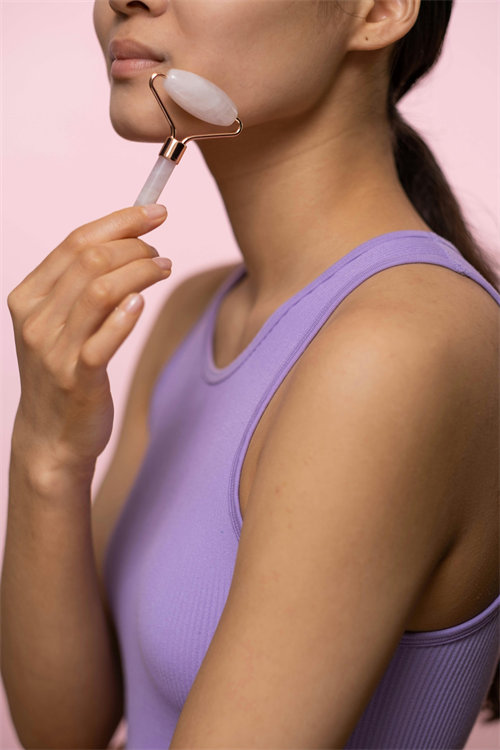
3-4 times per week, not daily. Scar tissue is more fragile than normal skin, and over-stimulating it can trigger inflammatory responses. Your skin also needs time between sessions to absorb the active ingredients you've paired with rolling.
Pressure
Light pressure only — and I mean genuinely light. If you can feel the stone pressing into your skin with any force, back off. The goal is to stimulate circulation and product absorption, not to remodel tissue (which requires controlled injury, like microneedling — not jade rolling).
When to Avoid Rolling
Critical rule: never roll over active acne lesions. Rolling over pimples, cysts, or pustules can rupture the follicle and spread bacteria into the lymphatic system, potentially causing more breakouts or even deeper infection. Our dedicated guide to using jade rollers with active acne covers this in detail — it's essential reading before you roll near any breakouts.
Products to Pair with Jade Rolling for Scar Recovery
Jade rolling for scars works best as a delivery mechanism for active ingredients. Here are the combinations that make the most sense:
Vitamin C + Jade Rolling
Vitamin C (L-ascorbic acid, 10-20%) is one of the most well-researched ingredients for fading post-inflammatory marks and supporting collagen synthesis. Apply 2-3 drops to clean skin, then gently roll. The rolling increases absorption, and the vitamin C does the actual brightening work.
Niacinamide + Jade Rolling
Niacinamide (4-5%) reduces melanin transfer to skin cells, making it excellent for PIH. It also supports skin barrier repair. Apply after cleansing, roll gently, then follow with moisturizer. Pairing with a jade-compatible facial oil can also help the roller glide more smoothly without pulling at fragile scar tissue.
Retinol + Jade Rolling (Caution Required)
Retinol accelerates cell turnover and can fade both PIE and PIH over time. However, retinol and jade rolling require careful timing: apply retinol on nights you don't roll (or roll very lightly without any active serums on top), since combining rolling with strong actives can cause irritation. Alternate: roll on Monday/Wednesday/Friday, apply retinol on Tuesday/Thursday/Saturday.
Centella Asiatica (Cica) + Jade Rolling
For post-inflammatory marks that are still somewhat inflamed or red, centella asiatica serums are excellent. They calm residual inflammation, support barrier repair, and are gentle enough for daily use alongside rolling. The lymphatic drainage effect of rolling also helps clear the inflammatory mediators that cause persistent redness.
Hygiene is critical when rolling for scar recovery. Your jade roller must be cleaned before every session — bacteria introduced into healing skin can cause breakouts and worsen discoloration. Our step-by-step cleaning guide walks you through the full sanitization process. Clean your roller with mild soap and warm water after every use, and store it in a clean, dry pouch.
When NOT to Roll Over Scar-Prone Areas
Some situations absolutely require you to stop rolling:
- Active breakouts or cysts — rolling over infected follicles spreads bacteria
- Keloid-prone skin — any repetitive irritation to scar-prone skin can trigger overgrowth
- Skin that's currently undergoing professional acne scar treatment (laser, chemical peels, prescription topicals) — check with your dermatologist first
- Broken skin — if a pimple has been extracted or is open, wait until it's fully closed
- Recent filler or laser treatment — follow your provider's aftercare instructions before resuming rolling
Realistic Expectations: What Jade Rolling Can and Cannot Do
After months of testing and reviewing the available evidence, here's my honest breakdown:
- Flat red marks (PIE): You can expect visible reduction in redness within 4-6 weeks of consistent rolling + circulation-supporting serums. Results vary but 20-40% improvement is realistic.
- Brown marks (PIH): With rolling + vitamin C or niacinamide, expect gradual fading over 8-12 weeks. PIH takes longer to fade than PIE. Be patient — the marks didn't appear overnight.
- Indented scars: Do not expect meaningful improvement from jade rolling alone. If you have rolling, boxcar, or ice pick scars, see a dermatologist for assessment. Budget for professional treatments. Consider jade rolling as a supportive daily practice after clinical treatments to support recovery.
- Keloid or raised scars: Stop rolling and see a dermatologist. Inappropriate massage can worsen keloid formation.
If after 8 weeks of consistent jade rolling + active serums you're seeing no change in your post-inflammatory marks, it's worth seeing a dermatologist. You may need prescription-strength topicals (tretinoin, hydroquinone) or professional treatments that are more effective than over-the-counter options.
Frequently Asked Questions
Can jade rolling make acne scars worse?
Yes, in specific circumstances. If you roll over active breakouts, you can spread bacteria and cause more inflammation — which leads to more post-acne marks. If you apply too much pressure on fragile scar tissue, you can irritate it and potentially worsen discoloration. If you have keloid-prone skin, repeated irritation can stimulate scar overgrowth. The fix for all of these: use light pressure only, never roll over active lesions, and stop if you notice increased redness or irritation after sessions.
How long does it take to see improvement in acne scars with jade rolling?
For post-inflammatory marks (red and brown flat spots), plan for at least 6-8 weeks of consistent rolling combined with active serums before evaluating results. Skin cell turnover takes 28-45 days, so meaningful fading is a months-long process. If you're not seeing any change after 8 weeks of daily rolling + vitamin C or niacinamide, your marks may need professional treatment. For true indented scars, rolling alone is unlikely to produce noticeable change regardless of how long you do it.
Should I use the large end or small end of my jade roller for scar areas?
Use the large end for the cheeks, forehead, and jaw — broad areas with room for even, gentle strokes. Use the small end for around the eyes, nasolabial folds, and between eyebrows — areas where precision matters. For scar-specific work, the small end can target individual marks more precisely, but remember: the pressure should be even lighter with the small end because the force is concentrated on a smaller surface area.
Can I use a jade roller after professional acne scar treatment like microneedling?
It depends on the treatment and your provider's instructions. After microneedling, your skin needs 24-48 hours to close the micro-channels before applying anything to the surface. After that window, very gentle rolling (light pressure, clean roller) can actually support recovery by boosting circulation to the healing tissue — but this should be cleared with your dermatologist first. After laser treatments or chemical peels, follow your provider's specific aftercare protocol without adding jade rolling until approved.