Jade Roller Stops Working: 6 Reasons Why
If your jade roller seems to have stopped working, the cause is usually one of 6 things. The diagnostic checklist, the 3 quick fixes that solve the problem, and the 3 reasons to replace the roller entirely.
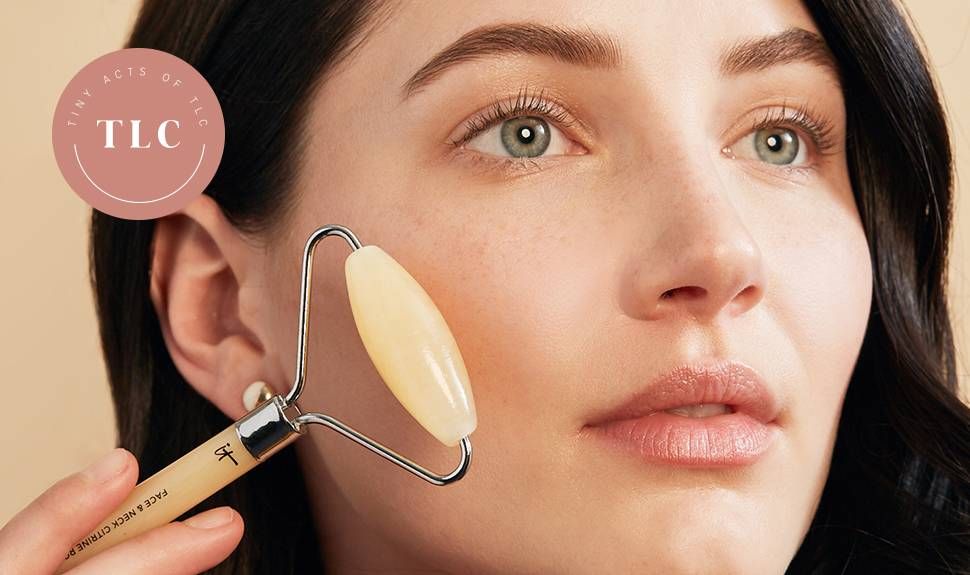
Why "stops working" is usually a description, not a diagnosis
When a user says the roller "stopped working," they usually mean one of three things:
- The depuff effect isn't visible anymore. The morning photos look the same as before the rolling session.
- The roller feels different in the hand. The swivel is stiffer, the stone feels rougher, or the weight has changed.
- The skin reacts differently. Pressure marks last longer, the depuff fades faster, or the skin feels irritated after rolling.
These three descriptions map to 6 specific causes, and the right fix depends on which cause is the actual problem.
The 6 reasons
Reason 1: The swivel has worn out
What it looks like: The roller doesn't spin freely anymore. The stone drags or grinds when it should glide.
Why it happens: The bearing in the swivel has worn from 6+ months of daily use. This is normal wear and tear.
What to do: Replace the roller. A worn swivel can't be repaired. The $15 replacement is the right move.
Reason 2: The stone has micro-scratches
What it looks like: The stone feels rougher under a fingertip, or you can see fine scratches in good light.
Why it happens: 6+ months of use, contact with skin and products, and occasional drops create micro-scratches on the stone surface. The scratches harbor bacteria and create friction.
What to do: Replace the roller. Micro-scratches can't be polished out at home. The replacement is the fix.
Reason 3: The frame has corroded
What it looks like: Green or white corrosion on the frame, especially where the stone meets the metal.
Why it happens: 6+ months in a humid bathroom, especially with hard water, corrodes plated zinc and brass frames.
What to do: Replace the roller. Corroded metal on the skin is a hygiene issue. Upgrade to a stainless steel frame for the next roller.
Reason 4: The cleaning protocol has slipped
What it looks like: The roller feels "off" but doesn't have visible damage. The stone is slightly sticky or the surface has a residue.
Why it happens: Skipping the alcohol wipe after every session, or wiping with a damp cloth instead of alcohol, allows sebum and product residue to build up on the stone.
What to do: Deep-clean the roller. Wipe with 70% isopropyl alcohol, let it air-dry for 5 minutes, and resume the after-every-session protocol. The roller is back to baseline within a day.
Reason 5: The skincare routine has changed
What it looks like: The depuff effect is the same, but the skin feels tighter or oilier after rolling. The glide is different.
Why it happens: New moisturizer (heavier or lighter than before), new active (retinoid, acid, vitamin C), or new SPF can change the glide surface and the roller's interaction with the skin.
What to do: Wait 5 minutes after the new skincare step before rolling. The product needs to absorb; the roller needs a stable surface. This usually fixes the problem within a few sessions.
Reason 6: The skin baseline has changed
What it looks like: The roller feels fine, but the depuff effect is less visible than it used to be.
Why it happens: Hormonal changes (stress, sleep, age), seasonal changes (humidity, temperature), or a new medication can all change the skin's baseline fluid retention. The roller is the same; the skin is different.
What to do: Test the roller on a day when the skin is well-rested and well-hydrated. If the depuff returns, the issue is the skin baseline, not the roller. If it doesn't, the roller is past its useful life.

The 3 quick fixes vs the 3 replacements
| Cause | Fix | Time to fix |
|---|---|---|
| Cleaning protocol slipped | Deep-clean + resume after-every-session protocol | 1 day |
| Skincare routine changed | Wait 5 min after new product before rolling | Few sessions |
| Skin baseline changed | Test on a rested, hydrated day | 1 day |
| Swivel worn out | Replace the roller | Buy a new one |
| Stone has micro-scratches | Replace the roller | Buy a new one |
| Frame has corroded | Replace the roller | Buy a new one |
The first 3 are operational and can be fixed in 1 day. The last 3 are physical and require a new roller. The diagnostic question is: is the issue the roller, or the conditions around the roller?
The diagnostic checklist
When the roller "stops working," go through this checklist in order:
- Inspect the stone. Run a fingertip across the surface. Do you feel any roughness? If yes, replace the roller.
- Test the swivel. Flick the stone with a finger. Does it spin freely and silently for 5+ seconds? If no, replace the roller.
- Inspect the frame. Look for green or white corrosion, especially where the stone meets the metal. If you see any, replace the roller.
- Deep-clean the roller. Wipe with 70% isopropyl alcohol and let it air-dry for 5 minutes. Does the stone feel different? If yes, the issue was cleaning protocol.
- Check the skincare routine. Have you added a new product in the last 2 weeks? If yes, the issue may be the new product.
- Check the skin baseline. Have you been sleeping well, hydrating, and managing stress? If no, the issue may be the skin baseline.
Steps 1–3 are physical checks; steps 4–6 are operational checks. Run them in order, and the cause is usually clear by step 3 or 4.
Frequently asked questions
How long should a jade roller last?
With daily use and proper cleaning, 6 months. With 2–3x weekly use, 12–18 months. The frame and the stone are the wear parts; the routine is the protective layer.
Can I repair a worn swivel?
No. The bearing is a sealed unit, and once it's worn, the only fix is replacement. Some people try lubricating the swivel with mineral oil, but the effect is temporary and the swivel usually wears out within weeks.
How do I know if the stone is too scratched?
Run a fingertip across the surface in good light. If you feel any roughness, the stone is past its useful life. Micro-scratches are usually visible in good light without a magnifier.
Is hard water the cause of corrosion?
Frequently, yes. Hard water accelerates corrosion on plated zinc and brass frames. If you have hard water and a plated frame, expect corrosion within 6 months. Stainless steel is the upgrade.
What if the roller is still under warranty?
Most quality rollers have a 1-year warranty. If the swivel grinds or the frame corrodes within the warranty period, contact the manufacturer for a replacement. The warranty typically doesn't cover normal wear after 6 months.
Who should run this diagnostic and who can skip it
Worth running if the roller has been in use for 6+ months, the depuff effect has diminished, or the roller feels different in the hand. The 6-step checklist takes 5 minutes and usually identifies the cause.
Skip it if the roller is new (less than 3 months old), the issue is operational (cleaning, routine, skin baseline), or the roller is clearly damaged and you already know to replace it. The diagnostic is for the unclear cases.
This article is for general information only. The 6 reasons reflect the most common causes; less common causes (extreme temperature exposure, mechanical shock) are not covered. Some links in this article go to products we independently recommend.