1 Month Jade Roller Results: What Actually Happens (2026)
Updated 2026 | Thinking about committing to a jade roller for 30 days? Here is an honest week-by-week breakdown of what actually changes, what does not, and how to get the most out of your first month.
Disclaimer
This guide is for general educational purposes only and does not constitute professional skincare or medical advice. Always consult a licensed dermatologist or skincare professional before using any new tool or technique on your skin.
Published on May 14, 2026 | 8 min read
Scroll through Instagram and you will find dozens of posts claiming that 30 days with a jade roller will give you "glass skin," sculpted cheekbones, and the kind of glow that makes people ask what foundation you are wearing. Most of these posts are selling something. The reality is a lot more nuanced, and frankly, more interesting than the highlight reel suggests.
After researching hundreds of user experiences and digging into what dermatologists actually say about facial stone tools, here is the honest, week-by-week breakdown of what you can realistically expect during your first month with a jade roller. No filters, no sales pitch.
In This Article
The "30-Day Glow-Up" Promise vs. Reality
Let's get the uncomfortable truth out of the way first: a jade roller will not erase wrinkles, shrink pores, or fundamentally change your bone structure. If anyone tells you otherwise, they are either misinformed or trying to make a sale.
What a jade roller can do, with consistent use over 30 days, falls into three categories:
- Immediate but temporary — reduced morning puffiness, temporary skin brightening from increased blood flow, better product absorption during that single session
- Gradual and cumulative — improved lymphatic drainage habits, more even skin texture over time, a noticeable "sculpted" look that lasts longer as your technique improves
- Lifestyle-adjacent — a consistent self-care routine that reduces stress-related skin issues, better awareness of your facial tension patterns, and a reason to actually apply your serums daily
The bottom line: most people who see "real results" after 30 days are experiencing a combination of all three. The tool alone is modest. The tool plus daily consistency plus better skincare habits is where the magic actually lives.
Week 1: The Adaptation Phase
Days 1-7The first week is exciting, awkward, and slightly disappointing all at once. Here is what most people report:
What you will probably notice
- Day 1-2: Your skin looks slightly less puffy right after rolling, but the effect fades within 2-3 hours. The stone feels cold and pleasant. You are probably using way too much pressure.
- Day 3-4: Your technique is getting slightly better — you are remembering to roll outward and downward. The morning de-puffing effect becomes a little more noticeable, especially under the eyes. If you are using the right technique for puffy eyes, you may see a visible difference within minutes.
- Day 5-7: The novelty is wearing off. Your jade roller is still sitting on your nightstand, but skipping a day starts to feel tempting. This is normal.
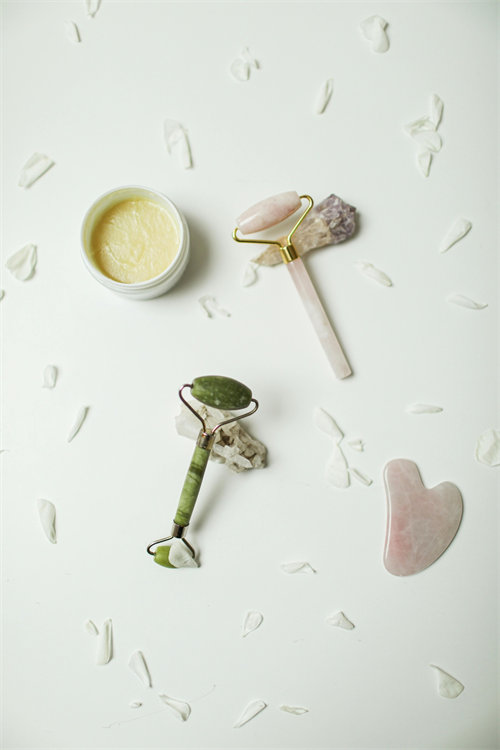
First-week tip: Store your roller in the fridge. The extra cold amplifies the de-puffing effect and gives you a more visible "result" early on, which makes it much easier to stay motivated. Just do not put it in the freezer — the temperature shock can cause micro-fractures in natural stone.
Week 2: When Things Start Shifting
Days 8-14Week 2 is when most people either commit for real or quietly abandon the project. The changes here are subtle but meaningful if you pay attention:
- Lymphatic drainage improves noticeably. By now your technique has leveled up. You are not just gliding the stone randomly — you are following the natural lymphatic pathways, and your face actually drains more efficiently. Morning puffiness that used to take 2 hours to resolve now fades in 30 minutes.
- Product absorption gets real. Your serums and moisturizers are penetrating more effectively because the rolling motion physically pushes product into the epidermis. You might notice your skin feels more hydrated even on days when you use less product.
- Jawline definition starts appearing. This is the one that catches most people by surprise. After about 10-12 days of consistent rolling along the jaw and neck, the accumulated fluid that normally obscures your jawline starts to diminish. It is not a structural change — it is a drainage improvement. But the visual effect can be striking.
If you have not already, week 2 is the right time to make sure your basic technique is solid. Small adjustments — like always rolling from center outward, using the small end around the eyes, and spending extra time on the neck — can dramatically improve your results.
Week 3: The Plateau Nobody Warns You About
Days 15-21Here is the part that almost nobody talks about online: around week 3, many people hit a plateau.
The initial excitement has faded. Your jawline looks about the same as it did last week. Morning puffiness is still reduced, but it is not getting dramatically better. You start wondering if the tool has "stopped working."
It has not. What is actually happening is that your body has adapted to the stimulus. The same rolling routine that produced visible changes in week 2 is now just maintenance. To break through the plateau, you need to change something:
- Add a facial oil. If you have been rolling on bare skin or with just a water-based serum, switching to a nourishing facial oil changes the glide and allows you to work the stone more deeply without pulling.
- Increase your session time slightly. If you have been doing 3 minutes, try 5. Most people under-roll, not over-roll.
- Focus on neglected areas. The forehead, between the eyebrows, and the nasal bridge often get less attention. Adding 30 seconds to each of these zones can reactivate the lymphatic flow in areas that have gone "stagnant."
Week 3 is also when people with sensitive skin might notice slight redness or irritation. If that happens, ease up on pressure and skip a day. Pushing through irritation never helps.
Week 4 and Beyond: Real, Measurable Changes
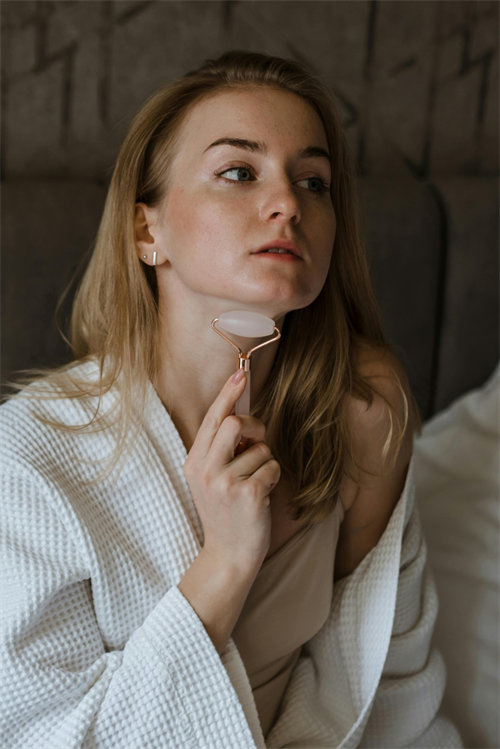
Days 22-30If you have been consistent, week 4 is when the cumulative effects start to compound. Here is what changes at this stage:
- The "baseline" shifts. Your skin's resting state is now less puffy than before you started. Even on days when you skip rolling, your face looks less inflamed than it did a month ago. This is because consistent lymphatic drainage has trained your system to move fluid more efficiently.
- Skin texture improves. This is partly from the jade roller itself and partly from the fact that you have been applying skincare products consistently for 30 days. The gentle exfoliation from daily rolling, combined with better product absorption, gives the skin a smoother, more refined appearance.
- The routine becomes automatic. Perhaps the biggest "result" is psychological. Rolling has become part of your morning or evening ritual, like brushing your teeth. You do not think about whether it is "working" anymore — you just do it, and that consistency is what drives long-term benefits.
Day 1 vs. Day 30: An Honest Comparison
Here is a side-by-side look at what typically changes — and what does not — after a full month of daily jade rolling:
| What Changes | Day 1 (Before) | Day 30 (After) |
|---|---|---|
| Morning puffiness | Takes 2-3 hours to fully resolve | Fades within 30-45 minutes; baseline is noticeably lower |
| Jawline definition | Obscured by retained fluid | More visible contour, especially along the mandible |
| Under-eye area | Puffy and dark | Reduced puffiness; dark circles depend on sleep, not the roller |
| Skin texture | Normal for your skin type | Smoother, more even — partly from rolling, partly from 30 days of consistent skincare |
| Product absorption | Serums sit on the surface | Products absorb noticeably faster and deeper |
| Wrinkles / fine lines | Present | Present — jade rollers do not structurally change wrinkles in 30 days |
| Pore size | Normal for your skin type | Unchanged — no tool can physically shrink pores |
For a broader timeline that covers the 4-week and 12-week marks, check out our full before-and-after breakdown.
How to Maximize Your First-Month Results
If you want to get the most out of your first 30 days, these adjustments make a real difference:
- Always apply a serum or oil first. Rolling on dry skin causes friction, tugging, and micro-irritation. A slip agent is non-negotiable. Facial oils with jojoba, squalane, or rosehip work particularly well.
- Roll for 5 minutes, not 30 seconds. Most beginners spend way too little time. Five minutes — 2 on each side plus 1 on the forehead and neck — is the sweet spot for noticeable lymphatic drainage.
- Use the right pressure. You should feel the stone glide smoothly. If it catches or drags, you need more product. If you are pressing hard enough to see the skin indent, you are pressing too hard. Light, firm, consistent pressure is what moves lymph.
- Do it at the same time every day. Morning is best for de-puffing because lymphatic fluid accumulates overnight. Evening works well if your goal is better product absorption and relaxation. Pick one and stick with it.
- Clean your roller regularly. A dirty roller transfers bacteria back onto your face, which can cause breakouts that undo your progress. A quick wipe with gentle soap after each use takes 10 seconds.
Common mistake to avoid: If you feel like your jade roller is not producing results, the issue is almost never the tool itself — it is usually one of these three things: insufficient rolling time, dry skin (no slip agent), or inconsistent routine. Our guide on why your jade roller might not be working covers these in detail.
Frequently Asked Questions
Will I see results if I only use my jade roller 2-3 times per week?
You will see some temporary de-puffing, but the cumulative benefits — improved baseline drainage, better skin texture, habitual consistency — really require daily use. Think of it like stretching: doing it once a week is better than nothing, but daily practice is what actually changes your baseline.
Can I use my jade roller both morning and night?
Yes, and many people do. Morning sessions focus on de-puffing and energizing the skin. Evening sessions are typically slower, paired with richer products, and more about relaxation and absorption. If you are going to roll twice a day, keep the morning session shorter (2-3 minutes) and make the evening session your main event.
I am on day 18 and I do not see any difference. Should I give up?
You are in the week 3 plateau — this is the exact moment most people quit. The changes from week 2 are consolidating, and the new changes from week 4 have not kicked in yet. Try the adjustments in the "How to Maximize" section above (add an oil, extend your session time, target neglected areas) and give it another week before deciding.
Does the quality of the jade roller matter for results?
For de-puffing and lymphatic drainage, the stone material matters less than your technique and consistency. That said, lower-quality stones tend to have rougher surfaces that can cause micro-irritation, and poorly mounted heads can squeak or wobble, which disrupts your routine. A smooth, well-made roller makes the process more pleasant, which means you are more likely to actually do it every day.