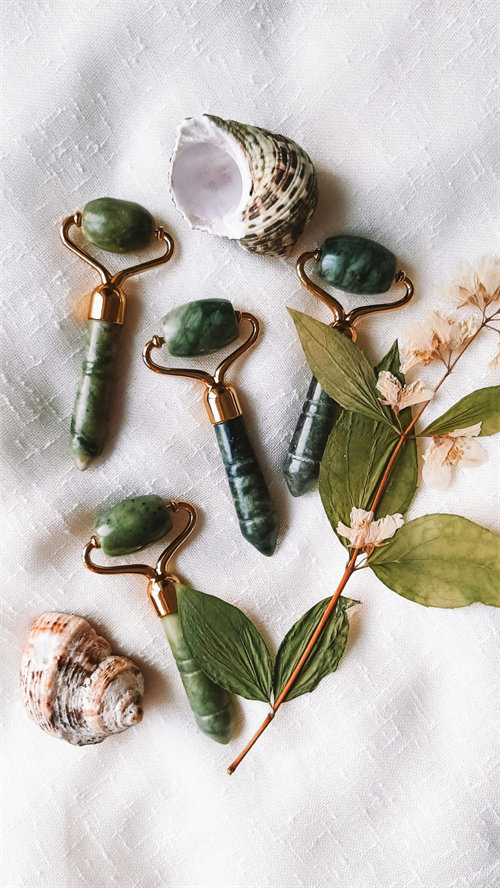
Does Jade Roller Really Work for Lymphatic Drainage? What the Science Says
You're not imagining it — that morning puffiness around your eyes and cheeks is real, and it's not just about how much water you drank last night. Your facial lymphatic system plays a huge role in how swollen your face looks when you wake up, and manual stimulation through tools like jade rollers has become one of the most discussed methods for addressing it.
But does the science actually back up the claims? After digging through anatomical research, dermatological studies, and lymphatic drainage therapy principles, here's what we found — including where the marketing oversells and where the mechanism genuinely has merit.
What We'll Cover
Your Lymphatic System and Facial Puffiness
The lymphatic system is a network of vessels and nodes that runs throughout your body, including your face. Unlike your circulatory system, which has the heart pumping blood, your lymphatic system relies almost entirely on physical movement to move fluid. In the face, this means that gravity, facial expressions, chewing, and manual stimulation are the primary drivers of lymph flow.
When lymph fluid accumulates in the soft tissue of your face — which happens naturally overnight when you're lying flat and not moving much — it shows up as puffiness, especially around the eyes where the skin is thinnest and the tissue is loosest. According to the National Center for Biotechnology Information, manual lymphatic drainage (MLD) is a recognized therapeutic technique that uses light, rhythmic strokes to encourage lymph movement. The question is whether a jade roller can replicate the key elements of MLD.
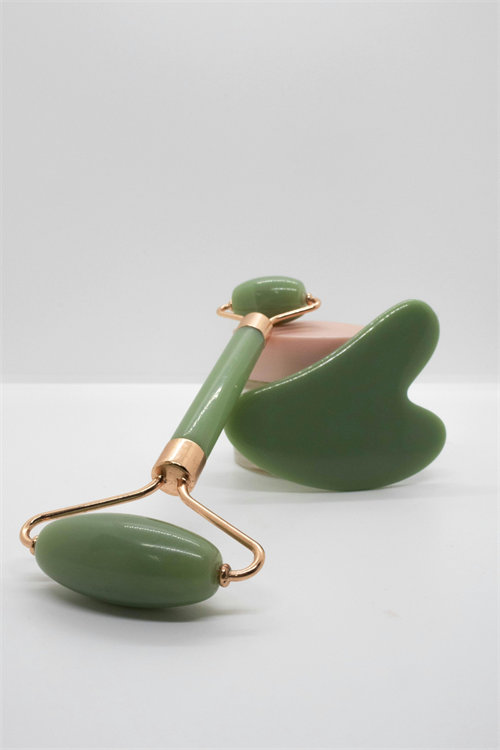
How Jade Rollers Interact with Lymphatic Tissue
The cooling effect of jade is one of the most immediate things users notice, and there's actually a physiological reason this helps with puffiness. When you store your jade roller in the fridge (not freezer — more on that here), the cool temperature causes superficial blood vessels in the skin to constrict. This temporarily reduces fluid buildup in the tissue, which is why the depuffing effect is most noticeable after a morning session with a chilled roller.
Beyond the cooling effect, the physical act of rolling creates gentle pressure on the skin and underlying tissue. For lymphatic drainage to work effectively, the pressure needs to be light — heavy pressure actually compresses the lymphatic vessels and can impede flow rather than encourage it. Most jade rollers, especially those with a smooth stone surface, apply roughly the right amount of pressure when used correctly.
Key insight: The lymphatic system operates at very low pressure. Effective manual lymphatic drainage requires light, precise strokes — not deep tissue massage pressure. This is one area where jade rollers have an advantage over heavier massage tools.
What the Science Actually Says
Here's where we need to be honest: direct clinical research specifically studying jade rollers for facial lymphatic drainage is limited. Most of the existing evidence comes from research on manual lymphatic drainage as a whole, which has been practiced by physical therapists and oncologists for decades to treat lymphedema and post-surgical swelling.
A 2020 review in the Journal of Clinical Medicine found that manual lymphatic drainage techniques significantly reduced facial edema in post-operative patients. However, these studies used trained therapists applying specific MLD strokes — not a handheld jade roller.
What we can say based on mechanism: jade rollers can produce a temporary depuffing effect through two pathways — the vasoconstriction from cooling and the mechanical stimulation of superficial tissue. The cooling effect is immediate and measurable. The lymphatic drainage effect is more subtle and depends heavily on technique.
Proper Technique for Lymphatic Drainage
Technique matters enormously here. The difference between a jade roller session that genuinely helps and one that just feels relaxing but accomplishes little comes down to stroke direction, pressure, and sequence.
Follow the Lymphatic Pathways
The key rule for lymphatic drainage is: always stroke toward the lymph nodes. For the face, this means from the center of the forehead outward toward the temples, from under the eyes outward toward the ears, from the cheeks downward toward the jaw then up toward the ears, from the chin toward the ears, and from the sides of the nose toward the ears.
Sequence Matters
Always work from the center of the face outward. The lymph from your nose and center forehead drains toward the ears, so you need to clear the outer pathways first before working on the center.
Use the Cold
Store your roller in the refrigerator (not the freezer — extreme cold can damage some jade grades). A consistently cool stone, around 40-50°F, will give you the vasoconstriction benefit that temporarily reduces puffiness. If you're dealing with especially puffy eyes in the morning, 10-15 minutes of rolling with a chilled stone before anything else will show the most visible results.
Realistic Limits: When Jade Rollers Can Only Do So Much
Jade rollers are excellent for morning depuffing and supporting everyday lymphatic health, but they're not a treatment for underlying conditions that cause facial swelling. If you experience persistent, significant facial edema, you should consult a doctor — it could indicate thyroid issues, kidney problems, allergies, or other systemic conditions that no jade roller can address.
Professional lymphatic drainage therapists use specific pressures between 30-40 mmHg for facial work, apply techniques that require training, and often combine MLD with compression therapy and exercise. A jade roller approximates one small aspect of what a trained therapist does — the gentle superficial strokes. Think of jade rolling as a maintenance tool, not a treatment.
Frequently Asked Questions
How long does it take to see results from jade roller lymphatic drainage?
Most users notice an immediate reduction in morning puffiness after a single session, particularly when using a chilled roller. For longer-term improvements, consistent use over 4-6 weeks is typically needed.
Should I use the large end or small end of the jade roller for lymphatic drainage?
The small end is better for lymphatic drainage work because it applies more focused pressure to specific areas like under the eyes and around the temples. Keep the pressure light regardless of which end you're using.
Can I use jade rolling alongside professional lymphatic drainage therapy?
Yes — many physical therapists who specialize in lymphatic work recommend jade rolling or gentle facial massage between sessions to maintain results.
Is it better to jade roll before or after applying skincare?
For lymphatic drainage specifically, rolling on bare skin or with a light oil before serums and moisturizers is ideal — this is when the tool makes direct contact with the tissue.