How to Use a Jade Eye Roller for Dark Circles, Puffiness & Fine Lines
Updated 2026 | Learn exactly how to use a jade eye roller to reduce dark circles, morning puffiness, and fine lines around your eyes. Step-by-step technique with tips most guides miss.
Disclaimer
This guide is for general educational purposes only and does not constitute professional skincare or medical advice. Always consult a licensed dermatologist or skincare professional before using any new tool or technique on your skin.
Published on May 15, 2026 | 8 min read
Medical Disclaimer: This article is for general informational purposes only and does not constitute medical advice. Jade rolling around the delicate eye area carries specific risks including capillary damage if done incorrectly. If you have any underlying eye conditions, allergies, or skin sensitivities, consult a dermatologist or healthcare professional before starting any new skincare routine. Statements have not been evaluated by the FDA.
You wake up, look in the mirror, and there they are again. Puffy bags under your eyes, dark circles that make you look like you haven't slept in a week, and fine lines that seem more pronounced than they did yesterday. You reach for your jade roller because someone on Instagram said it helps. But here's the thing most people don't realize: the way you roll around your eyes makes the difference between real results and wasted effort. Using the wrong end of the roller, the wrong pressure, or the wrong direction can actually make puffiness worse, not better. This guide covers the specific eye-area techniques that most general jade roller tutorials skip entirely.
In This Article
What Actually Counts as a "Jade Eye Roller"?
Let's clear up something confusing. When people search for "jade eye roller," they're usually talking about one of three things, and they behave very differently on your skin:
The small end of a standard double-ended jade roller. This is what 90% of existing guides mean when they say "use the jade roller on your eyes." The smaller stone (usually 15-20mm) on your standard roller works fine for the under-eye area, but the long handle makes precision tricky and you'll constantly bump the large end against your nose or cheekbone.
A dedicated mini jade roller. These are single-purpose tools with a shorter handle and smaller head (often 10-15mm), designed specifically for the eye contour. They give you way more control, fit into the hollow of your eye socket better, and are much harder to apply too much pressure with because they're lighter. If eye-area rolling is your primary goal, this is the better tool.
A jade eye wand or rollerball. These look less like a paint roller and more like a pen with a small jade sphere at the tip. They're the most precise option for targeting crow's feet and fine lines at the outer corners, but they cover less surface area per roll.
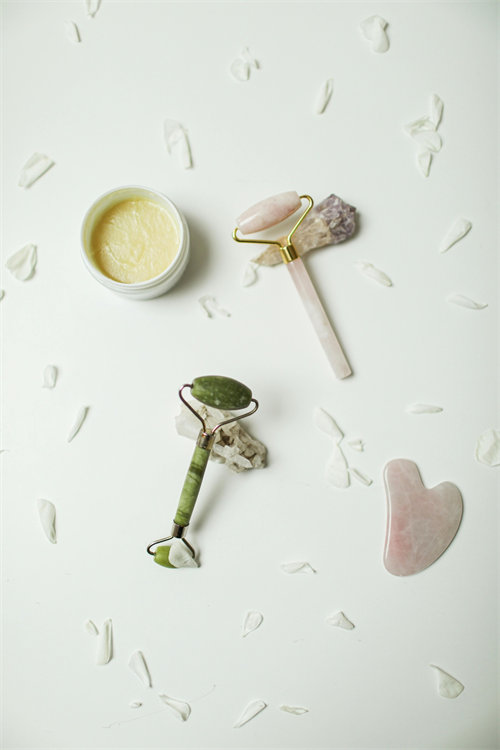
If you already own a standard jade roller: use the smaller end and follow the technique below. You don't need to buy a separate tool. If you're shopping specifically for eye-area work, a dedicated mini jade roller costs $10-20 and is worth the precision upgrade.
Why Jade Rolling Helps Your Under-Eye Area
The under-eye area is uniquely vulnerable. The skin here is roughly 0.5mm thick, compared to about 2mm on the rest of your face. It has fewer oil glands, less collagen, and a denser network of tiny blood vessels sitting just beneath the surface. When fluid accumulates overnight (thanks to gravity, salty dinners, or allergies), it pools in this thin-skinned pocket and creates visible puffiness.
Jade rolling helps in three specific ways that are backed by how facial anatomy actually works:
Lymphatic drainage. Unlike blood circulation, your lymphatic system doesn't have a pump (unlike your circulatory system, as the Mayo Clinic explains). It relies on muscle movement and external pressure to move fluid through one-way valves toward lymph nodes. The gentle, directional pressure from jade rolling manually pushes stagnant fluid out of the under-eye area and toward the drainage points near your ears and down the sides of your neck. For the anatomical specifics, our lymphatic drainage node map shows the complete pathway.
Vasoconstriction from cooling. Jade stone naturally stays about 5-8 degrees cooler than room temperature because of its high thermal conductivity. That cooling causes the tiny blood vessels under your eyes to constrict slightly, which reduces the bluish-purple tint that reads as dark circles. This effect is temporary (30-60 minutes), which is why it works best as a morning routine.
Product penetration. Rolling after applying an eye cream or serum increases absorption by about 20-30% because the pressure temporarily thins the outermost layer of dead skin cells and pushes product deeper. If you're using a caffeine or vitamin C eye serum, pairing it with rolling gives you more value from the same product.
Step-by-Step Eye Rolling Technique
This is where most guides go wrong. They tell you to "roll outward" and leave it at that. Here's the detailed technique that makes the difference between seeing results and wondering why it doesn't work.
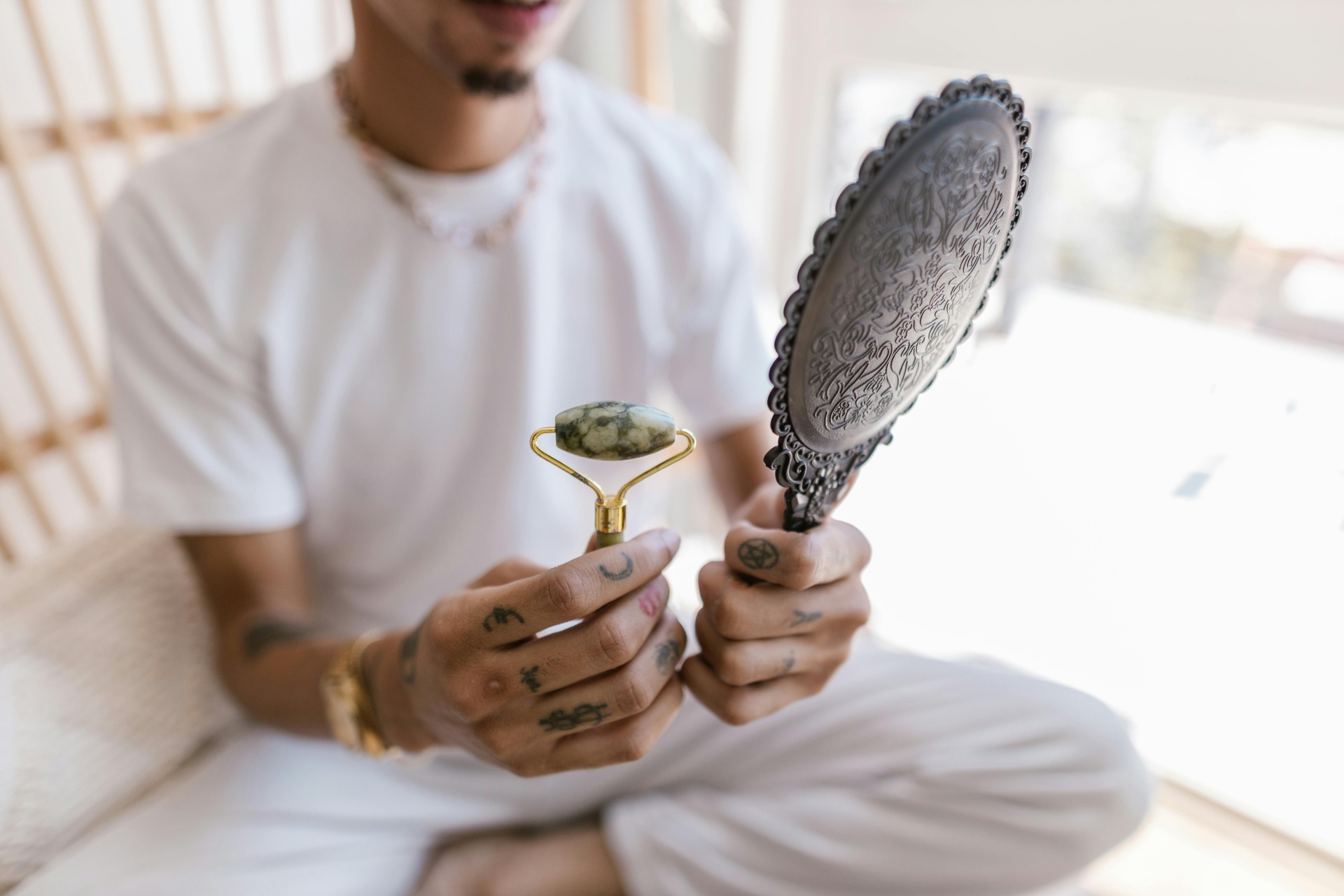
Prep (30 seconds)
- Cleanse your face. Rolling over makeup or yesterday's skincare residue pushes bacteria into open pores around your eyes.
- Apply an eye serum or lightweight eye cream. Caffeine-based formulas work especially well with jade rolling because the massage amplifies their de-puffing effect.
- Optional but recommended: pop the roller in the fridge for 5-10 minutes. Not the freezer. Freezer-cold jade can cause a thermal shock reaction on the thin under-eye skin.
The Rolling Pattern (2-3 minutes)
- Under-eye drain (most important step): Start at the inner corner of your eye, right where the tear duct sits. Use the lightest possible pressure, basically just letting the weight of the roller rest on your skin. Roll slowly outward toward your temple. Do this 5-7 times per eye, and keep the movement slow and steady. Fast rolling doesn't drain more fluid; it just irritates the skin.
- Brow bone lift: Place the roller at the inner end of your eyebrow. Roll outward along the brow bone, following its natural arch toward your temple. This drains fluid from the upper orbital area and helps lift the brow slightly for a more awake look. 3-5 passes per side.
- Temple drain: After each outward stroke from step 1 or 2, extend the movement briefly past your temple and down toward the lymph node just in front of your ear. This is the "exit ramp" for the fluid you're moving. Without this step, you're just pushing fluid sideways without actually draining it anywhere.
- Under-eye return (gentle): After the temple drain, bring the roller back to the inner corner along a slightly lower path, just above the cheekbone. This is a reset stroke, not a pressure stroke. Almost zero pressure here.
For a complete overview of jade roller technique beyond just the eyes, see our full step-by-step guide to proper jade roller technique.
Targeting Fine Lines and Crow's Feet
Fine lines around the eyes are a different problem from puffiness and need a different approach. Puffiness responds to lymphatic drainage (moving fluid out). Fine lines respond to increased blood circulation (bringing nutrients in) and tension release in the orbicularis oculi muscle, which is the circular muscle that surrounds your eye and contracts every time you squint, smile, or frown.
For crow's feet specifically, use the smallest roller head available and roll in very short, gentle upward strokes from the outer corner of the eye toward the hairline. Don't drag the skin sideways the way you do for drainage. Instead, do tiny lifting motions that just barely stretch the skin surface. Five to eight of these micro-lifts per side, twice a day, is more effective than aggressive rolling that pulls the skin too much.
This technique isn't going to erase deep-set wrinkles (nothing topical or manual can do that). What it does is temporarily plump the skin by bringing blood flow to the surface and relax the muscle that creates the squint lines in the first place. Over weeks of consistent use, the muscle relaxation component can make a visible difference in how deep the lines appear at rest.
Mistakes That Make Eye Puffiness Worse
Mistake #1: Pressing too hard. The single most common error I see. If you can feel the roller "digging in" or you see your skin bunching up in front of the stone, you're pressing way too hard. The roller should glide with zero resistance. Heavy pressure around the eyes breaks capillaries, and those little red dots take weeks to fade.
Rolling back and forth. Lymphatic vessels have one-way valves. Rolling outward moves fluid toward drainage points. Rolling inward pushes it back. Pick a direction and stick with it for the entire session. If you're unsure about the anatomy, our facial lymph node map shows exactly where each drainage pathway leads.
Skipping product. Rolling on dry skin creates friction that tugs at the delicate under-eye tissue. Always use at least a light layer of serum, eye cream, or even just a drop of facial oil. The roller should glide like it's on ice.
Using the large roller head near your eyes. The standard 35-45mm roller head on a dual-ended tool is designed for cheeks and forehead. Using it around your eyes means you're applying broad pressure to a small, fragile area. It also bumps into your nose constantly, which is annoying and makes you compensate with awkward angles. If you do under-eye work regularly, a mini jade roller eliminates this problem entirely.
Expecting permanent results from a single session. The de-puffing effect lasts 30-60 minutes post-rolling. The dark circle improvement is even more temporary, maybe 15-30 minutes. This is maintenance, not a cure. To build real improvement over time (less baseline puffiness, softer fine lines), you need to do it consistently for at least 3-4 weeks. For realistic expectations, our before and after timeline guide breaks down what changes at weeks 1, 4, and 12.
Frequently Asked Questions About Jade Eye Rolling
Can jade rolling damage the thin skin around my eyes?
Yes, if done incorrectly. Rolling with too much pressure, on dry skin, or in the wrong direction can break capillaries (causing red spots that take weeks to fade) and irritate the already-thin under-eye skin. Always use light pressure (just the weight of the roller), apply product first, and follow the directional technique in this guide. If you experience persistent redness or irritation, stop immediately and consult a dermatologist.
How long does it take to see results from jade eye rolling?
The de-puffing effect is visible immediately (within 2-3 minutes of rolling), but it's temporary and lasts about 1-2 hours. For more sustained results (less baseline puffiness, softer fine lines at rest), consistent daily use for 3-4 weeks is typically needed. For a detailed timeline, see our what to expect at 1, 4, and 12 weeks guide.
Is jade rolling or eye cream better for dark circles?
They work differently and are complementary, not alternatives. Eye creams with caffeine or vitamin C work chemically to constrict blood vessels and brighten skin tone over hours to weeks. Jade rolling works mechanically to drain fluid and stimulate circulation, with immediate but temporary results. The best results come from using both: apply your eye cream first, then roll to enhance absorption and add the drainage benefit. Neither is a substitute for adequate sleep and hydration, which are the most impactful factors for dark circles.
Building an Eye Rolling Routine That Sticks
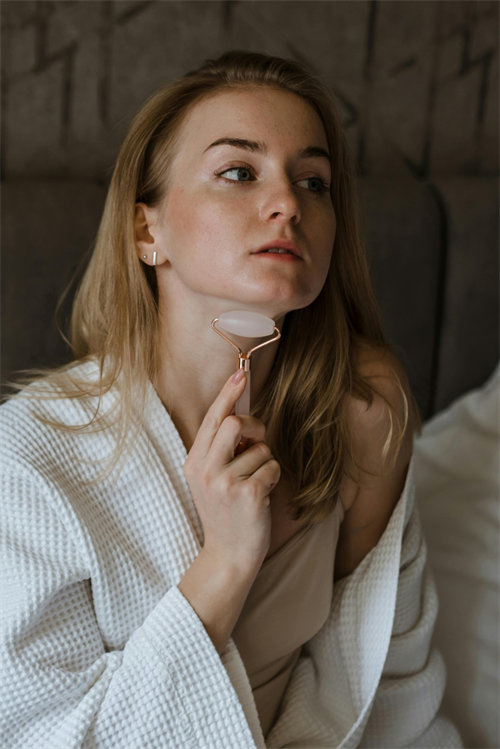
The best eye rolling routine is the one you'll actually do. Here's what works for real people, not skincare influencers with two hours of free time every morning:
Morning fast track (2 minutes): Keep your jade roller in the fridge. Wake up, splash water on your face, apply a thin layer of eye cream, and roll according to the steps above. This takes literally two minutes and the results (brighter, less puffy eyes) are visible by the time you finish your coffee. This is the routine that most people can actually sustain.
Evening wind-down (5 minutes): After washing your face and applying your night serum, spend about five minutes on a slower, more thorough roll. This helps release the muscle tension that builds up around your eyes from squinting at screens all day. The relaxation benefit alone makes it worth doing, even if you don't care about the skincare angle.
Storage tip: After each use, wipe the roller head with a dry microfiber cloth. Once a week, wash it with mild soap and warm water, then dry thoroughly before storing. A dirty roller introduces bacteria to the eye area, which is the last thing you want. For complete maintenance instructions, see our jade roller care and storage guide.
Eye rolling won't permanently erase dark circles or wrinkles. But two minutes in the morning, done correctly, will make you look more awake than an extra hour of sleep would. And when people start asking if you "did something different," you'll know it's working.
Ready to get the most from your jade roller?
Bookmark our complete jade roller technique guide and explore our product reviews section to find the right tool for your routine.