How to Use a Jade Roller Under Eyes: Dark Circles, Puffiness & Fine Lines
Published on May 17, 2026 | 7 min read
"Everyone" says a jade roller is great for under-eye bags 鈥?but nobody tells you that rolling there wrong can actually create more puffiness or stretch delicate skin that's thinner than a sheet of paper. The under-eye area is not the same as your cheeks, and the technique has to match that reality. Here's exactly how to do it right.
馃搵 Quick Navigation
Why Under-Eye Skin Is Different
Before I give you the technique, you need to understand what you're working with. The skin under your eyes is about 0.5mm thick 鈥?the thinnest anywhere on your body outside of your eyelids. For comparison, the skin on your forearm is roughly 2mm.
This means three things for rolling:
- Pressure must be minimal 鈥?what feels "gentle" on your cheeks is potentially aggressive under your eyes
- Direction matters more 鈥?the lymphatic vessels under your eyes have a specific drainage path that's easily reversed
- Friction is your enemy 鈥?never roll on dry under-eye skin, and use the lightest possible contact
If you're already familiar with full-face rolling technique, everything you know about pressure needs to be dialed back for this area.
Which End of the Roller to Use
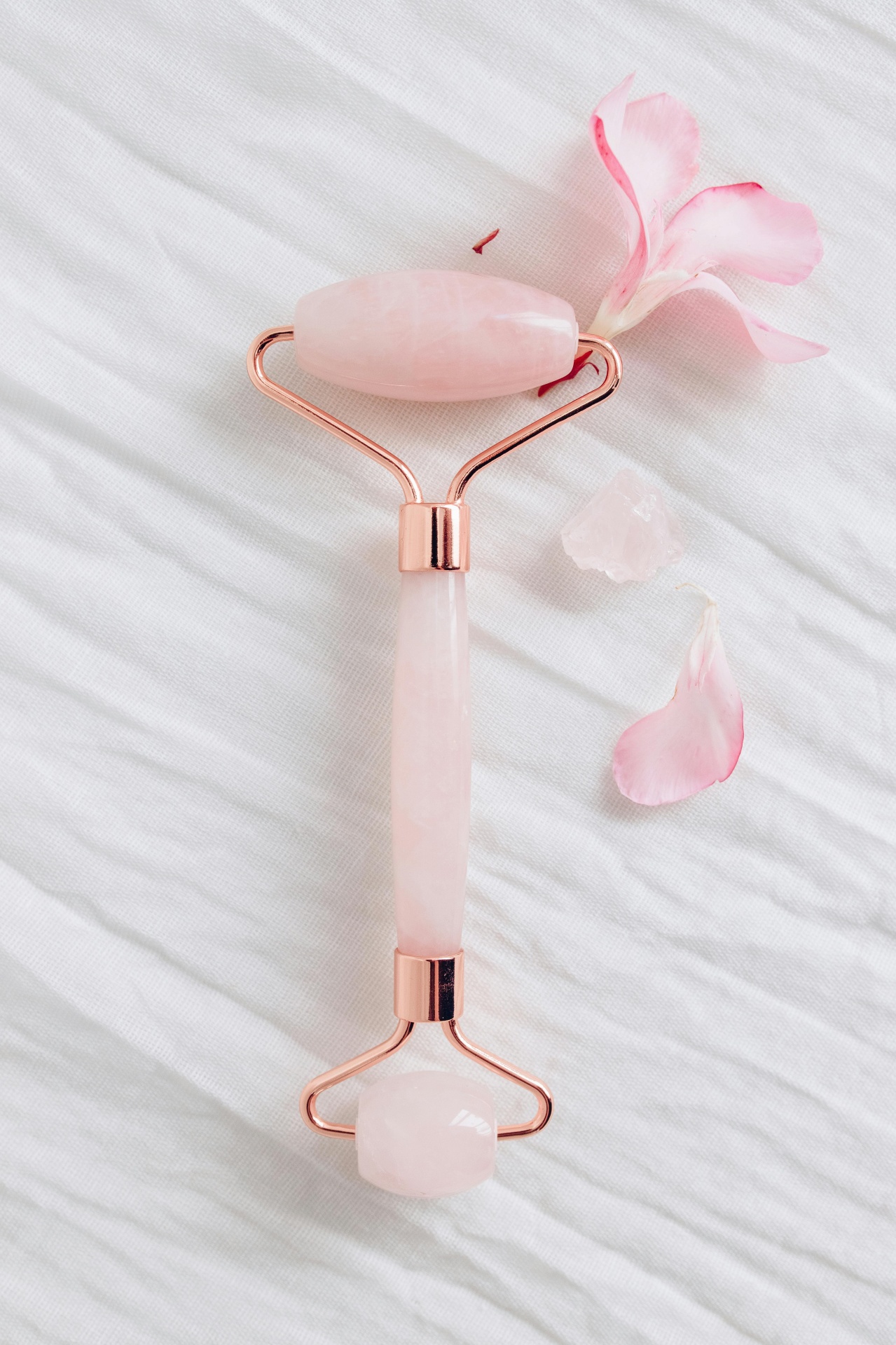
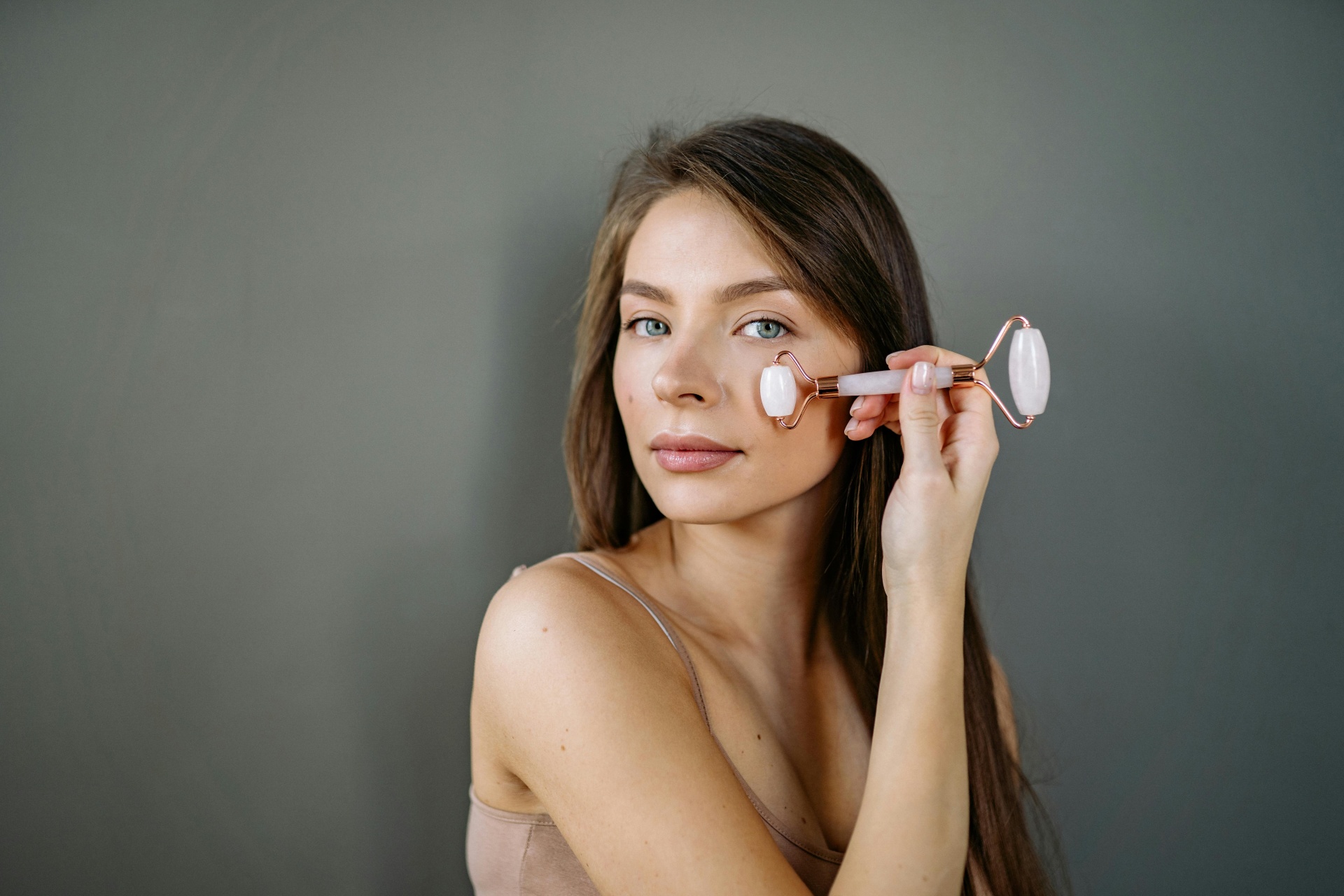
Always use the small end of a dual-ended jade roller for under-eye work. The large end is designed for the broad strokes of cheeks and forehead 鈥?when applied under the eye, it either misses the curved orbital bone entirely or presses across the bridge of your nose.
If you have a dedicated jade eye roller (often a single small stone with no large companion), that's even better 鈥?the smaller stone provides more precision on the curved under-eye contour.
The Correct Under-Eye Rolling Technique
Step-by-Step
- Apply eye cream or serum first 鈥?a pea-sized amount, dotted along the orbital bone (not rubbed in). You need slip, but the under-eye area absorbs product fast, so work quickly.
- Start at the inner corner 鈥?place the small roller end right next to your nose, on the bony ridge, not on the soft tissue beneath it.
- Roll outward to the temple 鈥?one smooth stroke from inner corner to temple, following the natural curve of the orbital bone. Do not roll back and forth. Each stroke is outward only.
- Use zero downward pressure 鈥?the weight of the roller itself provides enough contact. Don't press at all; just guide it.
- Repeat 3-5 times per eye 鈥?more is not better. Over-rolling the under-eye area causes micro-trauma that leads to more puffiness, not less.
- Drain at the temple 鈥?finish each stroke with a slight downward turn toward the ear, guiding fluid toward the lymph nodes in front of your ears.
馃幆 How to check your pressure: After rolling, your under-eye skin should look the same color as before. If it's pink or red, you pressed too hard. There should be zero color change if you're doing it right.
Techniques by Concern
| Concern | Special Adjustment | Best Time |
|---|---|---|
| Morning puffiness | Chill roller 10 min in fridge first. Use 5 outward strokes, then 3 gentle downward strokes from temple to collarbone to drain. | Morning |
| Dark circles | Pair with caffeine eye cream. Roll immediately after application to push caffeine into skin. Long-term: consistent microcirculation boost is what helps. | Morning |
| Fine lines / crow's feet | Use barely-there pressure. Focus on temple-to-outer-corner strokes. Pair with peptide eye cream. Never roll directly over the crow's feet crinkle. | Night |
| General maintenance | Standard 3-5 strokes after eye cream. The goal is product absorption and gentle drainage, not transformation. | Either |
鈿狅笍 Dark circles reality check: Rolling helps vascular dark circles (purple/blue, caused by poor circulation and thin skin showing veins). It does virtually nothing for pigmentary dark circles (brown/grey, caused by melanin). Know which type you have before setting expectations. A dermatologist can tell you in 30 seconds.
When You Should NOT Roll Under Your Eyes
Under-eye rolling is contraindicated in these situations:
- Styes or eyelid infections 鈥?rolling spreads the infection. Wait until fully healed.
- Recent eye surgery 鈥?including LASIK, cataract, or cosmetic eyelid surgery. Wait for surgeon clearance (typically 4-6 weeks).
- Active allergies with itching 鈥?rubbing (even gentle rolling) on irritated tissue worsens histamine response.
- Broken capillaries or visible veins 鈥?rolling near fragile vessels can worsen breakage.
- Botox or filler treatment within 2 weeks 鈥?check our post-Botox timing guide.
If you have chronic under-eye issues that don't improve with rolling, check our troubleshooting guide to rule out common mistakes.
Frequently Asked Questions
Can I use the jade roller on my eyelids?
No. The eyelid skin is even thinner than under-eye skin and has no bony support behind it. Rolling on your eyelids can cause irritation, broken capillaries, and in rare cases, corneal damage if your hand slips. Stick to the orbital bone.
How often should I roll under my eyes?
Daily is safe for gentle, correct technique. But if you're just starting, begin with every other day for 2 weeks so you can watch for any reaction before committing to daily use.
Cold or room-temperature roller for under eyes?
Cold (10-15 minutes in fridge, never freezer) for puffiness 鈥?the vasoconstriction from cold is the primary mechanism for reducing under-eye bags. Room temperature is fine for dark circles and product absorption. Don't store your roller in the freezer 鈥?extreme cold on delicate under-eye skin can cause cold burns.
Does under-eye rolling help with milia?
No, and it may worsen milia. Milia are keratin trapped under the skin 鈥?rolling doesn't release them, and the friction can irritate surrounding tissue, making them appear more prominent. Consult a dermatologist for milia removal.
Ready to build a complete eye care routine? See our 5-minute puffy eyes routine, or explore our full Usage Tips section for more targeted techniques.