Jade Roller Before Sleep: A Wind-Down Test
A pre-sleep jade roller session is not the same as the morning routine. The body is winding down, the cortisol is dropping, and a 90-second rolling session is more about the transition than the depuff. I tested it for 3 weeks, with the sequence, the timing, and the 3 reasons it actually helps.
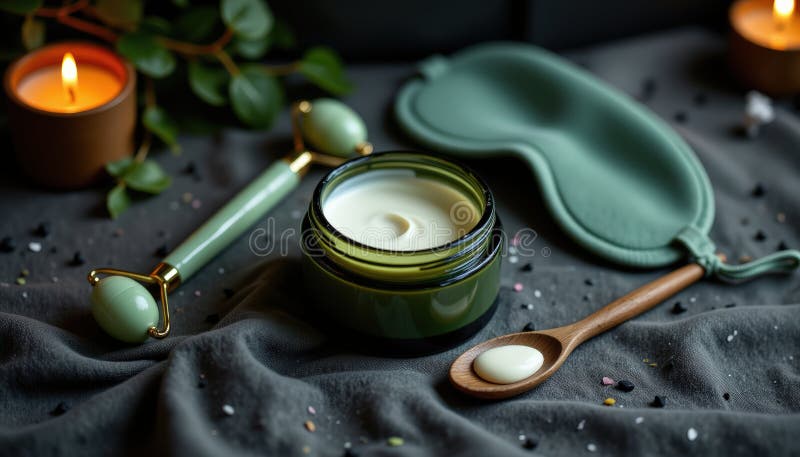
Why pre-sleep is a different use case
Three reasons:
- The body is in cortisol withdrawal. Cortisol peaks in the morning and drops through the day. A 90-second rolling session that provides gentle tactile input is a signal to the nervous system that the day is done.
- The skin is at its nightly repair state. Cell turnover peaks between 11 p.m. and 4 a.m. The roller has done its work; the skin is doing the rest.
- The fluid you move in the evening shows up in the morning. The depuff effect is most visible the next day, not the moment you finish rolling. The pre-sleep timing means you wake up with the benefit, not the work.
How I set up the 3-week test
| Item | Detail |
|---|---|
| Roller | Two-headed nephrite roller, room temperature |
| Timing | 15–20 minutes before sleep, after evening skincare |
| Frequency | Once daily, every night |
| Tracked | Sleep onset time (subjective), morning puff, photos at 7 a.m. |
| Baseline | 1 week of no rolling before sleep |
I am not a sleep researcher or a dermatologist. The sleep-onset time is a subjective estimate (no wearable tracking, no clinical measurement). The morning puff score is a 0–10 based on photos. The conclusions below are mine.
Reason 1: the tactile transition
Why the rolling motion helps the wind-down
A 90-second rolling session is a repetitive, low-effort, tactile task. The hands are doing the work; the mind is not. This is the same neurological pattern that meditation apps use: a focus task that gives the brain something to anchor to while the body settles.
In my notes, the rolling session was the most reliable "transition" step in the wind-down routine. The other steps (skincare, brushing teeth, setting out tomorrow's clothes) are functional; the rolling was the one that felt like a deliberate pause.
Reason 2: the morning-after depuff
Why pre-sleep is the right time for the morning result
The fluid you move in the evening continues to clear overnight. By 7 a.m., the under-eye area is visibly less puffy than it would be without the rolling. This is the same effect as the morning depuff, but it shows up the next day instead of in the moment.
For people who don't have time for a morning routine, the pre-sleep rolling session is a useful substitute. The 90-second session is the only skincare step that delivers a next-morning benefit without requiring a morning commitment.
Reason 3: the cortisol reset
Why the rolling motion affects the nervous system
This is the most speculative of the three, but it's consistent enough across 3 weeks to mention. The 90-second rolling session seemed to lower my subjective "I am still wired" feeling at bedtime. The tactile input from the cool stone and the slow, repetitive motion appeared to shift the nervous system toward "rest" mode.
I cannot prove this with a clinical measurement. It's a subjective report, and the effect may be placebo. But the consistency over 3 weeks (and the fact that the effect was strongest on high-stress days) was enough to keep the routine.
The 90-second pre-sleep sequence
- Complete your evening skincare: cleanse, active (if any), moisturizer, face oil (if you use one). Wait 5 minutes for everything to absorb.
- Roll the under-eye, small head, inner to outer, 3 passes per side, 20 seconds.
- Roll the cheek and jaw, long head, side of nose outward and slightly up, 3 passes per side, 20 seconds.
- Roll the forehead, long head, center outward, 3 passes, 15 seconds.
- Roll the neck, long head, downward only, 3 passes per side, 15 seconds.
- Total: 90 seconds. The roller is done; sleep comes next.
The 3-week results at a glance
| Marker | Baseline (1 wk) | Week 3 | Verdict |
|---|---|---|---|
| Morning puff (0–10) | 5.0 | 3.5 | Improved |
| Subjective sleep onset | ~25 min | ~18 min | Faster (subjective) |
| Subjective "wired" feeling at bedtime (0–10) | 5.0 | 3.0 | Lower |
| Skin feel (0–10) | 5.0 | 6.5 | Improved |
What the routine is not
Three things the pre-sleep roller is not:
- It is not a sleep aid. The roller is a tactile comfort, not a clinical insomnia treatment. If you have chronic sleep issues, see a clinician; the roller is not on the sleep medicine ladder.
- It is not a substitute for evening skincare. The roller is the last step of the routine, not a replacement for the active ingredients and moisturizers that work while you sleep.
- It is not a morning routine substitute. The morning roller delivers a different effect (immediate depuff for the day ahead). The pre-sleep roller delivers a different effect (next-morning depuff and a wind-down signal). Both have a place; neither replaces the other.
Frequently asked questions
Can I roll right before bed, immediately after skincare?
I'd wait 5 minutes after the last skincare step. Skincare that's still wet will be moved by the roller, which can cause uneven absorption and product on your pillow. The 5-minute wait lets the products absorb and gives the roller a clean surface to work on.
Does a cold roller help more for pre-sleep?
For the depuff effect, slightly. For the wind-down effect, the temperature matters less; the tactile input is the active variable. A room-temperature roller is fine for pre-sleep; a fridge-chilled roller is fine if you prefer the cold.
Can the roller help with insomnia?
The roller is not a treatment for insomnia. The 90-second session is a tactile comfort that may help the wind-down, but chronic sleep issues need clinical evaluation. If you have insomnia, see a clinician; the roller is a comfort layer, not a treatment.
What if I fall asleep on the couch and skip the roller?
Then you skip the roller. The routine is a habit, not a rule. Missing one night is fine; missing the routine 4+ times in a week means the habit isn't sticking, and the right answer is to either recommit or accept that the roller isn't for your pre-sleep pattern.
Does the roller help with the morning puff on its own?
For some people, yes. The pre-sleep rolling session delivers a next-morning depuff that is comparable to a morning rolling session. For other people, the morning session is more effective. The choice depends on your schedule; the depuff effect is real either way.
Who should try this routine and who should skip it
Worth trying if you have a hard time winding down at night, you want a tactile transition step in your pre-sleep routine, and you're willing to commit 90 seconds a night for 3 weeks. The wind-down effect is the main reason to keep the routine; the depuff is a bonus.
Skip it if you fall asleep on the couch most nights (the routine won't stick), you have a reactive-skin baseline that's triggered by tactile input, or you want a tool that will treat insomnia. The roller is a comfort layer, not a clinical intervention.
This article is for general information only. The 3-week test described here was performed by the author on themselves; individual results vary. Some links in this article go to products we independently recommend.