The Thermal Conductivity of Jade: Why It Stays Cold Longer Than Plastic
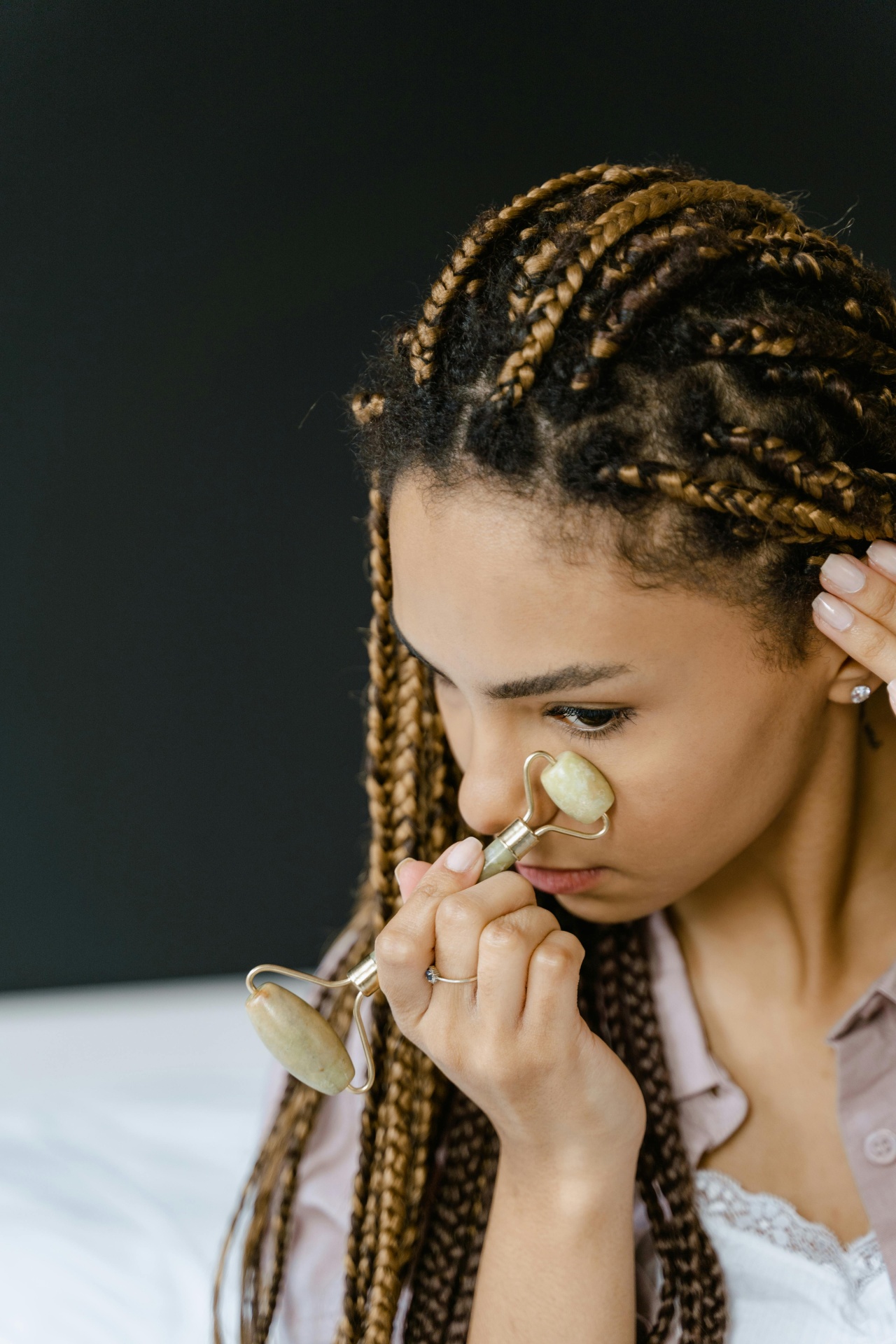
Jade's thermal properties make it superior for cold therapy facial massage.
If you've ever used a plastic facial roller and a jade roller back to back, you probably noticed something: the jade stays cold much longer. This isn't marketing — it's physics. The thermal conductivity of nephrite jade is genuinely different from the synthetic materials used in most budget facial rollers. Understanding why helps you choose better tools and use them more effectively.
What Is Thermal Conductivity?
Thermal conductivity is a material's ability to transfer heat. It's measured in watts per meter-kelvin (W/mK). Materials with high thermal conductivity absorb heat quickly and release it fast — they heat up and cool down rapidly. Materials with low thermal conductivity take longer to absorb heat and hold it (or cold) for extended periods.
For a facial massage tool, low thermal conductivity is the desirable property. When you store your jade roller in the fridge and then apply it to your face, you want the stone to stay cold during the massage — not warm up in your hand within 30 seconds.
Nephrite Jade's Thermal Properties
Nephrite jade has a thermal conductivity of approximately 3.0 to 4.5 W/mK, depending on the specific mineral composition and density. This is significantly lower than metals (copper: 400 W/mK, aluminum: 205 W/mK) but higher than most plastics (0.1 to 0.5 W/mK).
What makes jade particularly effective for cold therapy is not just its conductivity, but its heat capacity — the amount of energy required to raise its temperature by 1°C. Jade has a relatively high volumetric heat capacity, meaning it can absorb a significant amount of thermal energy before itself warming up. This is why a jade roller stored in the fridge for 30 minutes stays cold through a 5-minute massage session, while a plastic roller in the same conditions starts warming almost immediately.
Thermal conductivity comparison:
- Nephrite jade: 3.0–4.5 W/mK — cold for 5–8 minutes
- Rose quartz: 1.5–2.5 W/mK — cold for 3–5 minutes
- Acrylic/plastic: 0.1–0.3 W/mK — cold for 1–2 minutes
- Stainless steel: 15+ W/mK — heats/cool to skin temperature in seconds
*Approximate values; actual performance varies by exact material composition and ambient temperature.
The Problem with Plastic Facial Rollers
Most mass-market facial rollers are made from acrylonitrile styrene acrylate (ASA) or polycarbonate plastic. These materials have thermal conductivity roughly 10–20 times lower than jade — which sounds good in theory. But their low heat capacity means they absorb very little energy before reaching skin temperature.
In practical terms: a plastic roller at room temperature feels neutral the moment it touches your skin because it equilibrates instantly. A jade roller at the same room temperature feels pleasantly cool because jade's surface temperature doesn't instantly match your skin's warmth.
When chilled, the difference becomes dramatic. A plastic roller cooled to 4°C will feel cold for perhaps 60–90 seconds of active rolling before the heat from your hand and face raises it above the therapeutic threshold. A jade roller at the same temperature stays below the threshold for 5 minutes or longer, giving you enough time to complete a proper facial massage routine.
Why Jade Stays Cold Longer: The Science
The key factors are:
- Density: Nephrite jade has a density of 2.9–3.1 g/cm³, which is much higher than plastic (0.9–1.2 g/cm³). Higher density means more material mass to absorb heat from your face before warming up.
- Specific heat capacity: Jade's specific heat capacity (~0.8 J/g·K) is about twice that of plastic (~0.4 J/g·K). It takes twice as much thermal energy to raise jade's temperature by one degree.
- Thermal diffusivity: Jade transfers heat slowly through its structure (low thermal diffusivity), so the surface in contact with your skin stays cool while the interior remains cold. Plastic's thermal diffusivity is higher, so heat spreads through the material faster.
Rose Quartz vs Jade: Which Stays Colder?
Rose quartz is a separate mineral (silicon dioxide) with different thermal properties. Its thermal conductivity is lower than nephrite jade — approximately 1.5–2.5 W/mK. In practical use, this means rose quartz rollers lose their cold faster than jade rollers under the same conditions.
That said, rose quartz still outperforms plastic. And some users prefer rose quartz at room temperature because it doesn't feel as cool as jade before use. For cold therapy specifically — the depuffing, lymphatic-draining application — jade is the better performer.

Jade (left) retains cold temperature significantly longer than rose quartz or plastic alternatives.
Practical Implications for Your Routine
Understanding thermal conductivity helps you use your jade roller more effectively:
- Refrigerate for at least 20 minutes before use — jade needs time to absorb enough cold energy to stay effective through a full massage. 20 minutes minimum; 40–60 minutes is better.
- Don't freeze it — temperatures below 0°C can cause thermal stress fractures in jade over time, especially if the stone has internal inclusions. Refrigerator, not freezer.
- For touch-ups (mid-day depuffing), a room-temperature jade roller still works — the stone's conductivity is low enough that it won't rapidly absorb your face's heat the way metal would.
- For plastic rollers, you need to use them immediately after removing from the fridge because they'll warm up within 60–90 seconds.
Summary
- Jade stays cold 3–5x longer than plastic facial rollers due to higher density and specific heat capacity
- Thermal conductivity: jade (3.0–4.5 W/mK) > rose quartz (1.5–2.5 W/mK) > plastic (0.1–0.3 W/mK)
- Cool at least 20 minutes in the refrigerator before use for optimal cold therapy results
- Never freeze — thermal shock can cause jade to fracture over time
For cold therapy and depuffing, jade is the superior choice. For users who prefer room-temperature massage tools, rose quartz offers a middle ground between jade and plastic.