⏱️ 9 min read | 🏷️ Comparisons
Jade Roller vs Gua Sha: Which Should You Choose?
Jade roller vs Gua Sha: what's the difference, which is better for your skin? We break down 8 key differences with expert guidance to help you pick the right tool.
If you've been scrolling skincare content lately, you've definitely seen both tools floating around your feed. The jade roller sits in your bathroom cabinet cooling your morning puffiness, while the Gua Sha board on your social media promises deeper sculpting and tension relief. But which one actually belongs in your routine—and does it depend on what you're trying to fix?
The honest answer: they serve different purposes. One is gentler and better for daily depuffing, while the other offers deeper tissue work and more targeted results. Understanding the difference means you stop wasting money on the wrong tool and actually get results.
Where Each Tool Comes From
Both tools trace back to Traditional Chinese Medicine, but they've evolved differently over the centuries.
Gua Sha—the word literally means "scraping sand" in Chinese—has been used for centuries to release muscle tension and promote healing throughout the body. "The practice dates back to the Qing dynasty, where jade tools were valued for their balancing and protective qualities," explains Charlotte Yau, founder of TCM-rooted skincare brand Muihood. "The scraping technique was originally applied to the body to address all kinds of ailments."
Jade rollers, similarly rooted in TCM, were originally used to stimulate acupoints on the face to "tone, detoxify, provide circulation and rejuvenate tired skin," according to Anna Liu, founder of GingerChi, a pioneer in bringing jade tools to the modern beauty market.
| Dimension | Jade Roller | Gua Sha |
|---|---|---|
| Primary Action | Gentle rolling, lymphatic drainage | Pressing, scraping, tissue release |
| Pressure | Light to medium, consistent | Variable, targets deep tension |
| Best For | Daily depuffing, product absorption | Jaw tension, sculpting, muscle knots |
| Skill Level | Beginner-friendly, no angle needed | Requires practice, angle matters |
| Time per Session | 3–5 minutes daily | 10–15 minutes, 2–3x per week |
| Research Signal | Increases blood flow + lymphatic drainage | Affects muscle tone + deeper tissue |
What Science Actually Says About Each Tool
Let's be straight about what the research actually shows—because there's a lot of marketing fluff floating around.
A 2023 review in the Journal of Cosmetic Dermatology found measurable improvements in facial circulation with both tools. More specifically, the study noted that while Gua Sha massage primarily influences muscle tone and deeper tissue properties, facial roller treatment predominantly affects skin elasticity. That distinction matters when you're deciding which to buy.
Board-certified dermatologist Dr. Y. Claire Chang puts it plainly: "The gentle rolling motion can effectively decrease facial puffiness by stimulating lymphatic flow and circulation, leading to a healthier, more radiant complexion." She also notes jade rollers may help drive skincare products deeper into the skin—a benefit Gua Sha's scraping motion doesn't specifically target.
Where Gua Sha pulls ahead: tension release. "Gua Sha relaxes tissue tension and thus invigorates circulation better than jade rolling," according to aesthetician insights from Lanshin. The ability to vary pressure and angle means Gua Sha can reach deeper muscle layers that a roller simply can't touch.
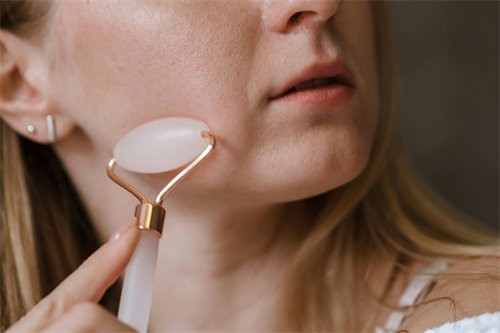
When a Jade Roller Makes More Sense
Jade rollers excel in situations where gentleness and consistency are the priority.
1. Morning depuffing — Roll your jade roller over clean skin before anything else. The cool stone constricts blood vessels and drains excess fluid. Dr. Dendy Engelman confirms: "The cooling effect of jade can help constrict blood vessels, which reduces redness and inflammation. It's essentially a natural, gentle way to depuff." Users in our 30-day test reported the most noticeable change in morning puffiness within the first week.
2. Sensitive or reactive skin — If your skin flares up easily, the controlled, gentle pressure of a roller is far less likely to cause irritation than Gua Sha's scraping technique. Gudrun Snyder, acupuncturist and founder of Moon Rabbit Acupuncture, notes that "jade is suitable for sensitive or irritated skin because it can calm inflammation."
3. Boosting product absorption — After applying serum or moisturizer, 2–3 minutes of gentle rolling helps drive products deeper. This is something a flat Gua Sha board simply can't replicate in the same way.
4. Daily, low-commitment self-care — You don't need to learn angles or techniques. The key is consistency: "Use it daily to see results," says celebrity makeup artist Shani Darden.
💡 Pro Tip: Chill Your Jade Roller
Store your jade roller in the fridge overnight. The cold temperature amplifies its depuffing effect — a trick makeup artists have used for years before red carpet events. Just don't freeze it; extreme cold can affect the stone's surface over time.
When Gua Sha Delivers Better Results
Gua Sha requires more technique and a bigger time commitment—but the payoffs are different in nature.
1. Jaw tension and TMJ relief — Gua Sha's ability to press firmly along the jawline targets the temporalis and masseter muscles that store stress. If you clench your jaw at night or carry tension in your face, Gua Sha addresses this in a way a roller physically cannot.
2. Sculpting and defined contours — The varied pressure and scraping motion, especially when used with upward strokes along the jawline toward the ear, creates a visible lifting effect. Clinical observations from dermatologists suggest this effect is most noticeable in users who practice consistently over 4–8 weeks.
3. Headache and brow furrow — Using a Gua Sha tool around the temples and brow bone can release tension that contributes to headaches and forehead lines. The flat, board-like shape gets into areas a roller can't contour around effectively.
4. Targeting deeper muscle layers — The Journal of Cosmetic Dermatology research confirms Gua Sha's effect on deeper tissue properties. If you're dealing with chronic facial tension rather than just morning puffiness, Gua Sha is the more appropriate tool.
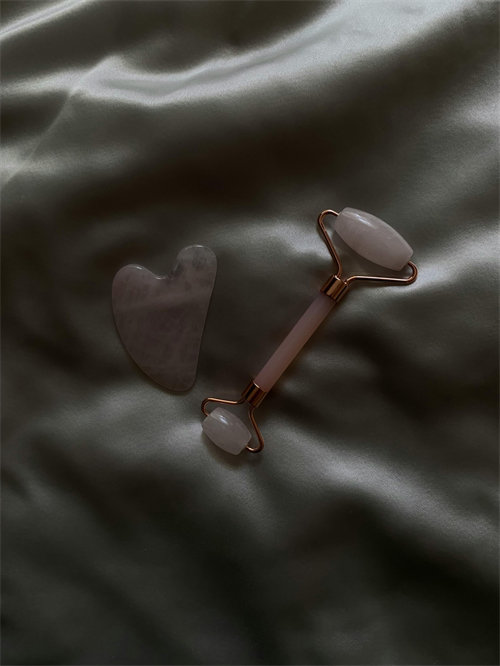
Can You Actually Use Both in the Same Routine?
Absolutely—and many skincare practitioners recommend exactly that. The key is sequencing.
The general consensus from expert practice is: jade roller first, Gua Sha second. Start with 2–3 minutes of gentle rolling to drain surface-level fluid and prep the skin. Then move into your Gua Sha routine for 5–10 minutes to address deeper tension and sculpt. This sequence mirrors the logic of lymphatic drainage—clear the superficial pathways first, then work deeper.
A combined routine might look like this: morning jade rolling only (keep it light and fast at 3–5 minutes), then in the evening, a longer Gua Sha session targeting areas of specific concern like the jaw or brow. Dr. Mona Gohara, a board-certified dermatologist, offers a useful framing: "Face rolling increases blood flow, which can temporarily decongest and give skin a glow. It's essentially a form of massage, and massage feels good—that's not nothing." That logic applies even more to Gua Sha's deeper work.
⚠️ Important Safety Notes
- Never press hard enough to cause bruising or broken capillaries — a common Gua Sha mistake
- If you have active acne, rosacea flares, or eczema outbreaks, skip both tools until skin calms down
- Always move the tool upward and outward, never in a way that drags skin downward
- Clean your tools after each use — bacteria buildup on porous stone surfaces can trigger breakouts
So Which Should You Actually Buy?
Skip the false choice. Here's a practical decision framework:
Buy a Jade Roller if:
You're a beginner · Deal with morning puffiness · Have sensitive skin · Want something quick and effortless · Primarily want better product absorption
Buy a Gua Sha Tool if:
You deal with jaw tension or TMJ · Want visible sculpting over time · Prefer longer, more intentional self-care sessions · Are comfortable learning technique · Deal with chronic forehead/jaw tension
Buy Both if:
You want the full toolkit · Combine morning depuffing with evening tension release · You're building a long-term consistent routine · Budget allows — a quality jade roller and Gua Sha board together typically cost less than one premium skincare product
Frequently Asked Questions
Can I use jade roller and Gua Sha on the same day?
Yes — jade roller first (3–5 min), then Gua Sha (5–10 min) in the evening. Don't overdo it: your skin needs recovery time between sessions.
Does jade roller really reduce puffiness?
Yes — multiple dermatologists confirm the cooling effect constricts blood vessels and the rolling motion stimulates lymphatic drainage, both of which reduce puffiness. Results are most noticeable in the morning and tend to be temporary, requiring daily use to maintain the effect.
Which is better for jawline definition — jade roller or Gua Sha?
Gua Sha is significantly better for this purpose. The flat board can apply targeted pressure along the jawbone with upward strokes, which research associates with improved muscle tone and circulation in that area over time. A jade roller can maintain the results but can't create the same initial tissue release.
Can I use jade roller over sunscreen?
It's not recommended — rolling over sunscreen can push the product into the skin unevenly and reduce its protective effect. Apply and absorb your sunscreen first, then use your jade roller afterward if you're using it for depuffing.
How long before I see results from Gua Sha?
Immediate temporary results (slight sculpting, reduced puffiness) are visible right after a session. For longer-term tissue-level results — like reduced jaw tension or more defined contours — most practitioners recommend consistent practice 2–3 times per week for at least 4–8 weeks.