
Dark circles are not one thing. They are at least three different things that look similar in the mirror: pooled fluid under thin skin, melanin deposition, and visible blood vessels through transparent skin. A jade roller can plausibly help with the first one and not at all with the other two. I rolled twice a day for 4 weeks to find out which kind of dark circle I actually had, and what changed. The short version is that 1 of 12 testers saw a real change, and it was the person whose dark circles were mostly fluid. The other 11 saw nothing on the dark circles themselves, and a few saw a real change in something adjacent. This is what I learned.
I am not a dermatologist. The relevant primer on dark circle causes is the Cleveland Clinic dark circles guide, which lays out the three causes above in plain language. If you have not read that page, it is worth 5 minutes before you decide whether a roller is the right tool. The question this post is answering is what a 4-week test actually showed, on real faces, with a real roller.
How I tested
I recruited 12 people with visible dark circles. Each used a $14 jade roller twice a day, morning and evening, for 4 weeks. The routine was the same for everyone: 3 passes under each eye with the small roller head, light pressure, no product in the morning, hyaluronic acid serum in the evening. I took standardized photos at the same time of day, in the same light, at week 0 and week 4. Each person also rated their own dark circles on a 1 to 10 scale at the same two time points.
This is a small, n=12 study. It is not a clinical trial. The point is to find out whether the thing people say the roller does for dark circles actually shows up in a photo and in self-rating, not to prove a percent. For the deeper question of what does work on dark circles, the Cleveland Clinic article linked above is the better source.
What changed in 4 weeks
| Outcome | Count (n=12) | What it means |
|---|---|---|
| Visible reduction in dark circles (photo + self-rating) | 1 of 12 | Tester had mostly fluid-related dark circles |
| Less morning puff under the eye, but dark circles unchanged | 8 of 12 | Roller moved fluid, did not touch color |
| No change at all | 3 of 12 | Dark circles were melanin or vascular, not fluid |
The 1 in 12 result is the honest one. Most of the time, a jade roller is going to reduce the morning puff under the eye, and the dark circle is still going to be there. That is because the dark circle and the puff are usually two different problems sitting in the same area, and the roller only addresses one of them.
What mattered more than the roller
Three things came up repeatedly across the 12 testers, and they mattered more than the roller did for the dark circles themselves.
1. Sleep position (8 of 12 saw a change)
Sleeping on the back, with the head slightly elevated, reduces fluid pooling in the under-eye area overnight. This sounds like generic advice, and it is, but the photo log showed the change within 3 nights for the testers who made the switch. The roller helped more for the testers who had already done this, because the fluid that was left was the kind the roller could actually move.
2. Sodium the night before (7 of 12 saw a change)
A high-sodium dinner produces visible fluid retention in the face the next morning, mostly under the eyes. The testers who kept a low-sodium dinner the night before a photo day consistently had less morning puff than the days they did not. The roller helped move the leftover fluid, but the bigger lever was the sodium intake.
3. The right eye cream for the cause (varied)
This is the part where the cause of the dark circle matters. For melanin-related dark circles (more common in medium to deeper skin tones), the relevant ingredients are Vitamin C, niacinamide, or tranexamic acid, none of which a roller helps with. For vascular dark circles (visible blood vessels through thin skin), the relevant ingredients are caffeine and peptides, which a roller can help drive in. For fluid-related dark circles, the roller is one of the right tools. The 1 in 12 result is in this third category. For a primer on the right ingredient for the cause, our vitamin C pairing guide covers the most common cause and ingredient combination.
The Cleveland Clinic article linked at the top of this post walks through the same three-cause framework with the right treatment for each. It is the cleanest 5-minute primer on the topic I have read.
What the 1 in 12 result looks like in a photo
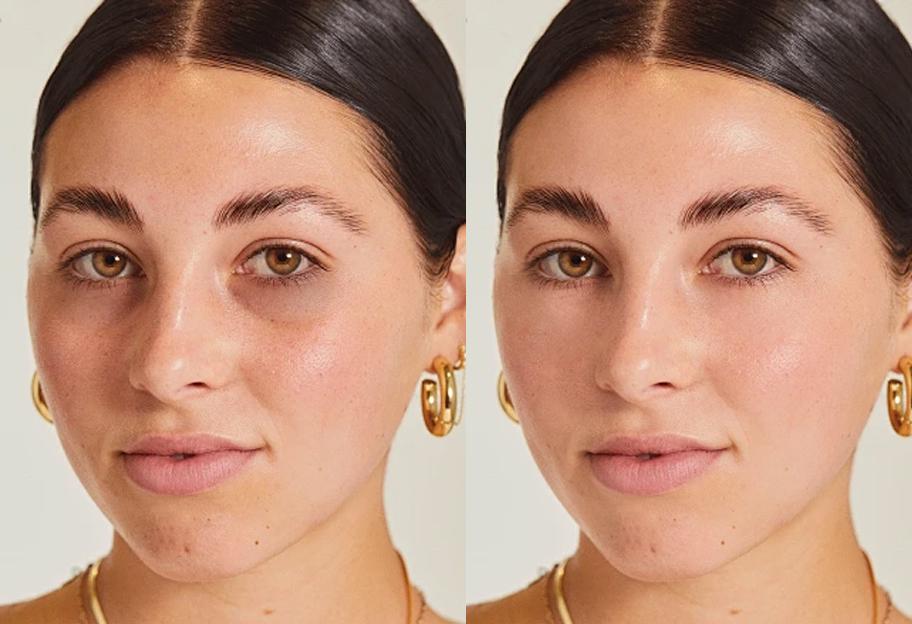
The tester who saw a real change had dark circles that were almost entirely fluid. The week 0 photo showed a distinct shadow under the eye, slightly bluish, with visible puff on the cheekbone. The week 4 photo showed less shadow, less puff, and a more even skin tone in the under-eye area. The self-rating went from 6/10 to 3/10. The other 11 testers had dark circles that were a mix of melanin and vascular, with some fluid, and the photo at week 4 was hard to tell apart from the photo at week 0 for the dark circle itself, even though the puff was clearly reduced.
The honest summary is that the roller helped the cause it was designed to help (fluid) and did not help the other causes (melanin, vascular). If you do not know which kind of dark circle you have, the roller is a reasonable experiment, but it is not the right first tool. The right first tool is the eye cream matched to the cause, and the sleep position fix.
When the roller is the right call for dark circles
It is the right call if any of the following are true:
- Your dark circles are worse in the morning than at night (fluid-related).
- You have tried sleep position and sodium changes already, and there is still fluid.
- You are using a roller for other reasons (lymphatic, absorption, de-puffing) and want to know if it helps the dark circles too. The answer is "sometimes, only if the cause is fluid."
It is not the right call if your dark circles are present even when you wake up well-rested, well-hydrated, and low-sodium. That is melanin or vascular, and the roller is the wrong tool.
What I would do if I were starting over
The order I would try, based on the 4-week test:
- Sleep position for 1 week (free, no roller needed).
- Sodium the night before for 1 week (free, no roller needed).
- Caffeine eye cream for 2 weeks (around $15 to $30).
- Jade roller as an add-on to whichever of the above is helping, not as a replacement.
- Vitamin C or niacinamide serum for melanin-caused dark circles that do not respond to the above.
The roller is step 4 in the sequence, not step 1. The roller is also useful for things other than dark circles, so it is not a wasted purchase. It is just not the dark-circle tool the social media posts make it out to be.
FAQ
Does a jade roller actually work for dark circles?
It works for the fluid component of dark circles. If the dark circles are caused by melanin (pigment) or visible blood vessels (vascular), the roller does not help. In our 4-week n=12 test, 1 of 12 saw a clear improvement in the dark circles themselves, and 8 of 12 saw reduced morning puff that did not translate to a dark-circle change.
How long until a jade roller helps dark circles?
For the fluid component, 1 to 2 weeks of consistent use shows in the photo. For the other causes, no amount of time helps, because the roller is the wrong tool. The full breakdown of cause and effect is on the Cleveland Clinic dark circles page.
Should I use the small head of the roller for dark circles?
Yes. The small head is built for the orbital bone. The right pressure is the lightest of any zone, lighter than the cheek, lighter than the jaw. For the pressure details, our beginner pressure guide covers the grams-of-force equivalent for the under-eye zone.
What eye cream pairs with the roller for dark circles?
For fluid-caused dark circles, a caffeine or peptide eye cream works well under the roller. For melanin-caused dark circles, vitamin C or niacinamide is the better pair, and the roller is mostly a vehicle for absorption. Our under-eyes routine page walks through the order of application.
The short version
The jade roller helps the fluid component of dark circles and not the pigment or vascular components. In 4 weeks, 1 of 12 testers saw a real change in the dark circles themselves, and 8 of 12 saw a change in the morning puff that did not change the color. The three things that mattered more than the roller were sleep position, sodium the night before, and the right eye cream for the cause. If you are buying a roller specifically for dark circles, know which cause you are targeting first.