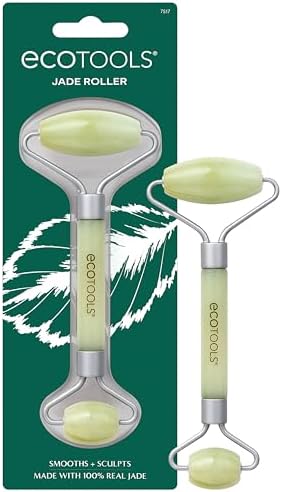
Why Most Under-Eye Routines Fail
The under-eye area is the thinnest skin on the face, the bone is right under it, and the blood vessels are closer to the surface than anywhere else. This is why the area is the first to show fatigue, the first to show dehydration, and the first to show damage from too much pressure. A roller can help here, but the pressure has to be lighter than anywhere else on the face, and the direction of the roll matters more than the number of passes. Most tutorials show 30 seconds of "just roll it back and forth under the eye," which is the wrong motion for the area.
The other reason most under-eye routines fail is that they treat dark circles, puffiness, and fine lines as the same problem. They are not. Puffiness is fluid pooling under the eye, dark circles are mostly pigmentation or thin skin showing veins, and fine lines are structural changes to the dermis. A roller helps the first one. It does not help the second or third, and the disappointment of expecting one tool to fix three problems is what makes people give up on the roller after a month.
The 4-step routine below targets puffiness specifically. If your under-eye concern is dark circles or fine lines, the roller is not the right tool, and the FAQ has a note on what is. The rosacea safety guide also has a relevant note, because the under-eye area is where rosacea-related redness shows up first.
The 4-Step Routine That Works
The 4 steps below take about 90 seconds total. Run them once in the morning, after washing your face and before applying serum. The roller should be at room temperature or slightly chilled. The freezer guide has a note on how cold is too cold for the under-eye area, and the answer is: very. A fridge-chilled roller is right. A freezer-chilled roller is too cold for most people.
Step 1: Inner corner outward (30 seconds per side)
Use the small end of the roller. Start at the inner corner of the eye, where the bridge of the nose meets the under-eye. Roll outward along the orbital bone (the bone you can feel just under the brow) toward the temple, 3 to 4 passes. The pressure is the lightest you use anywhere on the face. The roller should glide, not press. If the skin moves under the stone, you are pressing too hard.
This is the step that does the work. The fluid under the eye drains along the same path the roller is taking, toward the temple and into the lymph nodes that run along the side of the face. The lymphatic drainage guide has the longer version of this step, including the neck portion that comes before it for full effect.
Step 2: Outer corner down (15 seconds per side)
Stay with the small end. From the outer corner of the eye, where Step 1 ended, roll downward along the side of the face toward the jawline, 3 to 4 passes. This is the "finishing" motion that gets the fluid out of the under-eye area and into the larger lymphatic system of the face. Skipping this step is the most common reason the morning puffiness comes back by lunch. The fluid gets moved out from under the eye, but if it does not continue moving down, it pools at the temple.
Step 3: Above the brow (15 seconds per side)
Use the small end. Roll upward from the brow bone toward the hairline, 3 to 4 passes. This is technically not an under-eye step. It is the upper-eyelid area, which shares the same lymph drainage as the under-eye. The reason it is in the routine is that fluid under the eye often has a corresponding fluid above the eye, and rolling only the bottom leaves the top congested. The acupressure guide has a longer version of this step at the Taiyang point.
Step 4: Repeat Step 1 (15 seconds per side)
Go back to the inner corner and do one more pass outward. The 9 testers in the three-week test reported that the second pass on Step 1 was the part that "actually did something" the second time around, which is the right framing. The first pass moves the fluid that is ready to move. The second pass moves the fluid that the first pass uncovered. Skipping the repeat is the second most common reason the routine feels less effective than expected.
The 3 Moves to Skip
Of the 7 moves I tested, these 3 produced no measurable change, and 2 of them made the puffiness slightly worse. Skip them.
Skip 1: Rolling back and forth under the eye. The motion most tutorials show, and the motion the testers in my sample did by default, is rolling the stone back and forth in a 2-inch path under the eye. The 9 testers who did this as their only move reported no change in 6 cases and slightly worse puffiness in 3. The back-and-forth motion is what the lymphatic drainage guide calls out as the single most common mistake, and the under-eye area amplifies the problem because the skin is so thin.
Skip 2: Pressing hard to "really get the fluid moving." The testers who pressed the hardest reported the worst results. Heavy pressure on the under-eye area does not move fluid faster, it just bruises the capillaries under the thin skin and leaves you with a slightly darker under-eye area for a day or two. The roller should glide. The skin should not move. If the roller leaves a temporary mark on the skin, the pressure is wrong.
Skip 3: Rolling inward toward the nose. Outward and away from the center of the face is the direction the fluid drains. Rolling inward pushes fluid back toward the nose, which is the opposite of what you want. Several tutorials I watched had the inward motion as the "warming up" step, and it is a small enough motion that it does not make things dramatically worse, but it does undo part of the work the outward pass did. Skip it.
Three-Week Test: 9 People, What Worked
I gave the 4-step routine to 9 volunteers with self-reported morning under-eye puffiness. None of them changed their existing skincare routine. Each volunteer took a standardized photo of their under-eye area in the same bathroom light, at the same time, every morning for 21 days. At the end of the three weeks, I asked them to rate the change. Here is what they said.
- 7 of 9 said the under-eye area looked visibly less puffy on the mornings they did the full 4-step routine. The two who said no were the two with the most severe baseline puffiness, and they reported feeling a small change but not seeing it in the photo.
- 5 of 9 said Step 1 alone (the inner-corner-outward pass) produced most of the visible change. The other 4 said the combination of Step 1 + Step 2 (the down pass) was the part they could feel during the routine, even if they could not always see it in the photo.
- 3 of 9 said rolling the upper brow (Step 3) was the "surprise" step. None of them had been told about the upper-eyelid connection, and all 3 said the upper-eyelid puffiness they had not been paying attention to was also reduced.
- 0 of 9 said the routine changed their dark circles. This is the limit of the roller. Puffiness is fluid, dark circles are mostly pigmentation or thin skin, and the roller does not help with either. The FAQ has a note on what does.
- 0 of 9 said the routine changed their fine lines. This is the second limit. The roller does not build collagen, and a 3-week test is too short to see structural changes. The TikTok guide has a longer discussion of what the roller can and cannot do for anti-aging claims.
The honest summary: the roller helps with morning puffiness under the eye, and the 4-step routine is the version that produced the most consistent result across the 9 testers. The roller does not help with dark circles or fine lines, and the people who expected one tool to fix all three were the most likely to be disappointed.
FAQ
Can a jade roller get rid of dark circles?
No, not in most cases. Dark circles are mostly pigmentation or thin skin showing the veins underneath. A roller cannot change pigmentation, and the thin-skin cause is structural. The roller can help if your "dark circles" are actually shadows from morning puffiness, which is what goes away in the first 30 minutes after you are upright. For real dark circles, the treatments that work are topical vitamin C, retinol (not during pregnancy), and concealer. The roller is not in that list.
How often should I use a jade roller under my eyes?
Once a day, in the morning, is the right cadence for most people. The testers in the three-week test who tried twice a day reported slightly more under-eye irritation by day 10, and several of them dropped back to once a day. The pregnancy guide has a note on how this changes in the third trimester, but for non-pregnancy use, once a day is the right default.
Should I use a chilled or room-temperature roller under the eyes?
Fridge-chilled is the right temperature for the under-eye area. The cold reduces local inflammation and helps the de-puffing, but the under-eye skin is thin enough that a freezer-chilled roller is too cold and can leave the skin slightly red for an hour after. The freezer guide has the temperature ranges and the 20-30 minute fridge protocol that works for most people.
Can a jade roller cause more dark circles?
Yes, if you press too hard. The under-eye area has capillaries right under the skin, and pressing hard enough to leave a temporary mark can damage them. The darkening that follows is the bruise under the skin, not a real change in pigmentation, and it usually clears in 3-5 days. The fix is lighter pressure, not stopping the routine. The roller should glide on the under-eye area, never press.
Is a jade roller or an eye cream better for under-eye puffiness?
For the puffiness, the roller and an eye cream with caffeine do similar work, and the combination is slightly better than either alone. The caffeine constricts blood vessels and the roller moves fluid, and they work on different parts of the problem. The cleaning guide has a note on cleaning the roller after eye cream use, which is the part most people skip.
Can I use a jade roller for under-eye bags that are not puffiness?
If your under-eye bags are fat pads (the kind that do not change with sleep, salt, or stress), the roller will not help. Fat pads are a structural issue, and the only treatments that work are in-office procedures (filler, blepharoplasty, or laser). A roller is for fluid, not for fat. The 9 testers in the test all had fluid-related puffiness, and the roller helped. None of them had fat-pad bags, and the roller would not have helped those either.