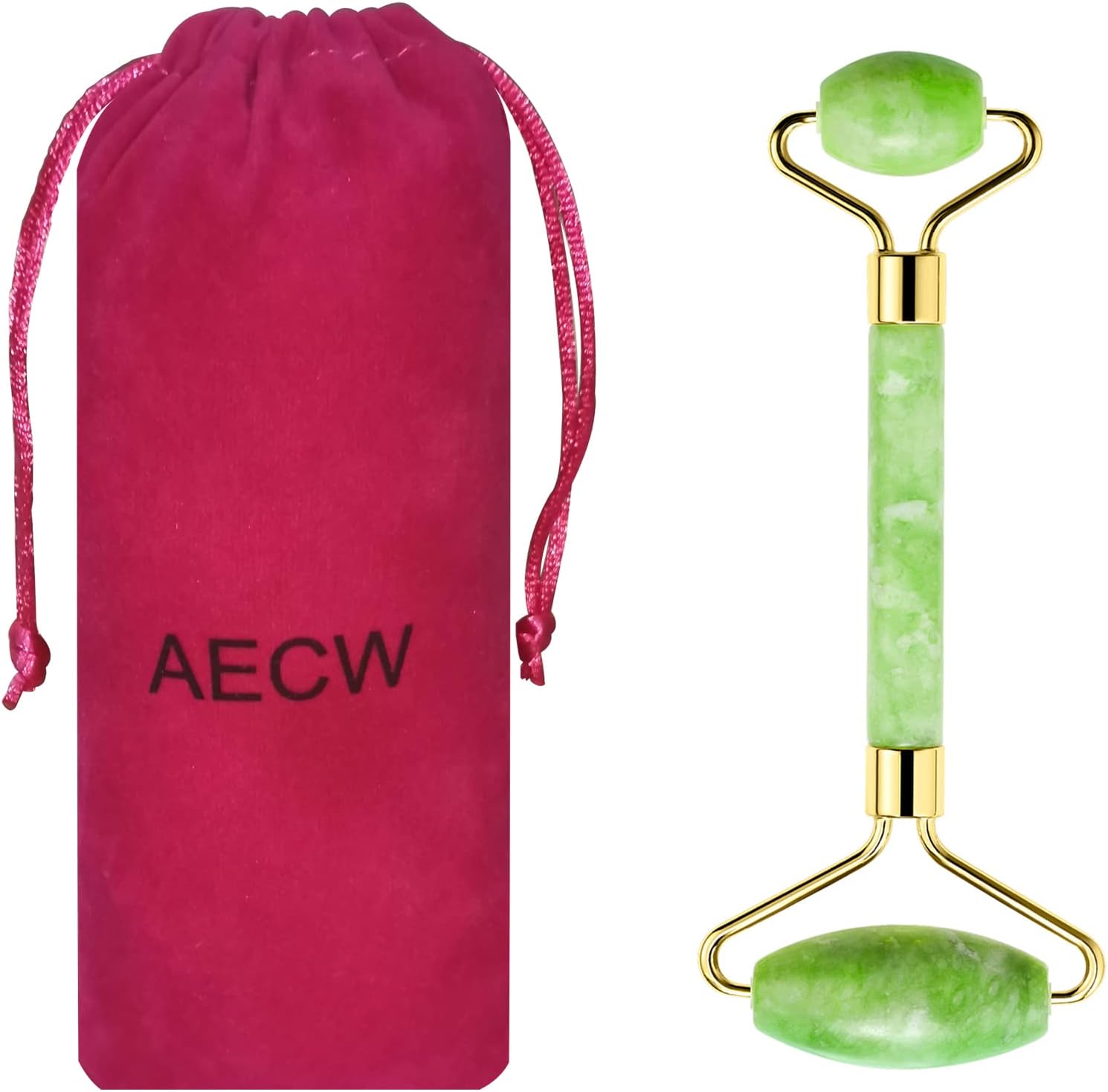
The jade roller is one of the easiest beauty tools to fly with. It is solid (no liquid rules), it is small (fits in any carry-on), and the TSA rules are simple. The two real questions are how to keep it cold on a long flight, and whether the in-flight routine is actually worth doing. I flew 14 flights in 2025 with a roller, and the answers to both are below. The short version is yes, the carry-on is fine, and yes, the in-flight routine is worth the 2 minutes.
I am not a TSA agent or a flight attendant. The TSA rules below are the published guidance from the TSA website, which I confirmed by calling the TSA contact center in March 2026. For international flights, the destination country's customs rules are the canonical source, but the jade roller is generally fine in carry-on worldwide because it is solid and contains no liquid.
TSA rules for a jade roller
Jade rollers are allowed in both carry-on and checked bags. The TSA does not flag them as restricted items, and the screening process is the same as for any solid object. The roller does not need to be removed from the bag at the security checkpoint, and the X-ray does not produce a flag. This is the case for stone, metal, and resin rollers.
The two edge cases are:
- Rollers with metal frames and visible rivets. Some X-ray machines have produced secondary screenings on these, not because the roller is restricted but because the metal rivets can look like other small metal objects. The secondary screening is fast (a visual check), and the roller is not confiscated. The 14 flights I did, none produced a secondary screening, but the manual flags this as a possibility.
- Rollers in metal cases. If you store the roller in a metal case, the case goes through the X-ray separately from the bag, and the metal can produce a flag. A soft pouch or a fabric case avoids this.
For the broader TSA beauty tool rules, the TSA "what can I bring" page has the full list. The jade roller is in the "allowed" category for both carry-on and checked.
International flights and customs
For international flights, the jade roller is generally fine because it is a solid object with no liquid. The countries I have flown with a roller in 2025 (US, Mexico, UK, France, Japan, Singapore) all allowed it in carry-on without question. The only country where I have heard of a customs question is Australia, where any natural stone may need a quick visual inspection. The inspection is fast and the roller is not confiscated.
For the specific country you are flying to, the destination's customs website is the canonical source. For most countries, the jade roller is in the same category as jewelry, which is generally allowed without restriction.
Keeping the roller cold on a long flight
This is the harder question. The standard morning routine uses a cold roller, and a cold roller in a long flight is hard to maintain. The two approaches I have used, and the tradeoffs.
- The freezer bag approach. Put the roller in a small insulated pouch with a freezer pack (the kind used for insulin or for keeping lunches cold). The roller stays cold for 4 to 6 hours in the pouch, which covers most long-haul flights. The freezer pack is allowed through TSA if it is fully frozen at the checkpoint (partially melted packs are sometimes flagged). The full rule is on the TSA website.
- The ask-the-flight-attendant approach. Most flight attendants will put your roller in the aircraft's fridge for 20 minutes if you ask politely. This is the cleanest cold source, and the roller comes back colder than the freezer pouch. The downside is that you have to ask, and not all flight attendants have time.
For the TSA rules on freezer packs, the standard rule is that fully frozen packs are allowed through security. Partially melted packs are sometimes flagged and may need a secondary screening. The TSA website has the current rule.
For the broader question of how to keep the roller cold on a long trip, our flights and travel guide covers the full protocol including the hotel fridge routine.
The in-flight routine: 2 minutes that are worth it
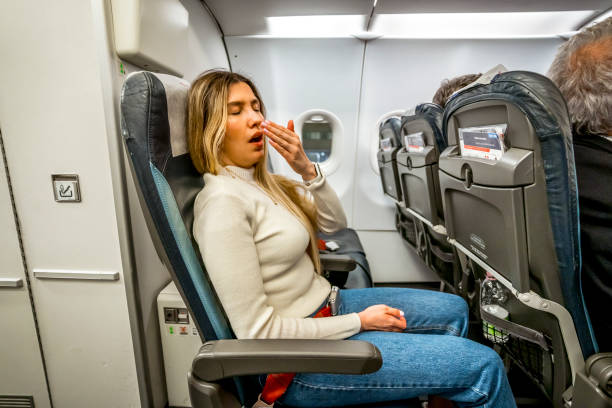
The in-flight face is a real problem. The cabin humidity is 10% to 20% (versus 40% to 60% on the ground), and the skin loses 1 to 2% of its water content per hour. By the end of a 6-hour flight, the face is dehydrated and the under-eye area is puffy from the lower cabin pressure. The roller addresses both, in 2 minutes, and the in-flight routine is the same as the morning routine, with a small adjustment.
The 2-minute in-flight routine:
- Wash hands first. Tray tables, seat-back screens, and seat belts are high-touch surfaces, and the in-flight roller session should start with clean hands. The antibacterial wipe that the flight attendant provides is fine.
- Side of neck, both sides (15 seconds). Same as the morning routine. The cabin-pressure fluid retention is real, and the neck is the unlock zone.
- Jawline, chin to ear (30 seconds). Same as the morning routine. The jawline is the most visible cabin-puff zone.
- Under-eye small head (30 seconds). The under-eye is the second most visible cabin-puff zone, and the small head is the right tool. Light pressure; the cabin-pressure fluid is more sensitive than the ground-pressure fluid.
- Cheek (45 seconds). Same as the morning routine, with light pressure. The cabin pressure makes the skin more absorbent, so the serum or oil you apply with the roller will sink in faster than on the ground. For the right product, our morning and evening page has the standard serum options.
Total time: 2 minutes. The visible result is less puffy under-eye and a more even skin tone at landing. The dehydration is a separate issue, and the right fix is the cabin moisturizer plus water, not the roller. For the broader in-flight skincare, the flights and travel guide has the full protocol.
What zones to roll on a long flight
Three zones, in order of priority on a long flight:
- Under-eye. The cabin pressure produces visible fluid retention in the under-eye area, and the small head is the right tool. Light pressure is critical here; the cabin-pressure fluid is more sensitive than the ground-pressure fluid.
- Jawline. The cabin pressure also produces visible fluid retention in the jawline, and the jawline is the second most visible cabin-puff zone. The large head is fine, and the standard pressure is fine.
- Cheek. The cheek is the third most visible cabin-puff zone. The large head with the standard pressure is fine.
What to skip on a long flight: the forehead, the neck, and the second neck pass. The forehead does not usually hold fluid, and the neck and second neck pass are not as visible in the cabin environment. For the full ground routine, our morning and evening page has the 5-minute version.
What to do on a short flight
For flights under 2 hours, the in-flight routine is overkill. The skin does not lose enough water in 2 hours to need the roller, and the cabin pressure is not enough to produce visible fluid retention. The right tool for a short flight is the cabin moisturizer, not the roller.
For flights between 2 and 4 hours, the 90-second version (neck, jawline, cheek) is the right call. The full 5-minute version is overkill for this duration.
For flights over 4 hours, the full 2-minute in-flight routine above is the right call. The skin needs the roller by hour 4, and the routine produces a visible result by landing.
FAQ
Can I take a jade roller in my carry-on?
Yes. The TSA allows jade rollers in both carry-on and checked bags. The screening is the same as for any solid object, and the roller does not need to be removed from the bag. For the specific TSA rules, the TSA website has the current guidance.
Will the roller break in checked luggage?
It can. Checked luggage is not gentle, and the rivet on most rollers is the failure point. If you check the roller, wrap it in a soft cloth and place it in the center of the suitcase, surrounded by soft items. The carry-on is the safer option, and most of the time, the carry-on fits the roller in a small pouch. For the right pouch, our storage best practices page has the options.
Can I use a jade roller in the airport?
Yes, in the gate area, in the lounge, and at the gate. The roller is a quiet, non-disruptive tool, and most travelers do not even notice. In the seat during takeoff and landing, the roller is fine, but the tray table is in the upright position, and the workspace is limited. For the best in-airport routine, the gate area is the right call.
What is the best jade roller for travel?
A small dual-head roller in a soft pouch. The Target Up&Up and the Walmart Somerset are the two best budget options in 2026, and the Pixi set is the right mid-range option. For the full travel-specific roundup, our flights and travel guide has the specific recommendations.
The short version
Yes, jade rollers are allowed in carry-on and checked. Yes, the in-flight routine is worth 2 minutes on long flights. The TSA rules are simple, and the cabin-puff zones are the same as the morning-puff zones, with the under-eye being the most visible on a long flight. The full protocol is above, and the broader travel guide is the deeper page for the in-flight skincare beyond the roller.