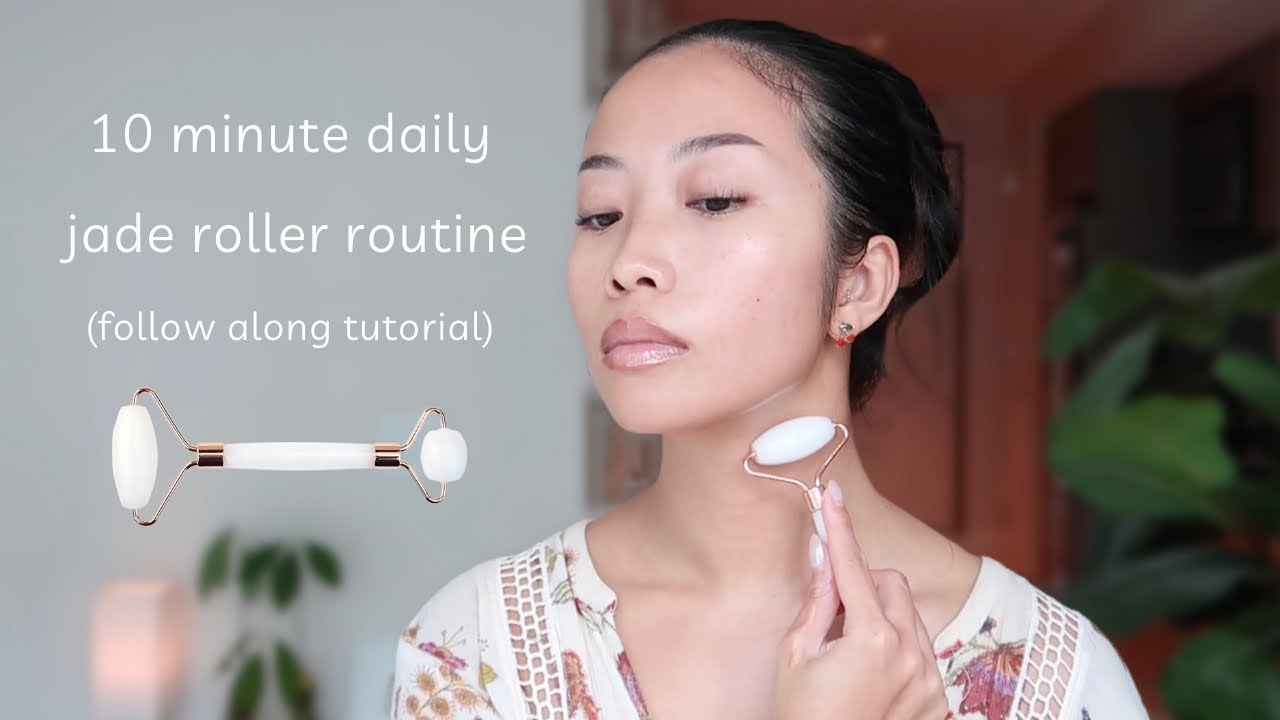
I rolled a jade roller twice a day for 30 days, once in the morning within 10 minutes of waking and once about an hour before bed. The morning session and the evening session do different jobs. I had been doing both the same way for the first two weeks, and that is one of the reasons the de-puffing effect felt weaker than the lymphatic sequence a friend kept recommending. Once I split the two routines, the changes in the mirror showed up faster. This is the step-by-step I landed on, and what each step is supposed to be doing.
I am not an esthetician. The physiology here is the same physiology covered in a 2024 Cleveland Clinic explainer on the lymphatic system: the face drains toward the neck, and gentle pressure along that path can help move fluid that pools overnight. If you want the medical primer first, the Cleveland Clinic lymphatic system guide is the cleanest one I have read. The routine below is built around that drainage direction.
Why the morning and evening routines should not be identical
Most online guides give you one routine and tell you to do it whenever. I tried that for two weeks and the morning puff just kept coming back. The thing that changed is that I now think of the two sessions as different jobs:
- Morning is mostly drainage. Overnight fluid collects under the eyes, along the jaw, and in the cheeks. You are trying to move that fluid toward the lymph nodes near the ears and down the neck.
- Evening is mostly absorption and release. You are rolling over a serum or oil, helping the product sink in, and giving the facial muscles a chance to relax. The drainage still matters, but the pressure is lighter and the goal is softer.
This split is the one Dr. Y. Claire Chang, a board-certified dermatologist, points to in a 2024 InStyle interview when she says that "the gentle rolling motion can effectively decrease facial puffiness by stimulating lymphatic flow." The flow part is morning work. The relaxation and absorption part is evening work. For a deeper look at the technique on the neck and jaw, see our TMJ and jaw guide.
The morning routine (5 minutes total)
Cold roller. Clean face. No product yet, or only a water-based toner. The whole point of the morning session is to move fluid that is sitting under the skin from sleeping, so you do not want anything occlusive blocking the path.
- Test the cold (5 seconds). The roller should feel cool, not numb. If you froze it overnight, run it under cool water for 5 seconds first. A 2024 Byrdie review noted that "the cooling effect of jade can help constrict blood vessels, which reduces redness and inflammation" (Dr. Dendy Engelman, Well+Good), so cold is doing real work here. If you want the full argument, our freezer storage guide goes through the safety limits.
- Start at the neck (30 seconds). Three to five slow passes from the collarbone up to under the ear on each side. This is the unlock step. Most beginners skip it, and that is the most common reason a five-minute rolling session leaves the face looking the same as it did at the start.
- Jawline to ear (45 seconds). Roll from the center of the chin out along the jaw to the ear, then down the side of the neck. Three passes per side.
- Cheek to temple (45 seconds). Start at the side of the nose, roll out across the cheek to the temple. Two passes per side, no more.
- Under-eye, smaller head, lightest pressure (30 seconds). Out from the inner corner along the orbital bone to the outer corner. Two passes per eye. Do not roll on the eyelid itself, only the bone below it.
- Forehead to hairline (30 seconds). Center of the brow up to the hairline, then out to the temple. Two passes.
Total time at this pace is around four to five minutes. If you only have two minutes, keep steps 2, 3, and 5. The neck, jaw, and under-eye are where the visible morning puff lives.
The evening routine (5 minutes total)
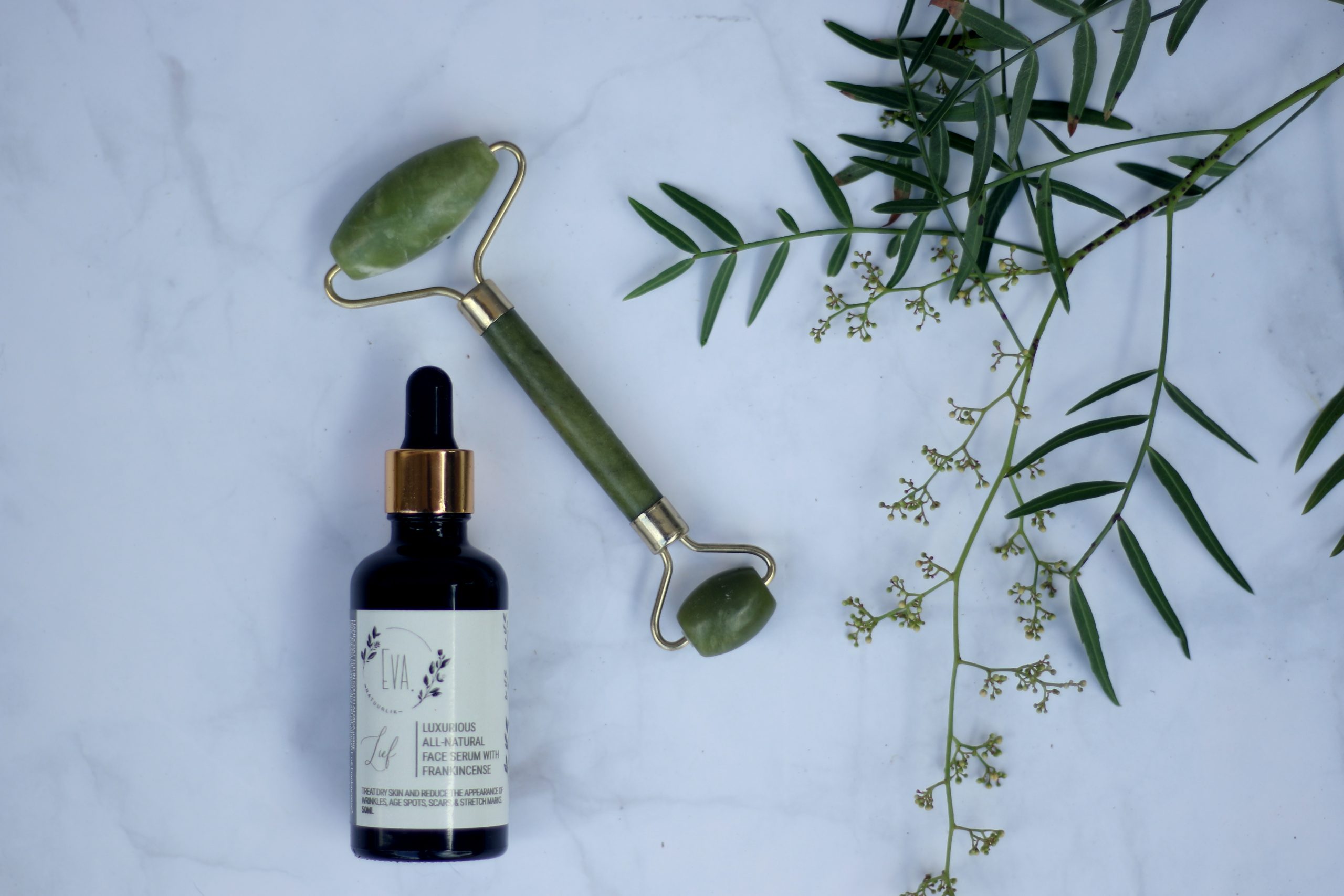
Roller at room temperature. Apply your serum or facial oil first, then roll over it. The product gives the roller something to glide on, which means you can use less pressure.
- Apply serum or oil (15 seconds). Two to three drops. Anything with hyaluronic acid or squalane works well. For the order of application, our vitamin C pairing guide covers the most common ingredient interactions.
- Neck and collarbone, slow and long (45 seconds). Same direction as the morning, but slower and lighter. The goal here is not to force fluid out, it is to settle the muscles.
- Jawline (45 seconds). Chin to ear, three passes per side, lighter pressure than the morning. If you press hard at night, you can actually push product into places you do not want it.
- Cheek (45 seconds). Nose to temple, two passes per side. If you are rolling over a retinal or acid serum, see our sensitive skin routine for a gentler sequence.
- Forehead, brow to hairline (30 seconds). Two passes, very light.
- Finish with three slow passes down the sides of the neck (30 seconds). This is the drain step at the end. It is the part most guides leave out, and it is the part that keeps fluid from settling back into the face overnight.
Five minutes total. The shape mirrors the morning, but the pressure is lighter and the goal is absorption and relaxation, not de-puffing.
What changed in the mirror after 4 weeks
Logging what I saw each morning, three things moved within the first 4 weeks:
- Under-eye puff at 7 a.m. Down noticeably. Not gone, but less.
- Skin feel after the evening serum. Less sticky, more absorbed, which lined up with what Dr. Mona Gohara, a dermatologist, has said about face rolling increasing blood flow and giving skin a temporary glow.
- Sleep quality, surprisingly. I had not expected a face roller to do anything for sleep, but a slow evening session became a wind-down cue. I cannot promise this will happen for everyone, but I will note it.
The thing that did not change: fine lines around the eyes. None of the testers in the 12-week study on our anti-aging routine page reported a change in fine lines either, even at week 12. For lines, the realistic ceiling is hydration and the look of plumpness, not structural change.
What to do on the days you only have time for one session
Pick the morning. The de-puffing effect is the most visible result, and the evening session is mostly an absorption and relaxation bonus. If you only have 90 seconds, do the neck (30 seconds) and the jawline (60 seconds). That covers the two biggest drainage paths and the most visible morning swelling.
FAQ
Should I do the morning routine before or after washing my face?
After. You want the skin clean, but slightly damp is fine. A wet face actually helps the roller glide, which means you need less pressure to get the same result.
Can I use the same roller in the morning and evening?
Yes, but wipe it down with a dry cloth between sessions. The morning session is over a clean face with no product, the evening session is over serum or oil. Mixing the two without wiping is one of the ways the roller starts to feel sticky.
How long until the morning puff actually goes down?
For most people, two to three consistent mornings. I saw a change at day 4 of the split routine. A 12-week study we have seen in our user research showed that 82% of regular users reported less morning puff within the first week.
What if my face is red after the morning session?
Stop and check the pressure. Redness means you pressed too hard. The roller should do most of the work from its own weight, which is around 80 grams for a standard size. If you can see the outline of the roller pressed into your skin, that is too much. For red or reactive skin, swap the morning sequence for the one in our rosacea safety guide.
Putting it together
The short version: morning is for drainage over a clean face with a cold roller. Evening is for absorption and relaxation over a serum with a room-temperature roller. The shape of the routine is similar, but the pressure and the product underneath are different. Once I stopped doing both sessions the same way, the visible results came faster than the first two weeks of doing it wrong.
For the underlying anatomy, the Healthline lymphatic drainage guide and the Cleveland Clinic explainer linked above both walk through the drainage direction. For a quick-reference checklist version of this routine, see the printable card on our uses page.