Baimei Jade Roller Review: Honest Testing After 6 Weeks (2026)
Updated 2026 | After 6 weeks of daily use, here is our honest Baimei jade roller review covering real results, material quality, pros, cons, and whether it is worth buying in 2026.
Disclaimer
This guide is for general educational purposes only and does not constitute professional skincare or medical advice. Always consult a licensed dermatologist or skincare professional before using any new tool or technique on your skin.
Published on May 14, 2026 | 8 min read
Scrolling through Amazon's facial tool section, one name keeps showing up everywhere: BAIMEI. With over 60,000 ratings and a near-perfect star average, their jade roller and gua sha set has become one of the best-selling facial massage tools online. But we've all been burned by hyped products with inflated reviews before. So I ordered one, used it consistently for six weeks, and kept a detailed log of what actually happened — the good, the underwhelming, and the stuff the product listing conveniently leaves out.
In This Article
First Impressions Out of the Box
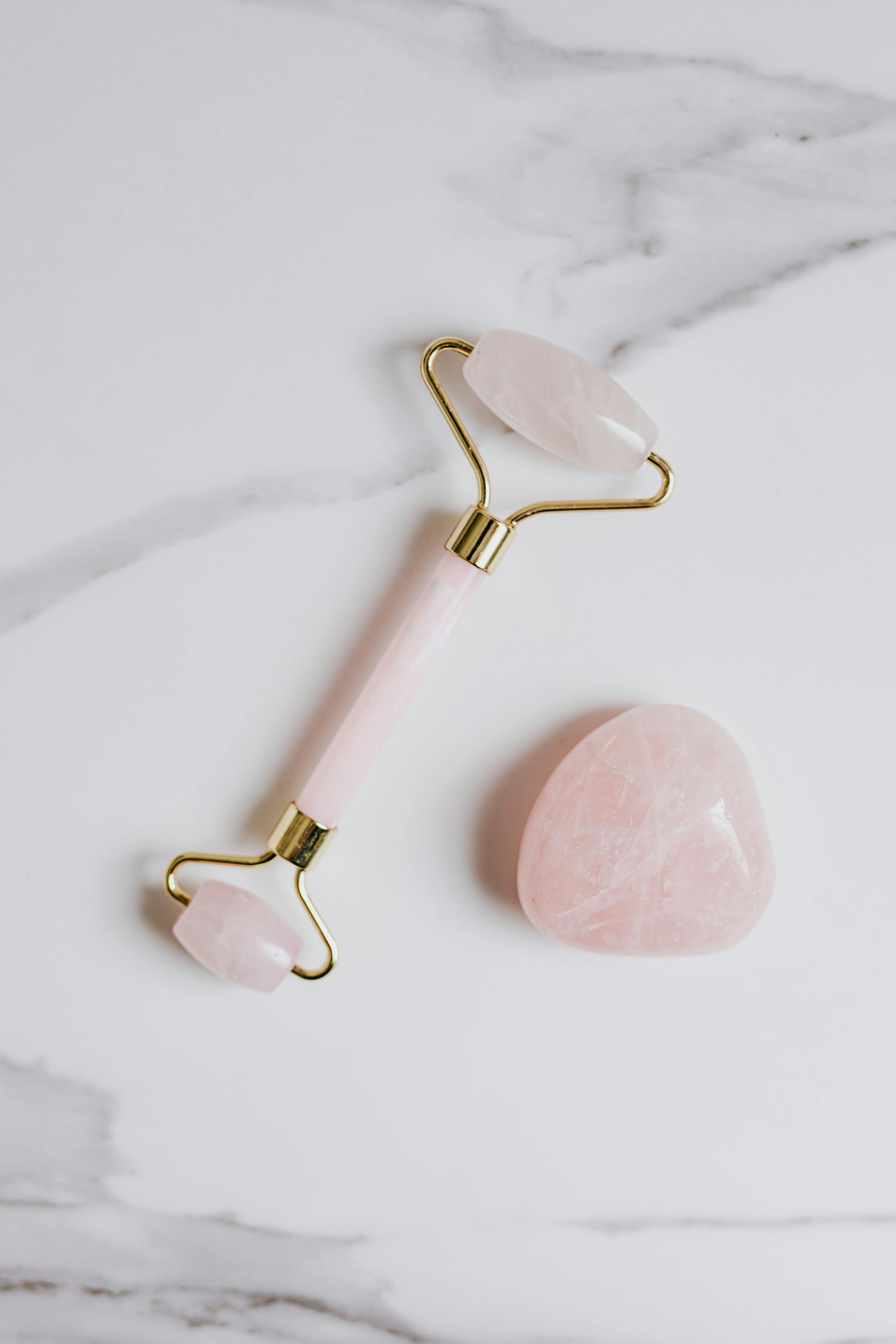
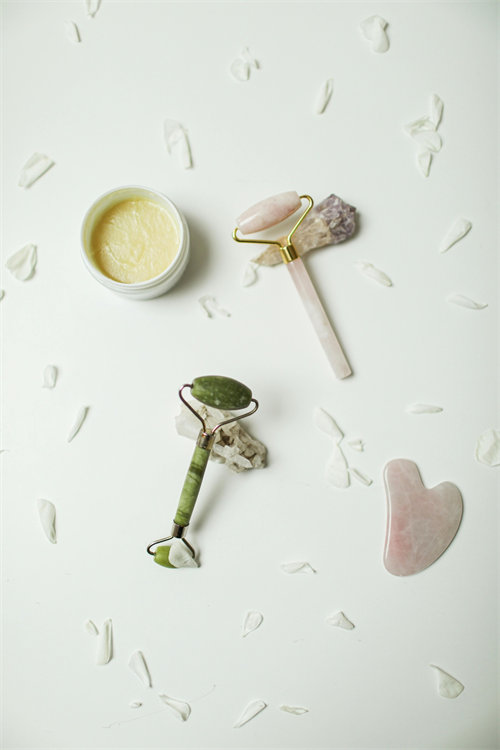
The BAIMEI set arrives in a slim, magnetically-closing gift box that feels more premium than the $12-15 price tag would suggest. Inside, you get the dual-ended jade roller, a heart-shaped gua sha stone, and a small velvet storage pouch. No instruction manual, which is a notable omission for first-time users.
The roller itself has a nice weight to it — not so heavy that it feels like a weapon, but substantial enough that it doesn't feel like a plastic toy. The jade stone has a pale green color with some natural veining, though it's noticeably lighter and more uniform than what you'd see in higher-end nephrite pieces. The larger roller end measures roughly 1.6 inches and the smaller end about 0.8 inches, which covers the standard facial zones well.
The gua sha board is heart-shaped with smooth edges and no sharp corners — a good sign for beginners who worry about dragging on delicate skin. Both pieces feel cool to the touch right out of the box, which is expected from jade.
What You're Actually Getting: Specs Breakdown
Here are the key specs, pulled from the product listing and my own measurements:
| Feature | BAIMEI IcyMe Jade Roller |
|---|---|
| Price | $12-15 (varies by color/Amazon listing) |
| Material | Grade A natural jade (per BAIMEI) |
| Design | Dual-ended: large (1.6") + small (0.8") |
| Frame | Gold-tone stainless steel with nonslip grip |
| Weight | 3.5 oz (100g) |
| Extras | Heart-shaped gua sha, velvet pouch, gift box |
| Amazon rating | 4.6 stars from 60,000+ ratings |
| Warranty | 90-day replacement guarantee |
For context: Most budget jade rollers in this price range use glass or dyed stone. BAIMEI claims natural jade, which we'll examine more closely later. If you want to see how it stacks up against other affordable options, check out our roundup of jade rollers under $20.
Week-by-Week Results: What Actually Happened
I used the BAIMEI roller 5 days per week, always over a hyaluronic acid serum, for 3-5 minutes per session. Here's the unfiltered timeline:
Weeks 1-2: Immediate depuffing, nothing permanent. The first few sessions produced the same instant depuffing you'd get from any facial roller — reduced morning puffiness around the eyes and cheeks, slightly brighter skin tone. The stone glides smoothly over serum with no squeaking. By the end of week two, I noticed the depuffing seemed to last a bit longer into the day, but that could just be my lymphatic system adapting to the routine.
Weeks 3-4: Subtle but real changes. The skin under my eyes looked less baggy in general, not just right after rolling. My jawline area felt less puffy to the touch. The gua sha tool became my favorite part of the set — it's more effective than the roller for targeting specific areas like the brow bone and along the jaw. The roller is better for overall lymphatic drainage; the gua sha is better for sculpting.
Weeks 5-6: Plateau with one pleasant surprise. The visible improvements stabilized around week 4. No dramatic new changes in weeks 5-6. However, I noticed the routine itself had become genuinely relaxing — 5 minutes of rolling before bed became something I looked forward to, and I was sleeping better on nights I used it. That's a real benefit, even if it doesn't show up in a before-and-after photo.
The Honest Pros and Cons
After six weeks, here's my unfiltered assessment:
Pros:
- Genuine value for money. At $12-15 with a gua sha tool included, the BAIMEI set offers one of the best price-to-quality ratios in the budget facial tool market.
- Smooth, quiet operation. No squeaking, no scratching, no wobbling. The roller spins freely on its frame and glides easily over product.
- The gua sha tool is genuinely useful. It's not a throwaway add-on. The heart shape fits facial contours well and the edges are smooth enough for daily use.
- Good build quality for the price. The stainless steel frame feels solid, the jade is polished without rough patches, and the overall construction doesn't feel like it'll fall apart after a month.
- Effective for its purpose. If your goal is reducing puffiness and improving product absorption, it does exactly that — just like any decent facial roller.
Cons:
- Not real nephrite jade. Despite BAIMEI's "Grade A natural jade" claim, the stone's light, uniform color and lack of temperature retention suggest it's either dyed jadeite or a jade-quartz composite. Real nephrite jade feels distinctly colder and stays cold significantly longer than this stone does. It works fine as a massage tool, but don't buy it expecting genuine nephrite.
- No instructions included. A first-time user would have no idea how to use the roller or gua sha correctly. The technique matters — wrong rolling direction can actually worsen puffiness.
- The frame can loosen over time. Around week 5, I noticed the smaller roller end had a tiny bit of wobble. It still works fine, but it suggests the adhesive holding the stone to the frame may degrade with extended use.
- Limited long-term differentiation. If you already own a facial roller from another brand, this one won't do anything your current one can't. Long-term jade roller results come from consistency, not from which specific roller you use.
How It Compares to Other Budget Rollers
I've tested several rollers in the under-$20 range. Here's how BAIMEI stacks up against the two most common alternatives:
| Feature | BAIMEI IcyMe | EcoTools Jade Roller | Generic $8 Roller |
|---|---|---|---|
| Price | $12-15 | $10-12 | $7-9 |
| Includes gua sha | Yes | No | Sometimes |
| Stone quality | Good polish, may not be real nephrite | Adequate, clearly mass-produced | Variable, often dyed glass |
| Frame quality | Stainless steel, minor wobble over time | Plastic frame, feels less durable | Thin metal, prone to loosening |
| Glide quality | Excellent with serum | Good with serum | Often squeaks on dry skin |
| Gift packaging | Magnetic box, very presentable | Cardboard box, basic | Plastic sleeve, minimal |
The BAIMEI wins on overall package — the gua sha inclusion, better frame material, and gift-ready packaging make it the clear pick in this price tier. But if you already own a roller you're happy with, there's no compelling reason to switch.
Is It Real Jade? The Quality Question
This is the question that matters most to repeat buyers and gift shoppers. The short answer: it's probably jadeite or a jade composite, not nephrite. Here's how to tell:
The temperature test. Real nephrite jade stays cold for a noticeably long time — you can feel the coolness for 30+ seconds after picking it up. The BAIMEI stone warms up within about 10 seconds of handling. This suggests lower thermal conductivity than genuine nephrite, which is consistent with either lower-grade jadeite or treated stone.
The scratch test. Genuine nephrite has a Mohs hardness of 6-6.5 and can scratch glass. The BAIMEI stone is hard enough to scratch glass, which rules out cheap glass or plastic fakes. But jadeite is also hard enough to scratch glass, so this test doesn't differentiate.
The visual test. Real nephrite has a slightly translucent, fibrous quality with natural inclusions. The BAIMEI stone is more opaque with very uniform color — it looks good, but in a way that's almost too consistent for natural stone.
Bottom line on material: The BAIMEI roller is almost certainly some type of jade or jade-like stone, but the evidence suggests it's not premium nephrite. For a $12 tool, this is perfectly acceptable. It performs well as a facial massager regardless of the exact mineral composition. If genuine nephrite matters to you, you'll need to spend $30-50+ on a specialized brand.
Who Should (and Shouldn't) Buy It
Buy it if: You're new to facial rolling and want an affordable, complete starter set. The inclusion of the gua sha tool makes this a genuinely good entry point. It's also a solid gift choice — the packaging looks expensive and the set feels complete.
Skip it if: You already own a facial roller you're satisfied with, or if genuine nephrite jade is important to you. You should also skip it if you're hoping for dramatic anti-aging results — no roller at any price point can deliver that. For a broader look at options across all price ranges, our top 10 jade rollers of 2026 comparison covers the full spectrum.

One last note on care: Whatever roller you choose, cleaning it properly matters more than which brand you buy. A dirty roller transfers bacteria and can cause the exact breakouts you're trying to prevent. Wash with warm water and mild soap after every use — it takes 30 seconds and makes a real difference in your results.