How to Boost Serum Absorption with a Jade Roller: The Right Order Matters
Updated 2026 | The order you apply serum and jade roll matters more than you think. This guide covers exactly which serums work best, when to roll, and how temperature affects absorption.
Disclaimer
This guide is for general educational purposes only and does not constitute professional skincare or medical advice. Always consult a licensed dermatologist or skincare professional before using any new tool or technique on your skin.
Published on May 16, 2026 | 7 min read
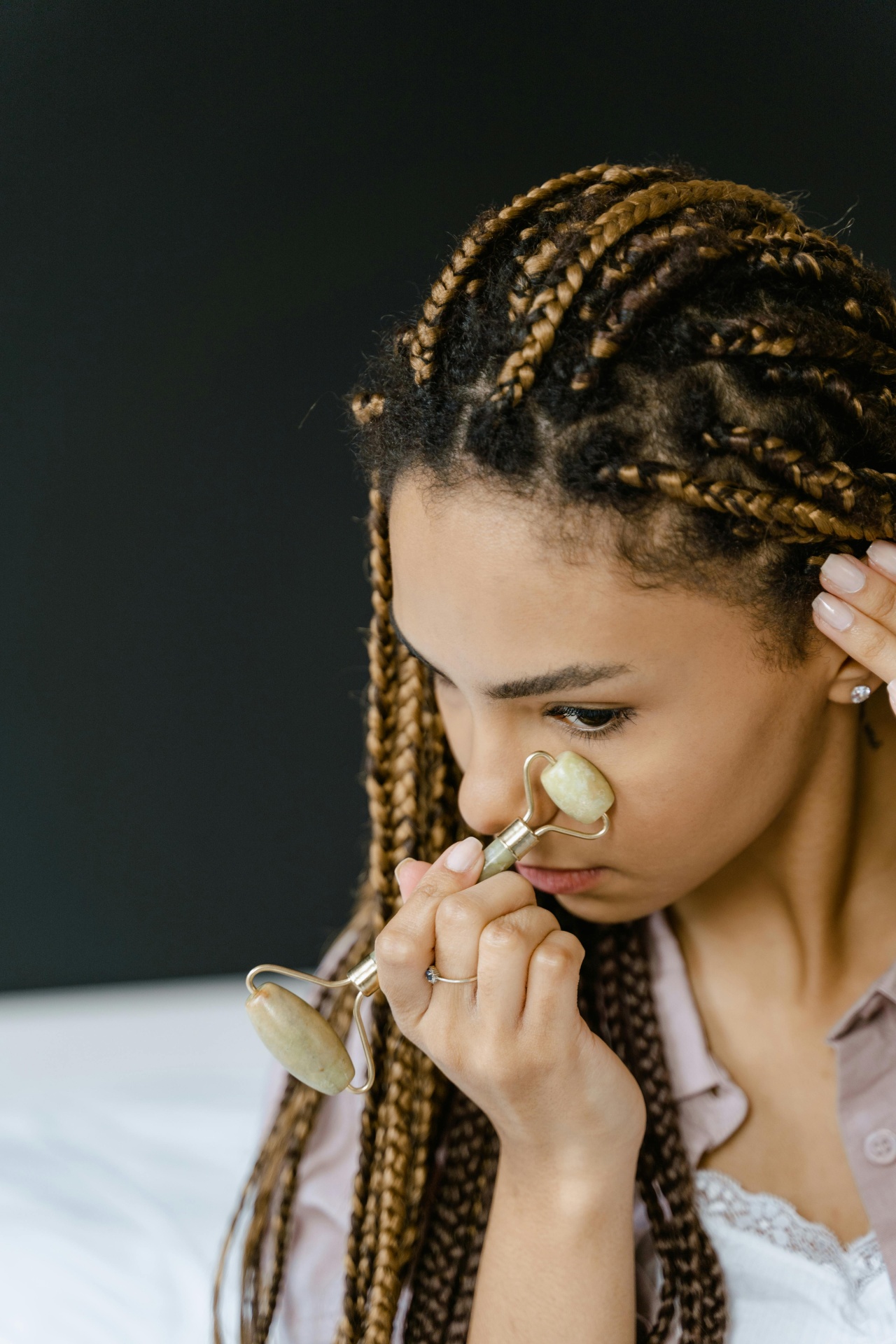
Picture this: you've just spent $45 on a concentrated vitamin C serum. You apply it generously, then grab your jade roller and start gliding it across your face. Except... a few minutes in, you notice something uncomfortable. The serum is getting pushed and dragged across your skin, half of it is piling up at your hairline, and the rest is basically being smeared rather than absorbed. You look in the mirror wondering why your face feels sticky but not actually hydrated.
Sound familiar? The mistake most people make isn't the product — it's the order. More serum does not equal more absorption. In fact, wrong technique can actively reduce how much product actually makes it into your skin. And the order in which you apply serum and use your jade roller is one of the most commonly overlooked factors in whether your skincare actually works.
What We'll Cover
Why Jade Rolling Boosts Serum Absorption (The Science)
Before getting into the order, it helps to understand why jade rolling affects absorption at all. Three mechanisms are at play:
1. Temporary Pore Dilation from Mechanical Pressure
When you apply gentle pressure to skin with a jade roller, you temporarily compress the skin's surface. Studies on transdermal drug delivery have shown that consistent, gentle mechanical pressure can increase skin permeability by temporarily disrupting the stratum corneum's barrier function. This effect lasts minutes, not hours — which is why timing matters.
2. Increased Microcirculation
The rolling motion increases blood flow to the treated area. More blood flow means more circulation, which means active ingredients are transported to living skin cells (keratinocytes in the epidermis) more efficiently. This doesn't directly drive product deeper, but it ensures the ingredients that do penetrate get to where they need to go.
3. Improved Lymphatic Flow
Rolling also stimulates superficial lymphatic drainage, which clears cellular debris and metabolic waste from the skin. Cleaner tissue means less resistance for active ingredients to penetrate. Our lymphatic drainage guide covers this mechanism in depth.
The Golden Order: Serum First or Roller First?
After testing this extensively with different serum types and skin conditions, here's the clear answer: apply serum first, then roll. But there's nuance depending on the serum type. Our serum combination guide covers more pairing strategies if you want the full picture.
The Standard Protocol
- Clean face — always start with a clean canvas
- Apply serum to damp skin — 3-5 drops, spread evenly. Don't massage in yet.
- Wait 30 seconds — let the serum begin to absorb and settle
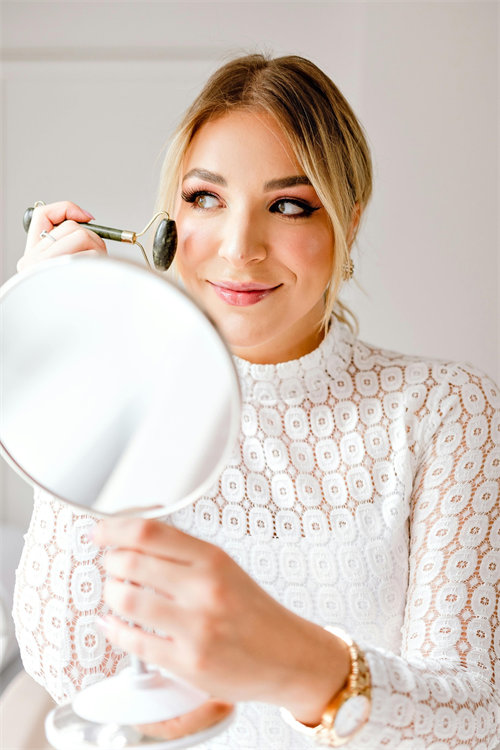
- Roll gently — use light pressure, roll outward and upward from center of face
- Follow with moisturizer or SPF — lock everything in
The 30-second wait is important: you want the serum to be on the surface (not fully absorbed) when you roll. A fully absorbed serum has nowhere to go. A serum that's still on the surface gets pushed into the skin by the rolling action.
The counterintuitive insight: You don't need a thick layer of serum. More product doesn't equal better results — it just means more gets pushed off your face. 3-5 drops spread evenly is sufficient for most serums. If you're using enough that it's pooling or dripping, you're wasting product.
Best Serum Types for Jade Rolling (Ranked)
Not all serums work equally well with jade rolling. Here's how different types rank:
| Serum Type | Rolling Compatibility | Best Technique | Notes |
|---|---|---|---|
| Hyaluronic Acid (HA) | Excellent | Apply to DAMP skin, then roll | HA binds to water — damp skin gives it more to bind with. Rolling drives the HA-water complex deeper. |
| Vitamin C (L-Ascorbic Acid) | Excellent | Apply first, roll gently | Increases penetration = more brightening. Use pH 2-3.5 serums on alternate nights if combined with rolling daily. |
| Niacinamide | Excellent | Roll freely, can use daily | Very gentle, good barrier support. Works at any pH. Rolling boosts absorption of the B3 compound. |
| Centella Asiatica (Cica) | Good | Apply first, roll lightly | Calming serums work well with rolling for inflammation. Ideal after breakouts or irritation. |
| Peptide Serums | Good | Apply first, roll gently | Large molecules — penetration is limited regardless. Rolling helps marginally. Use as part of a layered routine. |
| Retinol / Retinoids | Caution | Use on non-rolling nights OR roll WITHOUT other actives | Rolling + strong actives can cause irritation. Alternate rolling nights with retinol nights. |
| Salicylic Acid (BHA) | Use caution | Do NOT roll over BHA-serum-treated skin | BHA exfoliates by dissolving in oil — rolling disrupts this process. Apply BHA separately, not before rolling. |
| Azelaic Acid | Moderate | Apply, wait 2 min, then roll | Wait time is important — azelaic acid needs time to lower skin pH before rolling disrupts it. |
Cold vs. Room Temperature: Does Temperature Matter?
Yes — temperature significantly affects how your skin and serum respond to jade rolling.
Cold Jade Roller (Refrigerated)
A cold stone causes superficial vasoconstriction (blood vessel tightening). This means the skin's surface is temporarily less permeable — which sounds bad for absorption, but actually has a clever secondary effect. The vasoconstriction forces fluid deeper into tissues. When combined with rolling pressure, this can drive serum deeper than room-temperature rolling would.
Best for: oil-based serums, facial oils, thick textures. The cold also helps seal the skin afterward, trapping the product.
Room-Temperature Jade Roller
Room-temp rolling increases circulation more effectively. The skin is more permeable at slightly higher temperatures, so ingredients penetrate more easily through the stratum corneum. Blood flow is enhanced, carrying nutrients to living skin cells.
Best for: water-based serums, HA, vitamin C, active ingredients that need to reach the epidermis.
Practical recommendation: Keep one jade roller refrigerated and one at room temperature. Use the cold roller for your PM routine when you're pairing with oils or heavy moisturizers. Use the room-temp roller for AM when you're using water-based actives like vitamin C or HA. Our morning vs. night routine guide has more detail on tailoring your approach to time of day.
7 Mistakes That Reduce Serum Absorption When Rolling
1. Applying too much serum
More product = more waste. When there's excess serum on the surface, rolling just pushes it around rather than driving it in. Use 3-5 drops, spread evenly. If your roller is slipping rather than gliding with gentle pressure, you have too much product.
2. Rolling on dry skin
Dry skin + rolling = friction, not absorption. The serum needs a hydrated surface to work with. Always apply serum to slightly damp skin (after cleansing, before patting dry).
3. Wrong rolling direction
Rolling inward (toward the center of your face) or downward pushes product away from absorption pathways and can cause puffiness. Always roll outward and upward from the center. Our face map guide has the directional map for each face zone.
4. Rolling over sunscreen
Chemical sunscreens work by being absorbed into the skin where they undergo a chemical reaction. Rolling over sunscreen disrupts this absorption layer and reduces UV protection. Never roll between applying sunscreen and going outside. Your PM routine is where rolling + serums belong.
5. Using too much pressure
Heavy pressure doesn't drive product deeper — it causes irritation, triggers inflammation, and can break capillaries. Use a weight-of-the-tool pressure only. If you can feel the stone pushing into your skin, you're using too much.
6. Not cleaning your roller between products
If you're layering multiple serums, clean your roller between applications. Residual product from a previous serum can mix with the new one, reducing efficacy of both. A quick rinse under warm water between serums takes 10 seconds.
7. Rolling too quickly
Fast rolling = friction = less absorption. Each stroke should take 2-3 seconds per area. Slow, deliberate strokes allow the mechanical pressure to do its work without creating heat or friction.
Frequently Asked Questions
Can I roll with multiple serums in my routine?
Yes, but layer smartly. Apply water-based serums first (HA, vitamin C, niacinamide), roll, then apply oil-based serums or heavier textures. If using multiple water-based actives, apply one, roll, clean the roller, then apply the next and roll again. Don't mix strong actives (vitamin C + retinol) in the same session — this increases irritation risk without added benefit. The order: lightest texture first, heaviest last.
Should I roll before or after applying moisturizer?
Roll BEFORE moisturizer, not after. Moisturizers create a protective occlusive layer that seals in hydration. Rolling over an occlusive layer does nothing productive — the product can't penetrate through the moisturizer barrier. Your sequence should always be: serum(s) → jade roll → moisturizer → SPF (AM only).
How long should I wait after applying serum before rolling?
30 seconds to 1 minute is the sweet spot. You want the serum to be slightly tacky and on the surface — not fully absorbed (which takes 2-5 minutes for most serums) and not dripping wet (apply to damp skin first, don't add water after). This window is when the product is most mobile and can be driven into the skin by rolling.
Does jade rolling actually increase serum absorption or is this just marketing?
It's a legitimate mechanism, though the degree of improvement varies. The mechanical pressure effect on skin permeability is documented in transdermal research. However, jade rollers are at the gentler end of massage tools — the absorption boost is meaningful but not dramatic. Expect 15-30% improvement in active ingredient delivery compared to just applying serum without rolling, based on the limited but consistent data from massage-and-absorption studies. That's enough to matter over weeks of consistent use, but don't expect miracles from a single session.
Can I use jade rolling to boost prescription skincare absorption?
Use caution with prescription actives. If you're using prescription tretinoin, adapalene, or other retinoids, rolling over the treated area can increase irritation. If you want to combine rolling with prescription treatments, discuss it with your prescribing dermatologist first. They may recommend rolling on nights you don't use the prescription, or reducing frequency to avoid over-stimulating the skin.