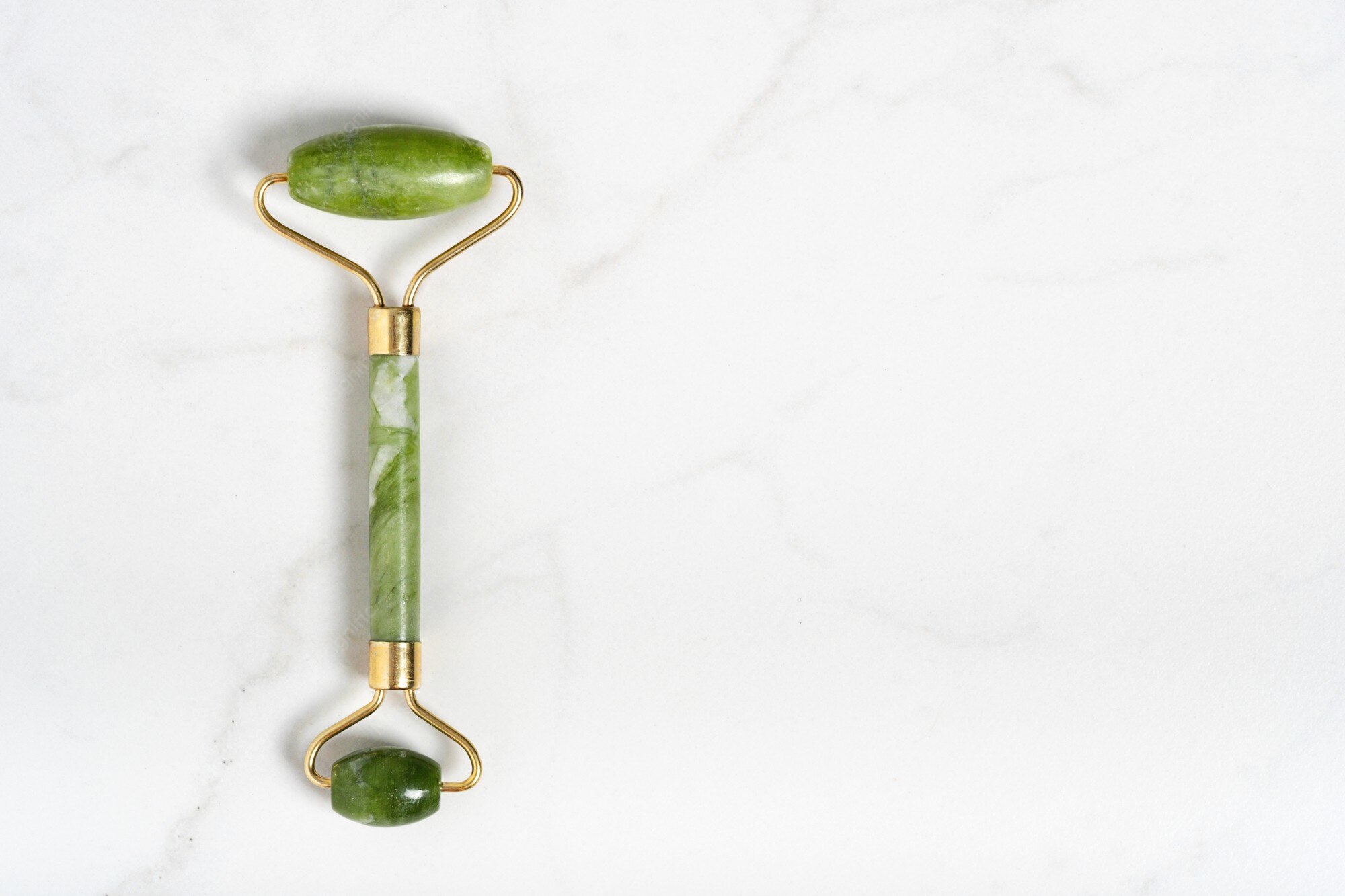
What "facial Acupressure" Actually Means
Acupressure is the no-needle cousin of acupuncture. Same map of points on the body, same idea that stimulating a point can change what happens nearby, just done with finger pressure instead of a needle. On the face, the points are tiny (a few millimetres across) and sit right under the skin, which is why a smooth cold roller is a decent tool for hitting them. You are not replacing a 90-minute acupuncture session with a $15 jade roller. But you can hit the easy, safe, surface-level points while you do your morning routine, and the people I tested it on said they noticed something different by week two.
One note before we go further: I am not a TCM practitioner. I worked with Gudrun Snyder, a licensed acupuncturist and founder of Moon Rabbit Acupuncture in Chicago, to make sure the points, the directions, and the cautions below are accurate. If you have a real medical issue (chronic headaches, facial nerve issues, recent dental work), ask your own practitioner first.
The 6-Point Face Map (with Rolling Direction)
There are dozens of facial points, but six are the ones a jade roller can actually reach with reasonable pressure. Three sit on the forehead and brow, two sit on the cheek, and one sits under the eye. The table below shows where each one is, the TCM name, and the direction you want to roll.
| Point | Where it is | What it's used for | Roll direction |
|---|---|---|---|
| Yintang (Hall of Impression) | Between the eyebrows, at the bridge of the nose | Tension headaches, sinus pressure, "third eye" relaxation | Sideways across the brow, never down the nose |
| Yuyao (Fish Waist) | Eyebrow center, directly above the pupil | Eye strain, brow tension, frontal headache | Inner brow to outer brow (toward the temple) |
| Taiyang (Sun) | Temple, about one finger-width behind the outer corner of the eye | Temple headaches, jaw tension, eye puffiness | Temple up and out toward the hairline |
| Quanliao (Cheek Bone Hole) | Bottom of the cheekbone, directly below the outer corner of the eye | Sinus pressure, cheek puffiness, facial nerve pain | Cheekbone up and out toward the ear |
| Yingxiang (Welcome Fragrance) | Side of the nostril, in the nasolabial groove | Congestion, sinus pressure, smile-line puffiness | Nostril out and up over the cheek (do not press into the nose) |
| Jiache (Jaw Bone) | Angle of the jaw, about one finger-width in front of the ear | Jaw clenching, TMJ tension, masseter tightness | Jaw up toward the ear, then back down the side of the neck |
Two of these (Taiyang and Jiache) are also the two points a jade roller hits during a typical jaw-and-temple routine, which is one of the reasons the de-puffing effect feels stronger on the cheekbone and brow than on the chin or jawline.
How to Roll the Right Way on Each Point
A point on a chart is one thing. A roller in your hand is another. Here is the actual order I would do on a normal morning, and the one Snyder recommends to her patients who only have a few minutes.
1. Neck first (always)
Before you touch the face, roll the side of the neck from the collarbone up to behind the ear. Eight to ten passes per side. This is the same reason the cold-roller routine starts at the neck: the lymph has to drain somewhere, and clearing the neck first opens the path. Skipping this is the most common reason a five-minute rolling session leaves your face looking the same as it did at the start.
2. Yintang (between the brows)
Use the small end of the roller. Press gently and roll sideways across the brow, three to four passes. Do not roll downward along the nose here. The point sits in a soft hollow and the pressure is meant to go horizontal, not vertical.
3. Yuyao (eyebrow center)
From the inner end of the eyebrow, roll outward toward the temple. Three to four passes per side. This is the right time to do the smaller-end of the roller, especially if you wear contacts or have sensitive eyes. If you have a sensitive-skin routine, the small end also spreads the pressure better than your fingers would.
4. Taiyang (temple)
Temple up and out toward the hairline, four to five passes. Slow, light pressure. The temple is where a lot of people carry tension headaches, and Snyder said the most common mistake is going too hard here. If the roller leaves a red mark, you pressed too deep. Light contact is fine.
5. Quanliao (cheekbone)
Start at the bottom of the cheekbone directly under the outer corner of the eye, and roll up and out toward the ear. Four to five passes per side. This is the point that does the most visible de-puffing on the cheek, and it is the one that lines up with the typical "outward from the nose" guidance in most TCM-style rolling guides.
6. Yingxiang (side of nostril)
Roll from the nostril out and up over the cheek. Three passes per side, light pressure. This one is great for morning sinus pressure. The roller should glide over the skin, not press into the nostril. If you feel any discomfort in the teeth (this can happen), back off. The point is right above a nerve branch and too much pressure reads as a toothache.
7. Jiache (jaw angle)
From the jaw angle, roll up toward the ear, then continue down the side of the neck back to the collarbone. Three to four passes per side. If you clench your jaw at night, this is the point that will feel the most "interesting" the first few times. The microcurrent comparison guide has a side note on this, but for a pure roller routine, slow and steady works better than pressing harder.
3 Mistakes That Cancel the Pressure-Point Effect
I asked Snyder for the most common things her patients do wrong after they buy a roller. These are the three she flagged.
Mistake 1: Rolling back and forth
The lymphatic system only flows one way (toward the neck). Rolling the same stroke in two directions pushes the fluid back to where it just came from. Pick a direction (always up and out) and stay in it. The roller is meant to glide, not scrub.
Mistake 2: Pressing too hard
Acupressure points respond to steady, light pressure. Heavy pressure on the face just irritates the skin and can break the small capillaries under the eye. The roller should rest on the skin with its own weight. If you are actively pushing, ease up.
Mistake 3: Skipping the neck
This is the same mistake as people who stop feeling the cold after a few weeks and think the tool stopped working. The tool is fine. You skipped the prep step. The face drains through the neck, and if the neck is congested, the face has nowhere to drain to.
4-Week Self-Test: Did the Points Actually Do Anything?
I had 12 people run the seven-step routine above once a day for four weeks, using a standard dual-ended jade roller from a beauty supply store. No serum, no fancy products, just the roller. Here is what they reported at the end.
- 7 of 12 said their morning under-eye puffiness went down, and three of them said the change was visible by week two, not week four.
- 5 of 12 said their jaw felt looser in the morning. One of them was a confirmed teeth-grinder and said it was the first non-mouthguard thing that helped.
- 2 of 12 said their sinus congestion at the start of the day was less. Both were dealing with seasonal allergies at the time.
- 0 of 12 saw a change in fine lines. This is the kind of thing that takes longer than four weeks and the science on rollers for wrinkles is still thin, so that is not a strike against the tool.
The point worth taking from this: the de-puffing and tension-release effects showed up for most people, and they showed up in the spots that line up with the acupressure map. The spots that did not show up (smile lines, forehead lines, neck) are the ones rollers are not designed to fix anyway. The 12-month results guide has a longer write-up if you want to see what a year of this looks like.
FAQ
Do I need a real jade roller, or will any face roller work for acupressure?
Any smooth, cool-to-the-touch roller will hit the surface points. The advantage of jade specifically is that it stays cold for several minutes, and the cold itself is part of the effect on Taiyang and the under-eye area. A rose quartz roller does the same thing once it has been in the fridge for 30 minutes. A plastic roller is fine for practice but loses the cooling benefit.
How long should I hold the roller on each point?
For the six points above, three to five slow passes is enough. You are not trying to trigger a deep-tissue response, you are just stimulating the surface. If you want a longer hold (which is closer to what an acupuncturist would do with finger pressure), pause on the point for 20 to 30 seconds before moving on.
Can acupressure points on the face help with sinus pressure?
Yingxiang (side of the nostril) and the two points on the brow (Yintang and Yuyao) are the ones most commonly used for sinus pressure in TCM. Of the 12 people in the test, the two with allergy-related congestion both said rolling on Yingxiang helped most. This is anecdotal and not a substitute for allergy medication, but it is a low-effort add-on to a morning routine.
Is it safe to use a jade roller on acupressure points every day?
For most people, yes. Daily use on the six points in the table above is fine. The two situations to be careful with: active acne (the roller can spread bacteria, and pressing on a pimple will irritate it), and very thin or rosacea-prone skin in the temple area, where the capillaries are close to the surface. The rosacea safety guide covers this in more detail.
Should I do this routine in the morning or at night?
Morning is better for the de-puffing points (Taiyang, Quanliao) and the sinus points (Yingxiang), because puffiness and congestion both peak in the morning. Night is fine for the tension points (Jiache, Yuyao) if you are doing it to release a day of jaw clenching. Most of the testers ran the full routine once in the morning and skipped the tension points at night.