Sensitive Skin Guide
Jade Roller for Sensitive Skin: The Complete Gentle Guide
Does your skin flare up at the mere mention of a new product? You're not alone — and yes, you can absolutely use a jade roller. You just need to know which ingredients to avoid, how much pressure is too much, and what your skin is actually telling you when it reacts.
Published: May 19, 2026 | Reviewed by JadeGuide Editorial Team
Disclaimer: This article is for general informational purposes only and does not constitute professional dermatological advice. If you have a diagnosed skin condition such as rosacea, eczema, or perioral dermatitis, consult your dermatologist before using any facial massage tool.
What You'll Learn
If you've ever applied a new serum only to watch your cheeks turn blotchy and itchy ten minutes later, you know the drill. Sensitive skin isn't just "picky" — it's a real physiological response pattern where your skin barrier overreacts to stimuli that normal skin would shrug off. The good news: a jade roller, when used correctly, is one of the few tools that can actually soothe reactive skin instead of provoking it.
Why Jade Rollers Work Well for Sensitive Skin — When Used Right
Before diving into technique, let's be clear on one thing: not every jade roller session will feel good, and that's not a flaw in your skin — it's feedback. Here's what the tool can genuinely do for reactive skin types:
1. Cooled Stone Reduces Inflammation
Jade naturally stays cool. When stored in the fridge, the stone temperature (~40°F / 4°C) has a genuine vasoconstrictive effect on dilated capillaries — the root cause of facial redness and blotchiness.
2. Manual Lymphatic Drainage
Sensitive skin often looks puffy because its lymphatic system is sluggish. Gentle upward strokes encourage fluid movement without any chemical triggers.
3. Better Product Absorption
When applied after serum, the rolling motion presses active ingredients deeper — meaning you need less product to get the same effect, which reduces exposure time for reactive skin.
4. Non-Chemical, Non-Invasive
Unlike acid peels or retinol, there's no chemical interaction with your skin barrier. The risk profile is essentially zero as long as you control pressure and hygiene.
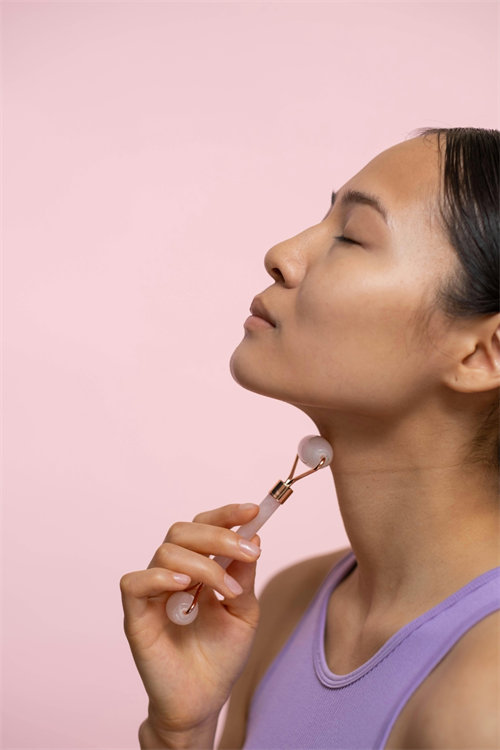
Ingredient Pairing Guide: What to Layer and What to Skip
The roller itself is inert — the risk comes from what you put on your skin before or after rolling. Here's how to pair your jade roller with your existing sensitive-skin routine:
| Ingredient | Use With Jade Roller? | Why / Why Not |
|---|---|---|
| Hyaluronic Acid | ✅ Safe | Lightweight humectant — absorbs fast, won't ball up under pressure. Ideal pre-roller. |
| Centella Asiatica (Cica) | ✅ Safe | Anti-inflammatory and barrier-repairing. Particularly good for rosacea-prone reactive skin. |
| Squalane | ✅ Safe | Non-comedogenic emollient, stable, unlikely to cause reactions. Works as a buffer layer. |
| Vitamin C (L-Ascorbic Acid) | ⚠️ Caution | Low pH can sting on compromised barriers. If using, wait 10 minutes after application before rolling. |
| Niacinamide (High %) | ⚠️ Caution | Above 5% can cause flushing and tingling — amplified by massage. Use a low percentage or skip on rolling days. |
| Retinol / Retinoids | ❌ Avoid | Retinol thins the stratum corneum temporarily. Rolling over retinoid-treated skin can cause micro-tears and severe irritation. |
| AHAs / BHAs | ❌ Avoid | Same logic as retinol — chemical exfoliation already challenges the barrier. Adding mechanical massage invites inflammation. |
| Aloe Vera / Cucumber | ✅ Safe | Cooling, soothing ingredients that actually complement the jade roller's temperature effect. |
Rule of thumb: If it tingles, burns, or stings when applied alone — don't roll over it. The mechanical pressure amplifies any sensation, even pleasant ones, which can trigger a delayed inflammatory response in sensitive skin 12–24 hours later.
Zero-Irritation Rolling Technique for Reactive Skin
Sensitive skin demands a lighter touch than normal skin. Forget everything you've read about "firm pressure" — for reactive skin, we dial it back significantly.
The Gentle Jade Roller Sequence for Sensitive Skin
Chill the roller (30–60 minutes)
Store your jade roller in the refrigerator — not the freezer. Frozen stone is too extreme and can cause capillary stress. Aim for ~40°F (4°C). If you have rosacea, even this may be too cold; room temperature is acceptable.
Apply a thin serum layer first
Not a thick cream — a thin serum creates just enough slip. Choose HA, Cica, or squalane. This is your barrier buffer. Without it, even gentle rolling can create friction.
Use the LARGE end only — no eye area
The small end of a jade roller puts concentrated pressure on a tiny area. For sensitive skin, avoid the eye area entirely — use your ring finger for eye products instead. Keep the large roller for cheeks, jawline, and forehead.
Roll in ONE direction only — upward and outward
Downward strokes pull gravity, stretch the skin downward, and create friction on the upstroke. Upward-only strokes (from jaw to ear, from nose to temple, from center forehead to hairline) follow lymphatic flow and require almost no pressure to feel effective.
3–5 passes per area, maximum
More is not better with sensitive skin. The goal is a brief lymphatic nudge, not a full 20-minute massage. Set a timer if needed — anything over 5 minutes of continuous rolling is excessive for reactive skin.
Clean immediately after
Wash with fragrance-free soap, pat dry, and store back in the refrigerator. Sensitive skin is more prone to breakouts from bacterial transfer, so hygiene is non-negotiable.
Building a Sensitive-Skin-Friendly Routine
How often you roll depends on how your skin responds. The safest schedule for sensitive skin is 3 times per week — with at least one rest day between sessions.
📅 Recommended Weekly Schedule
- Monday: Roll in the evening after calming serum (Cica or HA)
- Wednesday: Roll in the evening — skip if skin feels reactive
- Friday: Roll in the evening
- Sunday, Tuesday, Thursday, Saturday: No rolling. Let skin rest.
Adjust based on how your skin responds over the first two weeks. If 3 times feels too much, drop to 2.
What NOT to Combine in the Same Session
- Facial massage + acid exfoliant same night → micro-tear risk
- Jade roller + vitamin C (same session) → tingling amplified into burning
- Rolling + sheet mask worn while rolling → sheet mask ingredients penetrate too deep under pressure
- Jade roller on skin that's already red/flushed → wait until inflammation subsides
Stop Immediately If This Happens
Reactive skin can deteriorate quickly if you ignore warning signs. Here is exactly when to put the roller down:
🚩 Persistent Redness After Rolling
A mild flush that fades in 15 minutes is normal. Redness that lasts more than 2 hours means your barrier is inflamed — skip the next 3 sessions minimum.
🚩 Raised Hives or Welts
If you develop hives (urticaria) during or after rolling, this is an allergic response — not normal. Discontinue use and consider whether the serum you're using contains a fragrance or preservative.
🚩 Breakouts in Rolling Pattern
If pimples appear specifically along the paths you roll, this is called acne cosmetica — caused by pressure forcing products into pores. Switch to rolling with plain water as a test.
🚩 Tingling That Becomes Burning
Niacinamide and vitamin C can tingle mildly on their own. When that tingle turns into a burning sensation under pressure, flush the area with cool water and apply a basic moisturizer immediately.
Frequently Asked Questions
Can I use a jade roller if I have rosacea?
Yes, with caution. Rosacea is a vascular condition — dilated capillaries respond dramatically to temperature changes and pressure. The cooled jade roller can actually help reduce facial erythema in the short term, but only if the stone is cold (not frozen) and pressure is extremely light. If you have rosacea, consult a dermatologist before adding any new tool to your routine. A patch test on your inner forearm first is non-negotiable.
Should I roll if I have active eczema on my face?
No — avoid active eczema patches entirely. Rolling over inflamed, broken, or flaking eczema can spread the condition, introduce bacteria, and worsen the flare. Wait until the eczema is fully quiescent (no redness, no itching, no active flaking) before resuming. You can roll around eczema patches without touching them.
How do I know if my skin is reacting to the roller or the serum?
The simplest test: roll on bare, damp skin (plain water only) for 3 sessions in a row. If the reaction still occurs with water alone, the roller material or pressure is the culprit. If the reaction only happens after applying your serum, switch serums. Jade itself is generally hypoallergenic, but the metal frame or cleaning residue can be irritants.
Can I use a jade roller on allergic skin (contact dermatitis)?
Only during the calm phase. If you're currently experiencing contact dermatitis (red, itchy, blistered skin), the mechanical stimulation will worsen inflammation. Once healed, you can resume — but patch test any new product before combining it with rolling.
Is it better to roll before or after moisturizer?
For sensitive skin: never roll on bare skin without a barrier. But the order matters: apply your thinnest-consistency serum first (after cleansing), let it absorb for 30 seconds, then roll. The roller will press the serum in rather than drag it across. If you apply a thick cream first, the roller glides on top and doesn't deliver the active ingredients where they need to go.
What jade roller size is safest for sensitive skin?
A standard face roller with a large barrel (40–50mm diameter) is safest. Smaller barrel sizes concentrate pressure and can over-stimulate reactive skin. Avoid jade eye rollers for the eye area if you have sensitive skin around the eyes — use your ring finger with product instead. The neck roller end is generally fine for use on the neck if you've cleared that area with your dermatologist.
Continue Exploring
Ready to find the right jade roller for your skin type?
Browse our complete guide to jade rollers, gua sha tools, and facial massage techniques.
Explore All Guides →