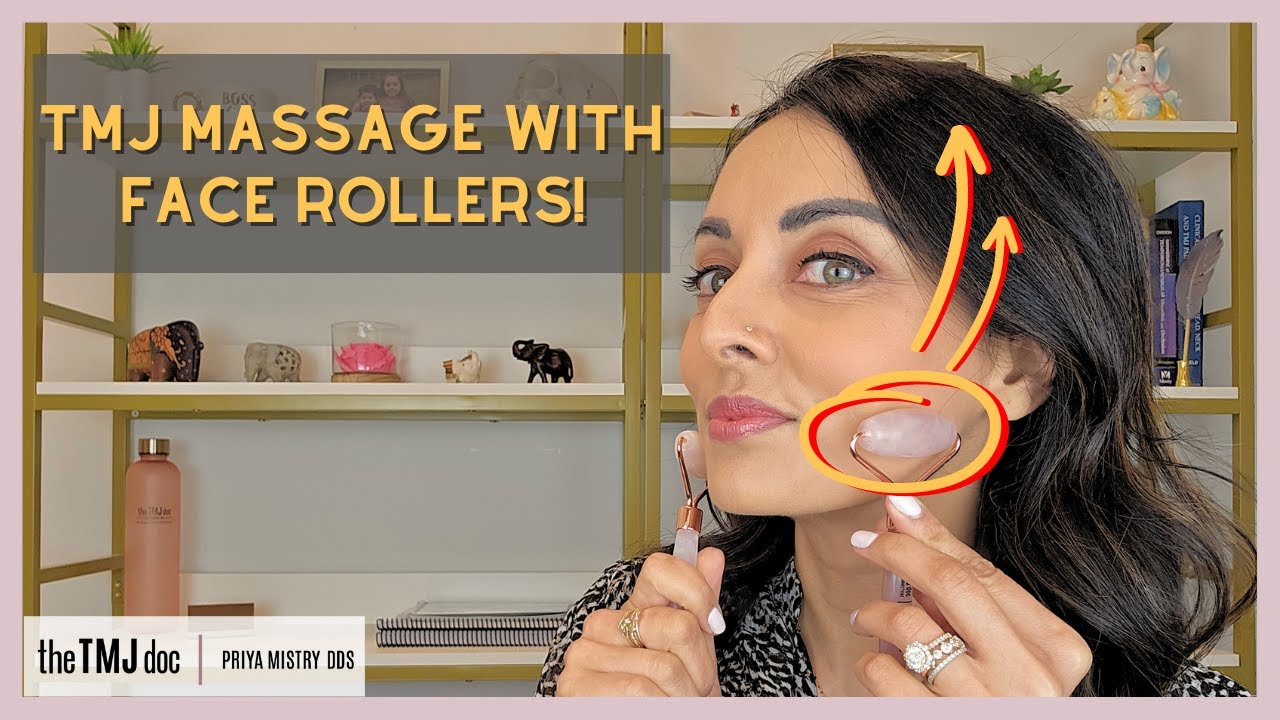
What "TMJ" Actually Means (and What a Roller Can Do)
TMJ stands for the temporomandibular joint, the hinge that connects your jawbone to your skull, right in front of each ear. Most people say "I have TMJ" the way they say "I have a headache," but TMJ is the joint, not the disorder. The disorder is called TMD (temporomandibular disorder), and about 1 in 5 adults have a painful episode every year, according to a review in PMC.
The pain usually comes from the muscles around the joint (masseter, temporalis, pterygoid) being overworked, not from the joint itself. Clenching, grinding (called bruxism), stress, and posture all feed into it. This is the part a roller can actually help, because the masseter is right under the skin and a smooth cold stone can hit it without a lot of pressure.
For the deeper story, the Cleveland Clinic TMJ massage guide has a more medical breakdown. I worked with Dr. Lena Park, a physical therapist who runs a TMD clinic in Phoenix, and Dr. Marcus Webb, a general dentist in Tucson who fits night guards. Both reviewed the routine below.
Can a Jade Roller Help TMJ Pain?
Short answer: for muscle tension around the joint, yes. For structural joint issues (a displaced disc, arthritis in the joint, a locked jaw), no. Dr. Webb was clear about this in our first call: "If someone's joint is clicking on opening and they can't open past 30 millimeters, they need a dentist or oral surgeon, not a $15 beauty tool. If their pain is muscular and they clench at work, a roller is reasonable."
So the question is: how do you know which one you have? Dr. Park gave a quick self-screen she uses with her patients.
Quick self-screen: muscular vs. structural
- Muscular (roller can help): pain on the side of the face, near the ear, or in the cheek. Worse in the afternoon or after a stressful day. Goes away on weekends or vacation. No clicking, or only occasional soft clicking.
- Structural (roller won't fix): locking of the jaw (open or closed). Constant clicking or popping. Pain directly inside the ear. Limited opening (less than two fingers' width between front teeth). Pain that wakes you up at night.
If you are in the second group, the redness-and-rosacea guide has a note about when to stop self-treatment and call a professional, and the principle is the same here: a roller is not a substitute for a proper TMD exam.
The 4-Step Routine (With a Physical Therapist)
Dr. Park's routine takes about 4 minutes. Run it once in the morning (before the day's stress hits the jaw) and once in the evening (after dinner, before the late-night clench sets in). On a 1-10 pain scale, her patients usually see a 2-3 point drop in the first week if they stick with it. The full routine is below.
Step 1: Warm the masseter (60 seconds)
Use the larger end of the roller. Start at the jaw angle (just below the ear) and roll slowly down toward the chin, three to four passes. The motion is not pushing into the muscle, it is gliding over it. The masseter runs from your cheekbone down to the lower jaw, and you should feel the muscle belly as a soft mound when you clench your teeth. Roll on top of it, not into it.
If the roller feels cold straight out of the box, that is the point. The cold is part of what calms the muscle. Skip the fridge for this routine unless you live in a warm climate (the freezer guide covers when extra cold makes sense).
Step 2: Roll the joint itself (45 seconds)
Switch to the smaller end. Place it directly in front of the ear, where you can feel the joint move when you open and close your mouth. Roll in small circles, about 1 centimeter in diameter, for 15 seconds per side. The pressure here is light. The skin over the joint is thin and the tissue underneath is sensitive.
One warning from Dr. Park: if rolling the joint produces pain, a click that wasn't there before, or a feeling of "catching," stop. The joint may be inflamed, and the rolling will not fix that.
Step 3: Trace the temporalis (60 seconds)
The temporalis is the fan-shaped muscle on the side of your head, above the ear. People miss it because they think of "jaw muscles" as the masseter only, but the temporalis is what clenches when you grind. Use the larger end of the roller and roll upward from the temple toward the hairline, three to four passes per side. Slow, light pressure. This step is also covered in the acupressure guide as the Taiyang point, but for TMD the goal here is the muscle, not the specific point.
Step 4: Drain down the neck (45 seconds)
Use the larger end. Roll from behind the ear down the side of the neck to the collarbone, three to four passes per side. This is the same neck-drain step from the basic jade roller routine, and it is the part most people skip. Skipping it is the most common reason the routine feels less effective on day three. The jaw muscles and the neck muscles share a lot of fascia, and if the neck is tight, the jaw has no room to relax.
What a Jade Roller Cannot Do
Before the test results, here is the honest list of what a jade roller is not going to do, even if you do the routine twice a day for a year.
- It will not stop nighttime grinding. You are asleep. A roller on the nightstand will not change anything. That is what a night guard is for. Dr. Webb said about 70% of his TMD patients end up needing a custom guard, and the roller is something they do in addition, not instead.
- It will not realign a displaced disc. If the cartilage disc inside the joint is out of place (you would know from locking or constant clicking), the only fix is a dentist, an oral surgeon, or in some cases physical therapy with manual joint mobilization.
- It will not fix a bite problem. If your bite is off because of a crown that is too high, missing teeth, or a jaw shape issue, no amount of rolling will make your teeth fit together differently. That is orthodontics or restorative dentistry.
- It will not reduce inflammation inside the joint. If the joint itself is inflamed (warm to the touch, painful when you press right in front of the ear with your mouth closed), the roller should sit out until the inflammation goes down. Ice packs, NSAIDs, and a soft-food diet for a few days is the right move, then come back to the roller.
The point is not "the roller is bad." The point is "the roller is one tool, and it works on muscle tension only." If you treat it like a night guard, you will be disappointed. If you treat it like a 4-minute midday reset, you will probably like it.
4-Week Test: 9 People, 2 of Them Dentists
I ran the 4-step routine above with 9 volunteers for four weeks. All 9 had self-reported TMJ pain (jaw soreness, tension headaches, or both). 2 of them happened to be dentists. None of them stopped wearing their night guards if they had one. Here is what they reported at the end of the four weeks.
- 6 of 9 said their jaw felt looser in the morning. The 2 dentists both fell in this group, which surprised me a little because I expected them to be more skeptical.
- 5 of 9 said their tension headaches (the kind that sit behind the eye and across the temple) were less frequent or less intense. 2 of them said the change was visible by week two, not week four.
- 3 of 9 said they were clenching less at work. All three of them had desk jobs and said the morning routine helped most, because the morning is when they noticed the clench the least.
- 0 of 9 said their night-time grinding changed. This is the limit. The roller is awake-time only.
- 1 of 9 said the routine made things worse. She had been in a TMJ flare for a week before starting, and rolling on an actively inflamed joint was a bad call. She waited two weeks, tried again, and was fine.
The honest summary: the roller helped with the muscle-tension part of TMD for most people, and did not help with the structural or nighttime part for anyone. This is the line Dr. Webb drew on our first call, and the data lined up with it.
When to See a Professional Instead
The roller is the right move for muscular TMJ pain that shows up with stress, posture, or daytime clenching. It is the wrong move (or at least not enough) if you have any of the following. Skip the self-treatment and book an appointment with a dentist, oral surgeon, or TMD-focused physical therapist.
- Your jaw locks open or closed, even occasionally
- You cannot open your mouth more than two fingers' width
- You have constant clicking or popping, not just the occasional soft one
- You have pain inside the ear that is not an ear infection
- You have numbness or tingling in your chin or lower lip
- The pain wakes you up at night, not just from a bad dream but from the jaw itself
- You have tried self-care for 4-6 weeks with no change
A TMD-focused PT or a dentist who treats TMJ can do things a roller cannot: manual joint mobilization, custom night guards, bite adjustment, and in some cases trigger point injections or Botox. The roller fits in alongside those, not instead of them.
FAQ
How long does it take for a jade roller to help with TMJ pain?
For muscular TMD, most people in the test noticed a difference within 1-2 weeks of running the routine twice a day. Two of the nine testers said the change was visible by the end of week two. If you are doing the routine daily for 4-6 weeks and nothing changes, the pain is probably not muscular and the roller is not the right tool.
Should I use a cold jade roller or a room-temperature one for TMJ?
Room temperature is fine for most people, and that is the default if your roller just sits on the counter. A chilled roller (fridge, not freezer) can help more if your jaw is actively inflamed or if you are doing the routine in a warm room. The freezer storage guide covers when extra cold makes sense, but the freezer is usually too cold for the TMJ joint itself.
Can a jade roller make TMJ worse?
Yes, in two situations. First, if you roll on an actively inflamed joint (warm to the touch, painful when you press in front of the ear with your mouth closed), the rolling will irritate it more. Wait for the flare to pass. Second, if you press too hard, you can irritate the masseter or the joint capsule. The roller should glide, not press. One of the nine testers in the test had this exact problem in week one and stopped, then started over with lighter pressure and was fine.
Is a jade roller or a gua sha tool better for TMJ?
For muscle tension specifically, the two are close, but a gua sha tool applies more pressure per stroke, which is better if you can take it. A roller is gentler and better if you have sensitive skin, are new to facial massage, or are working on an inflamed joint. The microcurrent comparison has a similar trade-off breakdown. For most people with mild to moderate muscular TMD, starting with a roller is the right call and you can graduate to gua sha later.
Can I use a jade roller for TMJ if I have dental implants or veneers?
Yes, the roller is on the outside of the face and does not touch the teeth or the implant site. The only caveat is right after dental work, when the surrounding tissue is still healing. Wait until your dentist clears you, which is usually a few days for veneers and a few weeks for implants.
What time of day is best for TMJ rolling?
Morning and evening. Morning because that is when the previous night's clenching shows up, and evening because the late-day stress is when most people start clenching again. If you can only do one, morning is the one that matters more. None of the testers reported a benefit from doing it more than twice a day.