Facial Tools & Reviews
Pink Jade Roller Guide: More Than Just a Pretty Face Tool
Published: May 21, 2026
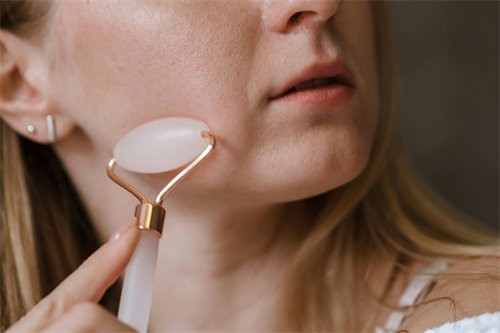
When beauty influencers started raving about jade rollers a few years back, most people assumed the pretty pink ones were just a trend — a pastel aesthetic choice with no real functional difference. Turns out, pink jade has its own distinct mineral fingerprint, and that matters more than you might think.
If you have been eyeing a pink jade roller and wondering whether it is worth the upgrade, or if you are already using one and curious about what is actually happening beneath the surface, this guide breaks it all down — the geology, the skincare science, the practical differences, and how to pick the right one.
What is Inside
- The Geology: Why Pink Jade Is Not Just Pretty Paint
- Skin Benefits: What Pink Jade Actually Does for Your Face
- How to Use a Pink Jade Roller: Step-by-Step
- Pink vs. Green Jade: Is There a Real Difference?
- What to Look for When Buying a Pink Jade Roller
- Care and Maintenance Tips
- Frequently Asked Questions
The Geology: Why Pink Jade Is Not Just Pretty Paint
Most people know jade comes in green. But jade is actually a family of minerals, not a single stone — and pink jade is a legitimate member of that family with its own chemical personality.
Pink jade, often referred to as pink nephrite, derives its soft blush color primarily from manganese and lithium traces embedded within its tremolite or actinolite structure. The same molecular chain that gives green jade its signature color is present here, but iron and magnesium have been partially replaced by these lighter elements, resulting in that romantic rosy hue.
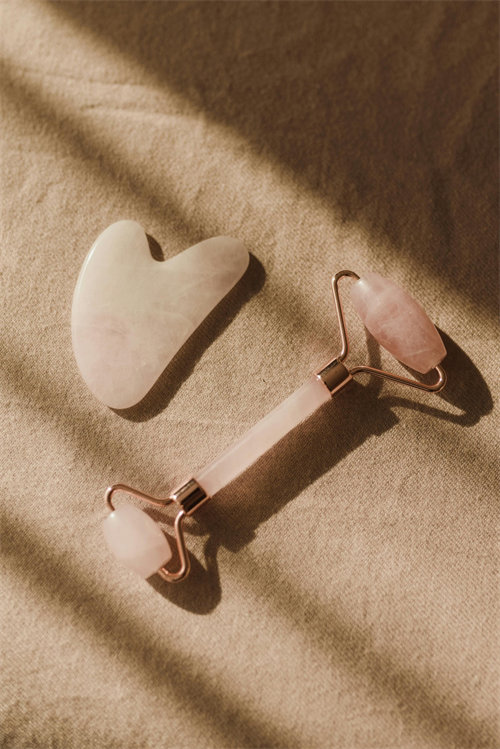
Unlike dyed rose quartz (which fades over time and can harbor bacteria in micro-cracks), authentic pink jade maintains its color throughout the stone — not just on the surface. When you cut a pink jade roller open, the blush runs all the way through. That is a meaningful difference when you are rolling it across your face every day.
JadeGuide Tip: If your "pink jade" roller fades after a few months of use, it was almost certainly dyed. Real pink jade deepens slightly with oil absorption from your skin over time — it does not lose color.
Skin Benefits: What Pink Jade Actually Does for Your Face
The cooling and depuffing mechanism works the same way across all jade types — the stone thermal conductivity draws heat away from inflamed skin, constricts capillaries temporarily, and gives that satisfying "morning face" effect within minutes. But pink jade has a few specific characteristics worth knowing about.
Anti-Inflammatory Properties
The manganese content in pink nephrite has a mild natural anti-inflammatory effect on skin. This does not mean it replaces your serum or moisturizer, but over weeks of consistent use, many users report that their skin appears less reactive and recovers faster from environmental stressors like dry air or sun exposure.
Gentle on Sensitive Skin
Pink jade tends to have a slightly finer grain structure than deep green nephrite, which translates to a smoother rolling surface. If you have ever felt your jade roller "drag" slightly on delicate areas like the under-eye zone, a pink jade roller with a well-polished head can make a noticeable difference in comfort.
Lymphatic Drainage Support
Like all jade rollers, the pink variant supports the lymphatic system through gentle upward strokes. The stone stays cool longer than glass or stainless steel alternatives, which means you get more sustained drainage time per session before the tool warms up to body temperature. For more on how this works, see our jade roller lymphatic drainage guide.
How to Use a Pink Jade Roller: Step-by-Step
Using a pink jade roller correctly is not complicated, but there are a few technique points that separate people who see real results from those who are just moving the tool around.
Morning Routine (5 to 10 minutes)
- Start with a clean face. Apply a water-based serum or essence first — jade rolling without sufficient slip will tug at skin and defeat the purpose.
- Keep your roller in the fridge overnight. A cold pink jade roller (not frozen — roughly 40 to 50 degrees Fahrenheit) dramatically enhances the depuffing effect and constricts blood vessels more effectively than room-temperature stone.
- Use the larger end for cheeks, jaw, and forehead. Roll upward and outward — never downward — with light to moderate pressure. Each stroke should take about 3 to 5 seconds. Three passes per area is ideal.
- Switch to the smaller end for the under-eye area, temples, and around the nose. Use even lighter pressure here — the skin is thinnest on the face and bruising from over-pressure is a real thing.
- Finish with your moisturizer or sunscreen applied immediately after, while the skin is still cool and receptive.
Night Routine (5 minutes)
At night, the goal shifts from depuffing to recovery and product absorption. You can skip the fridge and use the roller at room temperature or slightly cool.
- Apply your evening serum or treatment (retinol, vitamin C, etc.) and let it absorb for about 30 seconds first.
- Use the larger end for broad sweeping motions across the face. Focus on areas where you want product to penetrate deeply.
- Do not roll over active acne or broken skin — this can spread bacteria and worsen inflammation. For acne-prone skin guidance, see our jade roller for acne-prone skin guide.
Pink vs. Green Jade: Is There a Real Difference?
This is the question most buyers ask, and the honest answer is: yes, but it depends on what you value.
At a glance: Green jade rollers are the traditional choice and are excellent all-around performers. Pink jade rollers offer the same core cooling and drainage benefits with a slightly softer mineral profile that some users find gentler on reactive or sensitive skin.
The color difference is not merely cosmetic. Green jade owes its color to iron and magnesium. Pink jade replaces some of those metals with manganese and lithium, which slightly alters the stone density and grain structure. The practical result is that pink jade tends to be marginally less dense — and therefore feels slightly silkier under the roller — while green jade is harder and holds an edge longer.
If you are deciding between the two, consider your primary skin concern. For general depuffing, lymphatic drainage, and everyday use, either works beautifully. For sensitive or reactive skin types, pink jade may offer a slight edge in comfort. For users who prefer a weightier, more traditional feel, green jade remains an excellent choice. For a deeper comparison, see our jade vs rose quartz comparison.
What to Look for When Buying a Pink Jade Roller
The market is flooded withfake jade rollers, and pink is not immune. Here is how to separate the genuine from the fraudulent.
Price Indicators
Real pink nephrite is not inexpensive. A genuine pink jade roller with a proper rosewood or ABS frame typically retails between 35 and 90 US dollars. If you find a "pink jade roller" for 8 to 15 dollars, it is almost certainly dyed玻璃 or treated stone. Those price points do not even cover the mining and carving costs for real nephrite.
Visual Checks
- Color consistency: Real pink jade has subtle color variation — no two rollers look exactly alike. If every "pink jade" roller you see has the exact same uniform blush, that is a red flag.
- Surface quality: Real jade is polished to a smooth, slightly cool surface. If it feels plasticky or gets warm quickly, it is probably not real jade.
- Weight: Nephrite is a dense stone. A real jade roller will feel noticeably heavier than a glass or resin alternative of the same size.
Certification
Reputable sellers often provide gemological certification or at minimum a composition disclosure. If a seller cannot tell you whether their pink jade is nephrite or jadeite, or whether it has been treated, proceed with caution. Our real vs. fake jade roller guide has more detailed authentication steps.
Care and Maintenance Tips
Pink jade rollers are low-maintenance compared to many skincare tools, but a few habits will keep yours performing at its best for years.
- Clean after each use: Wipe the roller head with a soft, damp cloth. Do not soak the frame in water, especially if it is wooden — this can cause warping and splitting.
- Store properly: Keep your roller in the provided pouch or a soft drawstring bag. Do not leave it in the fridge longer than 12 hours, as excessive cold can affect the bond between the stone and the frame.
- Deep clean weekly: Once a week, clean the roller with a gentle, fragrance-free soap and warm water. Dry immediately with a soft cloth.
- Check for cracks: Inspect the roller monthly for hairline cracks, especially around the spindle area. Cracked rollers should be replaced — the stone can shatter during use and cause injury.
JadeGuide Tip: Do not boil your jade roller to sterilize it. High heat can cause natural jade to fracture. Warm soapy water is all you need.
Frequently Asked Questions
Can I use pink jade roller if I have rosacea?
Many people with rosacea find pink jade rollers soothing because the cooling effect temporarily reduces redness and inflammation. However, always consult your dermatologist before introducing new tools, and avoid using the roller during active flare-ups with broken capillaries.
Does pink jade roller help with dark circles?
The cold from a pink jade roller constricts blood vessels under the eyes, which can temporarily reduce the appearance of dark circles caused by dilation. It does not eliminate genetic or structural dark circles, but as part of a consistent morning routine, the visual improvement can be noticeable. For targeted techniques, see our jade roller under-eyes guide.
How often should I use my pink jade roller?
For best results, use it once in the morning and once at night. Overuse can cause irritation, especially on sensitive skin types. If you experience redness or bruising, reduce frequency to every other day.
Can I use pink jade roller with retinol?
Yes, but timing matters. Use your pink jade roller before applying retinol at night — not after. Rolling after retinol can push the product too deeply or cause irritation. For a complete guide, see our article on jade roller and retinol compatibility.
Is pink jade the same as rose quartz?
No. Pink jade is nephrite — a hard, dense mineral with fine grain structure. Rose quartz is a separate silicate mineral with a different molecular structure, lower hardness, and significantly greater porosity. Rose quartz rollers are more prone to harboring bacteria and generally do not hold cold as well as jade. For the full comparison, see our jade vs rose quartz pros and cons.