White Jade Facial Roller Guide: What Makes This Elegant Stone Different
Updated 2026 | Curious about white jade facial rollers? Discover what sets them apart from green jade, their unique mineral properties, and whether a white jade roller belongs in your skincare routine.
Disclaimer
This guide is for general educational purposes only and does not constitute professional skincare or medical advice. Always consult a licensed dermatologist or skincare professional before using any new tool or technique on your skin.
Published on May 15, 2026 | 7 min read
Disclaimer: This article is for informational purposes related to mineral identification and product selection. We are not affiliated with any jade suppliers mentioned and do not receive compensation for product mentions except through standard affiliate programs. Always verify product authenticity independently. Statements have not been evaluated by the FDA.
Green jade rollers are everywhere. You've seen them in your Instagram feed, on Amazon, and probably in your friend's bathroom. But recently, a quieter trend has been emerging: white jade facial rollers. They look completely different, cost a bit more, and most skincare guides don't mention them at all. If you've spotted one and wondered whether it's just a color gimmick or something genuinely different from the green jade you already know, this guide answers that question from the mineral level up.
In This Article
What Is White Jade, Exactly?
White jade isn't a marketing term. It's a genuine geological classification that covers two distinct stones sold as facial rollers (as classified by the Gemological Institute of America), and knowing which one you're buying matters for durability and performance.
White nephrite (mutton-fat jade). In Chinese culture, this is the most prized form of jade, historically valued more highly than green jade. It's nephrite with extremely low iron content, which is what gives green nephrite its color. The result is a creamy, off-white to pale ivory stone with a noticeably finer grain structure than its green counterpart. The whitest, most translucent pieces are called "mutton-fat jade" and have been collected by Chinese emperors for millennia. For facial rollers, white nephrite offers essentially the same thermal properties as green nephrite since their mineral structure is identical, but the grain structure can feel marginally smoother against the skin.
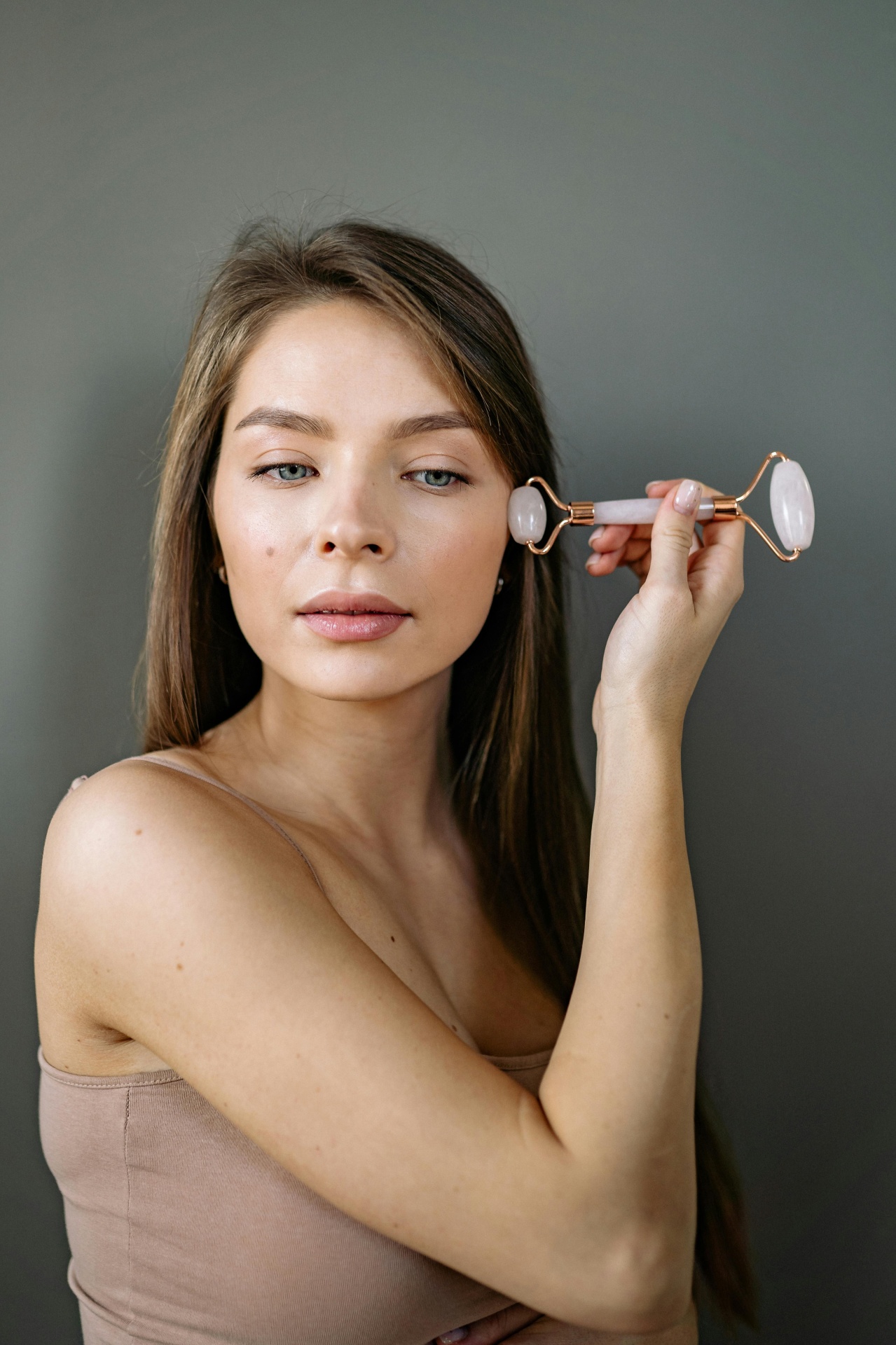
White jadeite. This is rarer, more expensive, and harder (6.5-7 on the Mohs scale versus 6-6.5 for nephrite). White jadeite is almost entirely composed of jadeite mineral with minimal chromium (green) or manganese (pink/lavender) impurities. It's the purest form of jadeite and has a slightly glassier surface feel than nephrite. For facial rollers, jadeite's higher hardness means it resists scratching better, but it also doesn't retain cold quite as long as nephrite because of differences in thermal conductivity. For context on how jade types affect performance, our nephrite vs. jadeite comparison covers this in detail.
White Jade vs. Green Jade: The Real Differences
| Feature | White Jade | Green Jade |
|---|---|---|
| Mineral type | Usually nephrite (low iron) | Usually nephrite (higher iron) |
| Color source | Low iron content | Iron content + trace chromium |
| Grain structure | Finer, smoother micro-structure | Slightly coarser fiber bundles |
| Thermal retention | Similar to green nephrite (excellent) | Excellent (5-8 minutes of cooling) |
| Surface feel | Marginally smoother, silkier | Smooth, slightly more texture |
| Price range | $18-$50 | $12-$50 |
| Cultural prestige | Historically highest value in China | Most recognized globally |
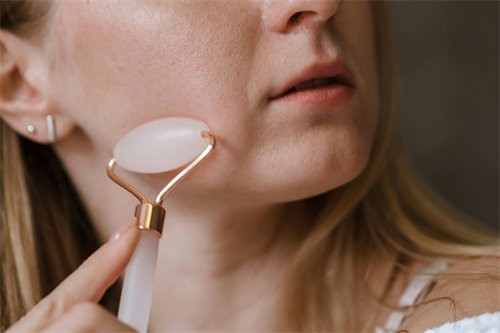
The performance difference between white and green nephrite rollers is minimal. They both stay cold, they both glide smoothly, and they both deliver the same lymphatic drainage benefits. The choice between them is mostly aesthetic and cultural. White jade rollers tend to be priced slightly higher because high-grade white nephrite with good color and translucency is rarer than equivalent-quality green nephrite in today's market.
Do White Jade Rollers Offer Any Unique Benefits?
Honestly? The skincare results are the same. White jade doesn't have magical properties that green jade lacks, and anyone claiming otherwise is making things up to justify a higher price tag. The mechanical action of facial rolling (lymphatic drainage, circulation stimulation, product absorption) is what creates results, not the stone's color.
However, there are two practical advantages worth noting:
Slightly better hygiene visibility. Because white jade is lighter, it's easier to spot dirt, residue, or buildup on the roller head. With green jade, a thin film of product can blend into the stone's natural color variations and go unnoticed. For people who are meticulous about keeping their tools clean, this is a small but real advantage.
Aesthetic preference. Some people simply prefer the look of white stone against their skin or on their vanity. If the visual appeal of your skincare tools makes you more likely to use them consistently, that's a legitimate benefit. Consistency is what drives results with any facial massage tool, as our 1-month results guide explains.
How to Verify a White Jade Roller Is Real
White jade is actually easier to fake than green jade. Colored glass can be tinted green to mimic jade, but it takes less effort to make white glass look convincingly like white jade. Here's how to test yours:
The light test works better on white jade than green. Hold your roller up to a bright light. Real white nephrite shows a warm, slightly translucent glow with subtle internal variations like tiny cloud-like inclusions. Fake white jade (glass or resin) looks perfectly uniform, almost like milk glass, with zero internal depth or variation. If your white jade looks exactly the same edge-to-edge under bright light, it's almost certainly glass.
The sound test is equally effective. Gently tap the roller head against a ceramic mug. Real jade produces a clear, bell-like chime that rings for a second or two. Glass makes a flat click with no sustain. Resin makes an even duller thud. For more identification methods, our real vs. fake jade roller guide covers all the reliable at-home tests.
Also watch for misleading product names. "White jade" rollers listed at $8 or less are almost never real jade. At that price point, you're getting white howlite, magnesite, or dyed glass, all of which are commonly sold as "white jade" on marketplace platforms. Real white nephrite or jadeite starts around $15-18 minimum, even for budget brands.
Frequently Asked Questions About White Jade Rollers
Is white jade more expensive than green jade?
Typically yes, by about 20-40% for equivalent quality. This is because high-grade white nephrite with good translucency and minimal iron staining is rarer than equivalent green nephrite. However, the price gap has narrowed in recent years as more suppliers have entered the white jade market. Budget white jade rollers ($12-18) are almost certainly not real jade, regardless of what the listing says.
How do I clean a white jade roller without staining it?
White jade is actually easier to keep visibly clean than green jade because you can see residue buildup immediately. Use mild soap and warm water once a week, drying thoroughly with a soft microfiber cloth. Avoid colored soaps or cleaning products with dyes, as white jade's lighter color makes it more susceptible to visible staining from pigmented products. For complete care instructions, see our jade roller storage and care guide.
Does white jade yellow or discolor over time?
Real nephrite and jadeite are both chemically stable and non-porous, meaning they do not absorb oils, products, or environmental contaminants that could cause discoloration. If your white jade roller develops a yellow tint, it's either surface buildup from not cleaning (removable with proper washing) or the stone was treated with wax or resin by the manufacturer to enhance its appearance, and those treatments are degrading. Genuine untreated white jade will maintain its color indefinitely with proper care.
Who Should Choose White Jade Over Green?
Buy a white jade roller if any of these apply:
- You prefer a lighter, cleaner aesthetic on your vanity
- You're a stickler for tool hygiene and want to easily spot residue buildup
- You appreciate the cultural history of white nephrite (mutton-fat jade) as the most prized jade variety in Chinese tradition
- You already own a green jade roller and want a second one that feels visually distinct
Stick with green jade if:
- You want the best value for money (green nephrite rollers are cheaper for the same quality)
- You don't care about vanity aesthetics and just want the most effective de-puffing tool
- You're buying your first jade roller and want the most widely available, proven option
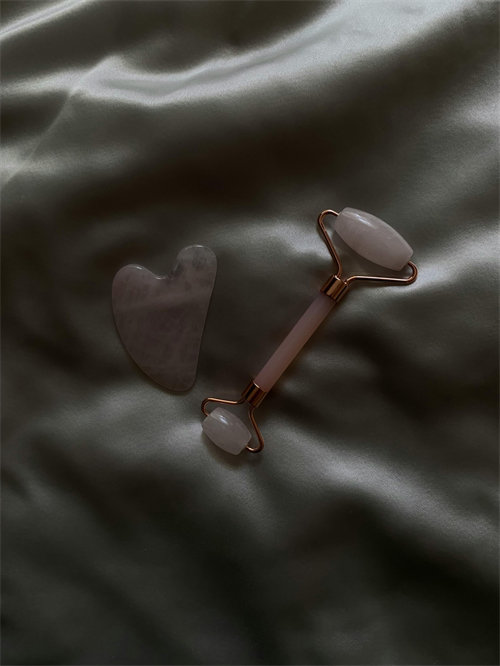
White jade isn't a skincare upgrade. It's a style choice with a genuine mineral story behind it. If the story and the look appeal to you, and you can verify you're buying real nephrite or jadeite rather than glass, it's a perfectly good addition to your routine. Just don't pay a premium expecting results that green jade can't also deliver.
Found your perfect jade roller color?
Once you've chosen your white jade roller, learn how to use it correctly and explore our stone comparisons to see how other jade varieties compare.