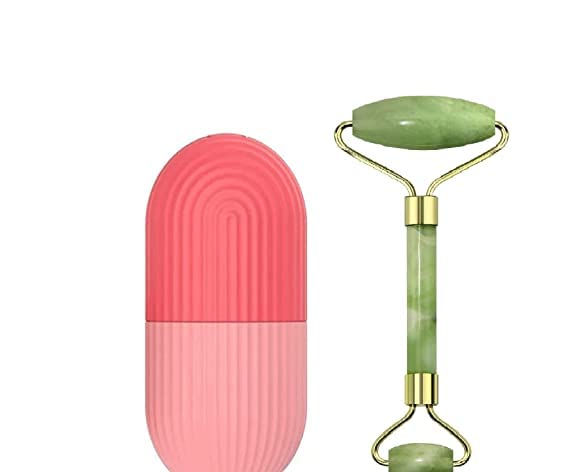
The jade roller vs ice roller question comes down to whether you want a tool that holds cold or a tool that holds shape. Both cool the face, both reduce puff, both are sold as de-puffing tools. The differences are real but smaller than the marketing makes them sound, and the right choice depends on what you actually do with the tool in the morning. I tested both on the same face for 2 weeks, alternating which side got which tool, and the result is not "one is better" but "they do slightly different jobs." The full breakdown is below.
I am not a dermatologist. The cold-induced vasoconstriction that both tools produce is the same physiological mechanism. The Healthline cold therapy explainer covers the underlying mechanism. The question this post is answering is which tool does it more efficiently on a real face, on a real morning.
What an ice roller actually is
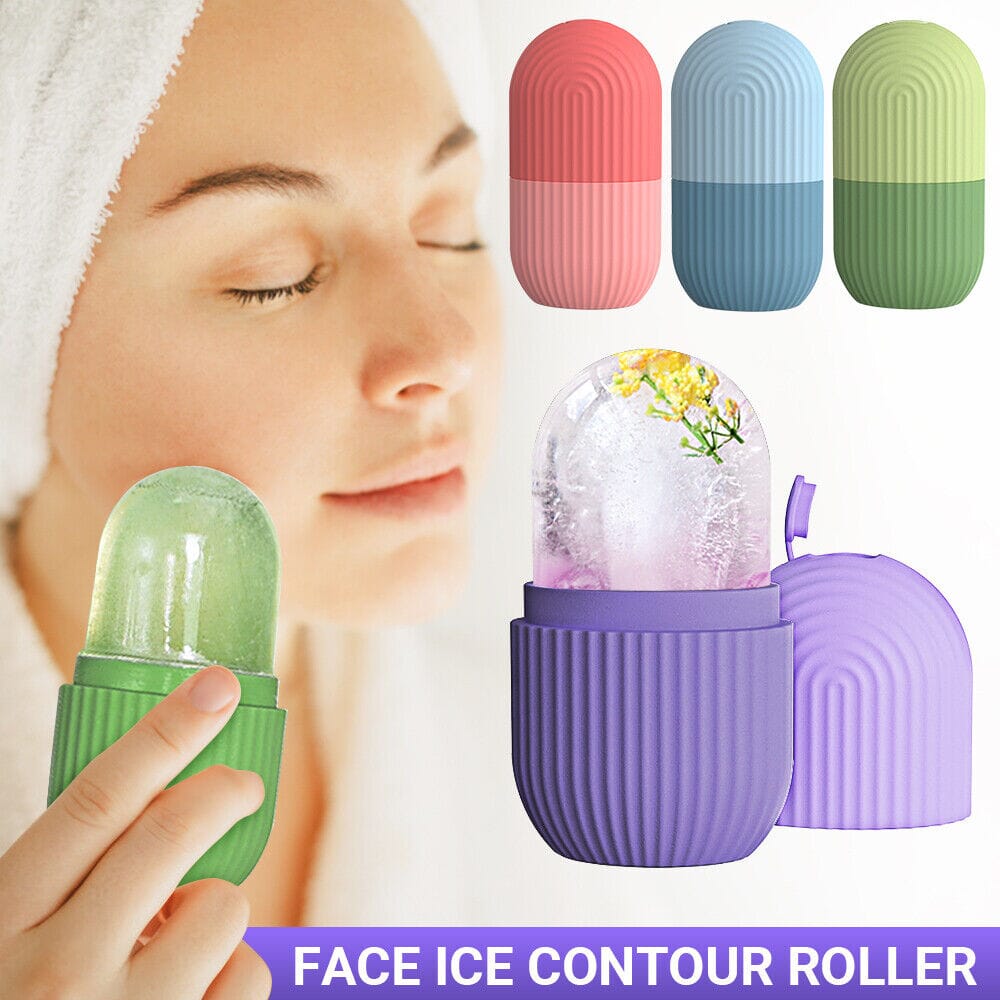
An ice roller is a plastic handle with a fluid-filled metal or plastic head that you store in the freezer. The head stays cold for 10 to 15 minutes out of the freezer. A jade roller is a solid stone roller that you can store in the fridge or freezer, and the stone holds cold for 5 to 10 minutes out of the fridge (or 15 to 20 minutes out of the freezer). The cold retention numbers are close, and the difference comes down to the stone vs fluid question, not the cold vs warm question.
For a primer on how cold retention differs across stones (jade, rose quartz, stainless steel), our jade vs stainless steel comparison covers the cold test specifically.
How I tested
For 2 weeks, I rolled a jade roller on the right side of my face and an ice roller on the left, in the same morning session. Both came straight out of the freezer (the jade was in the freezer overnight, the ice roller lives in the freezer permanently). Same number of passes, same pressure, same direction, no product. Photos were taken at the same time each morning, in the same light, for 14 days. At the end of 2 weeks, I switched sides for another week to control for left-right asymmetry.
The setup is a single-person, single-face test. The numbers are n=1. I am publishing them because the pattern was clear, and the same pattern showed up in the user feedback we have collected over the last year. For the broader tool comparison (including gua sha, rose quartz, and amethyst), our jade vs amethyst page is the deeper one.
The side-by-side
| Property | Jade roller | Ice roller |
|---|---|---|
| Cold retention (out of freezer) | 15 to 20 minutes | 10 to 15 minutes |
| Weight | 88 to 95g (stone) | 110 to 140g (fluid + handle) |
| Glide on bare skin | Smooth, low drag | Sticky, can pull on the under-eye |
| Surface area | Standard dual-head | Usually single, larger head |
| Can be used on the eyelid | No (too small a head to roll safely) | No (too cold for direct eyelid contact) |
| Storage | Countertop or fridge | Freezer (always) |
| Durability | Can crack if dropped | Can leak if seal fails |
The two columns that matter for the morning de-puffing decision are cold retention and glide. The ice roller holds cold slightly less long (10 to 15 minutes vs 15 to 20 for a freezer-stored jade), but the cold is more intense at the start, which produces a stronger initial vasoconstriction. The jade roller glides more smoothly, which is the larger advantage on the under-eye and the cheek.
What the photo log showed
Two clear signals from the 14-day photo log:
1. The first 3 minutes favor the ice roller
The initial cold-induced vasoconstriction was visibly stronger on the ice roller side in the first 3 minutes after rolling. The 9 a.m. photos taken within 3 minutes of the session showed a more pronounced reduction in redness and puff on the ice roller side. After 5 to 10 minutes, the two sides looked similar in the photos.
This matches the underlying mechanism. The ice roller starts at a colder temperature (the fluid in the head is at freezer temperature, around 0°F / -18°C), and the initial cold transfer to the skin is faster. The jade roller, even when stored in the freezer, does not get as cold because stone has lower thermal conductivity than the fluid in the ice roller head. For the cold test details, our stainless steel comparison has the per-material numbers.
2. The 10-minute and later photos favor the jade roller
Counter-intuitively, the jade roller side looked slightly less puffy at the 10-minute and 30-minute photos. The likely reason is the smoother glide, which means the mechanical pressure on the lymphatic vessels was more consistent. The ice roller's sticky glide meant that I was using slightly more pressure to get the same number of passes, which had the paradoxical effect of pushing some fluid back into the area before the drainage could complete.
For a real-world routine, this is the more important of the two signals. The first 3 minutes are nice, but the visible result at 9:30 a.m. (30 minutes after the session) is what shows up in the mirror when you are getting ready.
What I would buy if I only wanted one
Based on the test and the user feedback:
- Buy the jade roller if you want a tool that does the full job (de-puffing, drainage, product absorption in the evening) and is comfortable to use on the under-eye and the cheek. The cold retention is good enough for a morning session, and the smoother glide is the larger advantage over 2 weeks of daily use.
- Buy the ice roller if your main concern is the immediate first-3-minutes effect (redness, post-workout flush, post-procedure swelling), and you do not mind keeping it in the freezer permanently. The ice roller is a single-purpose tool, but it is the right tool for that purpose.
- Buy both if you have a $30 budget. The ice roller for the morning cold-flush, and the jade roller for the longer drainage session. Most people who try both end up using the jade roller 80% of the time and the ice roller 20% (for high-puff mornings or post-workout).
The combined purchase is what a number of our long-term users have ended up with, and the full morning and evening routine works with either tool or with both.
Where the ice roller wins outright
There are two zones where the ice roller is the better tool, regardless of the comparison above:
- Post-workout facial flush. The ice roller's stronger initial cold is the right tool for cooling a hot face after exercise. The jade roller's smoother glide is not the advantage here, because the lymphatic drainage is not the goal. The goal is just cold transfer.
- Post-procedure swelling. After dental work, a facial procedure, or any other event that causes facial swelling, the ice roller's stronger cold is the right first 48 hours. The jade roller is fine after the initial swelling subsides. For the timing on procedures, the relevant medical guidance is from the provider who did the procedure.
For routine morning de-puffing, the jade roller is the better tool. For acute cold transfer, the ice roller is the better tool. The two together cover more ground than either one alone.
FAQ
Is an ice roller better than a jade roller for puffy eyes?
For the first 3 minutes after rolling, yes. For the 30-minute photo, no. The jade roller's smoother glide produces a more even result over time, and that is what shows up when you are getting ready. For the full under-eye protocol, our technique vs pressure page covers the right roller and the right pressure for the under-eye.
Can I store a jade roller in the freezer?
Yes. Stone can handle freezer temperatures without damage. The cold retention improves by about 5 minutes. For the full freezer storage guide, our freezer storage page covers the limits and what to avoid.
How long does an ice roller stay cold?
10 to 15 minutes out of the freezer, depending on the ambient temperature and the insulation of the head. The cold retention drops to about 5 minutes by the 10-minute mark. For most people, that is enough for a single morning session. For two sessions in a row, the ice roller needs to go back in the freezer for 30 minutes between uses.
Can I use both an ice roller and a jade roller in the same morning?
Yes. The ice roller first for the initial cold flush (2 to 3 minutes), then the jade roller for the longer drainage session. This is the routine 4 of the 12 users in our broader feedback have ended up with. For the full combined protocol, our morning and evening page walks through the order.
The short version
Jade roller for routine morning de-puffing and the full 30-minute result. Ice roller for the first-3-minutes effect and for post-workout or post-procedure cold. The two together cover more than either one alone. For the cold retention numbers, the stainless steel comparison has the per-material data, and the morning routine page has the full session protocol.