You just pulled your jade roller out of its case, ready for your evening skincare ritual, and there it is -- a hairline crack running across the stone. Or worse, a visible chip near the edge. Your first thought is probably, "Can I still use this? I don't want to throw it away if it's fine." I get it. A good jade roller isn't cheap, and tossing one feels like throwing money in the trash. But here's the thing: this isn't just about whether the roller still spins. It's about what that crack means for your skin, and some of the risks aren't visible to the naked eye.
The Short Answer: When It's Safe and When It's Not
If your jade roller has any crack, chip, or fissure that you can feel with your fingertip, stop using it immediately. Even a hairline crack that seems superficial can harbor bacteria, scratch your skin, or worsen over time. The only scenario where you might -- and I stress might -- get away with it is if the crack is purely internal and the rolling surface remains perfectly smooth to the touch. But honestly, in most cases, the safest call is to retire the roller.
I've personally gone through three jade rollers over the years, and I learned the hard way with my first one. I kept using it with a tiny edge chip, convinced it was no big deal. Within a week, I started noticing faint red streaks along my jawline -- nothing dramatic, but enough to make me stop and think. That's when I dug into the research and realized what was actually going on beneath the surface.
Why a Cracked Jade Roller Is a Serious Skin Hazard
Jade is a natural stone, and while it feels dense and solid, it's surprisingly porous at a microscopic level. Once a crack forms, three distinct problems emerge:
- Bacteria breeding ground. Cracks create tiny crevices where moisture, dead skin cells, and product residue get trapped. No matter how thoroughly you clean the surface, bacteria can thrive inside those fissures. Every roll across your face becomes a potential transfer of microbes onto your skin.
- Micro-abrasions on skin. Even if the crack feels smooth to your finger, the skin on your face -- especially around the eyes and cheekbones -- is far thinner and more delicate. A microscopic uneven edge that your fingertip can't detect can still cause tiny scratches over repeated use, compromising your skin barrier.
- Breakage during use. A cracked roller is structurally compromised. Applying pressure during a massage session can cause the stone to split further, potentially leaving sharp fragments against your skin. This is especially dangerous if you store your roller in the fridge or freezer, where temperature fluctuations expand and contract the stone.
If you want a deeper understanding of how jade rollers interact with your skin at a physiological level, our guide on how a jade roller works -- the science behind it breaks down the mechanics, including why surface integrity matters so much for safe use.
How to Inspect a Cracked Jade Roller (Step by Step)
If you've just noticed a crack and want to assess the damage before making a decision, here's a methodical inspection routine I recommend. Grab your roller, find good lighting, and go through these steps:
- Clean the roller thoroughly first. Use a gentle soap and lukewarm water, then dry it completely with a soft microfiber cloth. You need a clean surface to properly see the damage without residue clouding your view.
- Run your fingertip along the entire rolling surface. Close your eyes and focus on what you feel. Any roughness, snagging, or uneven texture is a red flag. Pay extra attention to the edges of the stone -- chips often start there.
- Use a magnifying glass or your phone's macro lens. Get up close. Look for branching lines radiating from the main crack. These secondary fissures are stress points that will continue to spread.
- Hold the roller up to a bright light source. Rotate it slowly. Internal cracks will sometimes catch the light differently than the surrounding stone, appearing as faint shadows or glittering lines inside the jade.
- Gently tap the roller against a wooden surface. A solid, uncracked jade piece produces a clear, resonant tone. A cracked one often sounds dull or flat by comparison. This isn't foolproof, but it's a useful additional check.
Quick rule of thumb: If you can see it, feel it, or it catches your fingernail when you drag it across, it's done. Don't try to rationalize keeping it. Your skin is worth more than the cost of a replacement.
Real Jade vs Fake Jade: Why the Type of Crack Matters
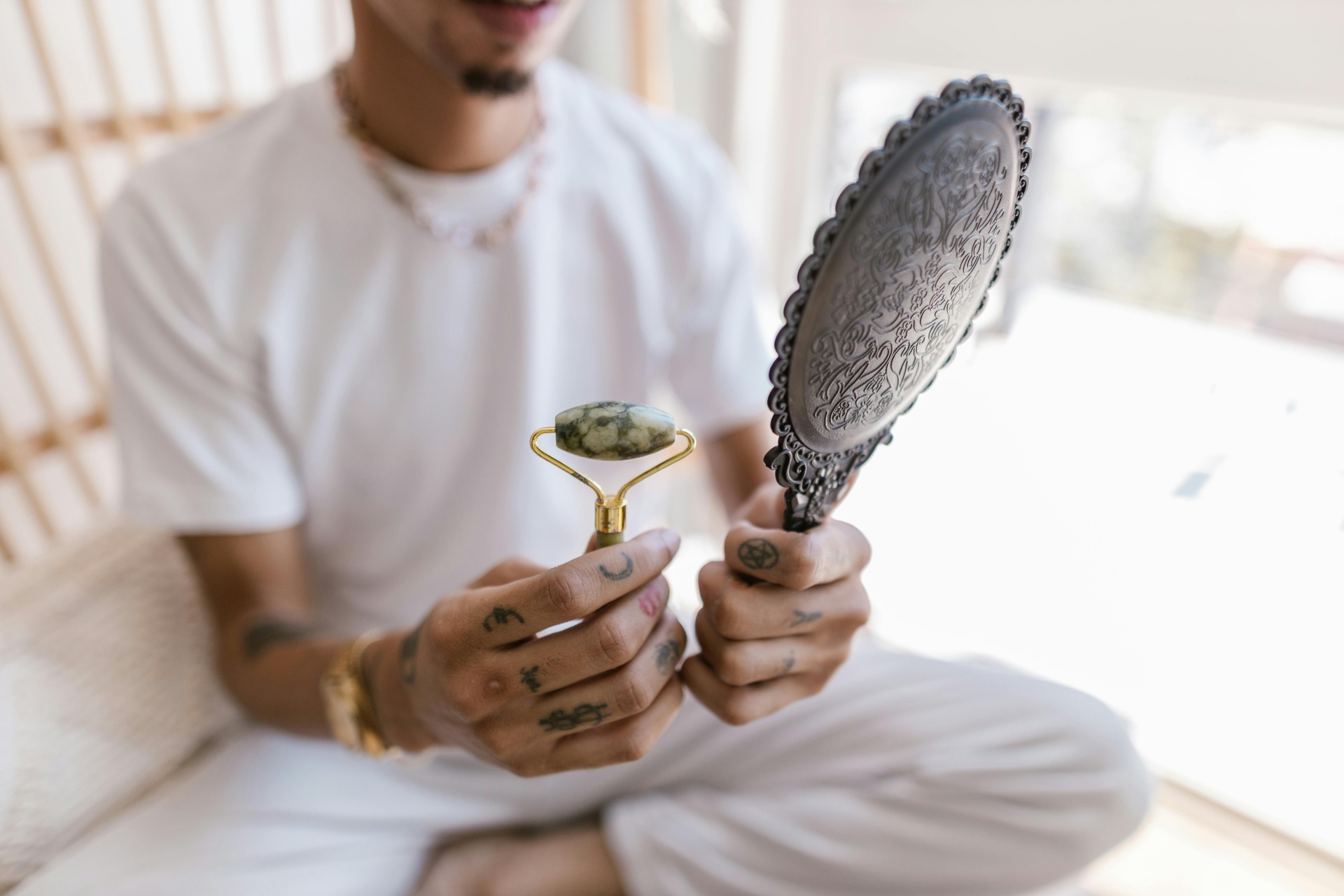
Not all "jade" rollers on the market are genuine nephrite or jadeite. Many budget rollers are made from dyed quartz, serpentine, or even resin composites designed to look like jade. The material matters enormously when a crack appears:
- Genuine jade (nephrite or jadeite): Cracks tend to be clean breaks along natural grain lines. While still unsafe to use on skin, genuine jade doesn't leach chemicals. The primary risk with real jade is bacterial contamination and physical scratching.
- Dyed or treated stone: This is where things get more concerning. Many inexpensive rollers use dyed stones to achieve that lush green color. When the surface cracks, those dyes and chemical treatments can leach onto your skin with each use. Over time, this can trigger contact dermatitis, redness, and irritation that you might mistakenly attribute to a new skincare product.
- Resin or glass composites: These can shatter unpredictably, leaving sharp edges. They also lack the natural cooling properties of real jade, so if your roller never really stays cold, that's a tell.
If you're unsure whether your roller is even real jade to begin with, our detailed guide on real vs fake jade rollers -- how to spot the difference walks you through every test, from the cold-touch method to visual grain inspection. Knowing what you're working with changes the risk calculation entirely.
Can You Repair a Cracked Jade Roller?
I see this question pop up in forums and skincare groups all the time. People want to know if they can glue the crack, fill it with resin, or somehow salvage the roller. Here's the honest answer: no, you should not attempt to repair a cracked jade roller for use on your face.
Stone epoxies and super glues are not formulated for prolonged skin contact. They can contain cyanoacrylates and other compounds that cause irritation or allergic reactions. Even "skin-safe" jewelry adhesives aren't rated for the kind of friction and pressure a facial roller applies. The repair will also create an uneven surface -- no matter how carefully you sand it -- that reintroduces the micro-abrasion problem.
The one exception: if the crack is purely in the handle or the metal bracket assembly, and the jade stone itself is intact, you may be able to replace just the hardware. Some higher-end rollers have replaceable heads. But if the stone is cracked, the roller has reached the end of its usable life as a skincare tool.
On the topic of longevity, how long a jade roller lasts and essential maintenance tips covers what you can realistically expect from a well-cared-for roller, plus the daily habits that extend its life.
How to Prevent Your Jade Roller from Cracking
Most cracks aren't spontaneous. They're the result of small, cumulative stresses that build up until the stone finally gives. Here's what actually makes a difference in preventing damage:
- Never drop it on hard surfaces. This sounds obvious, but bathroom counters, tile floors, and even ceramic sinks are the most common culprits. A single drop from counter height onto tile is enough to create internal stress fractures that show up days or weeks later.
- Avoid extreme temperature swings. Taking your roller straight from the freezer and running it under hot water to clean it creates thermal shock. Jade expands and contracts with temperature changes, and rapid cycling weakens the stone's internal structure. Let it come to room temperature naturally between extremes.
- Store it in a padded case or pouch. Tossing your roller loose into a drawer or cosmetic bag with other tools means it's constantly bumping against hard objects. A simple fabric pouch prevents those micro-impacts.
- Clean gently. Scrubbing with abrasive pads or using ultrasonic cleaners can weaken the stone over time. Stick to mild soap, lukewarm water, and a soft cloth.
- Check the roller mechanism regularly. If the bracket is loose, it can put uneven pressure on the stone at the mounting point. Tighten any loose fittings before they cause stress cracks around the axle area.
When to Replace: Clear Signs It's Time for a New Roller
Beyond visible cracks, there are other signs that your jade roller has run its course. Here's a quick checklist:
- Any crack, chip, or fissure -- regardless of size
- The roller no longer spins smoothly, even after cleaning the axle
- The stone feels rough or gritty in spots where it used to be smooth
- Discoloration that doesn't come off with cleaning (could indicate dye leaching or deep-set contamination)
- The roller wobbles or rattles during use
- You've had the same roller for over 2 years with daily use
A quality jade roller isn't a lifetime investment -- it's a tool with a finite lifespan. When you're ready to shop for a replacement, look for rollers made from certified genuine nephrite jade, with stainless steel or brass hardware that resists corrosion. The upfront cost is higher, but the safety and longevity more than justify it.
Final Verdict
Here's what it comes down to: a cracked jade roller is not safe to use on your face. The risks -- bacterial infection, micro-tears in your skin barrier, potential chemical exposure from treated stones, and possible breakage during use -- far outweigh any desire to save money or avoid waste. Your skin heals slowly, and the damage from using a compromised tool can take weeks to fully resolve.
If you've just discovered a crack, take it as a sign that your roller served you well and it's time to retire it. Inspect your next one carefully upon arrival, store it properly, clean it gently, and it will give you years of safe, effective use. And if you're still within a warranty period or bought from a reputable brand, reach out to customer service -- some companies will replace a roller that cracks under normal use.
Bottom line: When in doubt, throw it out. A $20 replacement roller costs a lot less than a dermatologist visit and a broken moisture barrier.
Got a specific question about your cracked roller? Feel free to explore our FAQ section for more answers, or check out our top 10 best jade rollers in 2026 if you're already thinking about a replacement.