Pink Jade Roller Guide: Why This Color Stone Is More Than Just Pretty
Updated 2026 | Think pink jade rollers are just rose quartz with a fancy label? Think again. Learn what makes pink jade genuinely different, how it compares to rose quartz, and whether it's worth adding to your skincare routine.
Disclaimer
This guide is for general educational purposes only and does not constitute professional skincare or medical advice. Always consult a licensed dermatologist or skincare professional before using any new tool or technique on your skin.
Published on May 15, 2026 | 8 min read
Scroll through Amazon or Instagram and you'll spot plenty of "pink jade rollers." Here's the problem: a significant chunk of them aren't jade at all. Some are dyed glass, others are rose quartz with misleading labels, and a few are genuine jadeite with a natural pink hue that most buyers couldn't tell apart from the fakes. The skincare industry has turned "pink jade" into a buzzword that moves units, not a term with any consistent meaning. If you've been eyeing one, or already own one and aren't sure what you actually have, this guide will clear things up.
In This Article
What Is "Pink Jade," Really?
This is where most guides go wrong. They use "pink jade" as a product name without explaining the stone behind it. Let's fix that.
There are two minerals that get sold as "jade": nephrite and jadeite. They're completely different minerals with different crystal structures, hardness levels, and origins. Nephrite (the one most commonly used in quality facial rollers) comes from calcium amphibole and registers 6-6.5 on the Mohs scale. Jadeite (the rarer, more expensive variety) is a pyroxene mineral that scores 6.5-7.
Pink coloring in jade is almost always jadeite, not nephrite. The pink hue comes from trace amounts of manganese within the crystal lattice. Natural pink jadeite ranges from a pale blush to a deeper rose, depending on the manganese concentration and how the stone was formed under heat and pressure over millions of years.
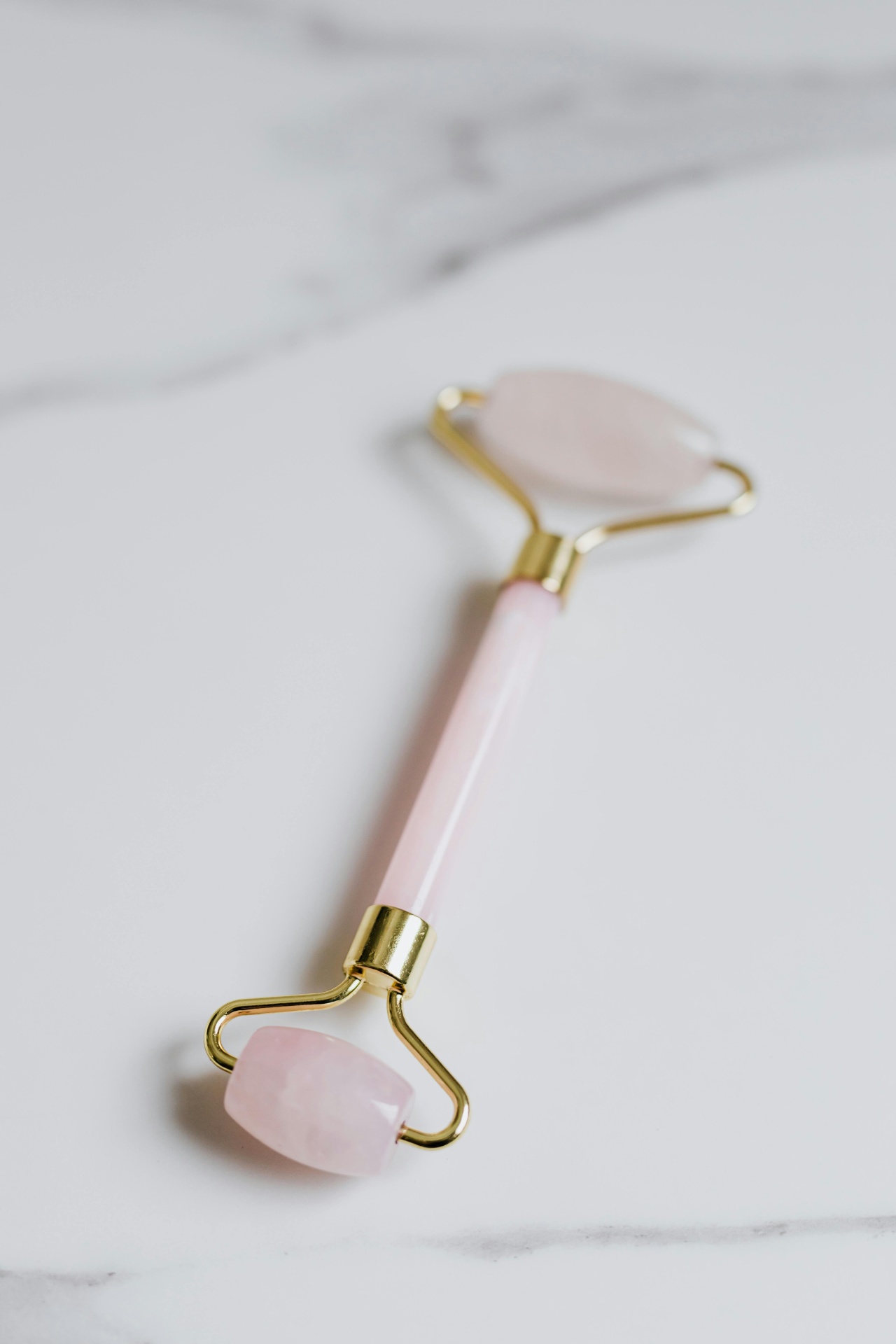
Nephrite, which is the stone used in most traditional jade rollers sourced from Xiuyan, China, rarely occurs naturally in pink. When you see a "nephrite jade roller" advertised in pink, it's usually either dyed or it's actually aventurine quartz being mislabeled. For a deeper understanding of why nephrite is the preferred stone for facial tools, see our nephrite vs. jadeite comparison.
The takeaway: if you're buying a pink roller specifically because you want jade, look for "pink jadeite" rather than just "pink jade." If the listing doesn't specify jadeite vs. nephrite, and the price is under $15, it's likely not real jade of any color.
Pink Jade vs. Rose Quartz vs. Green Jade
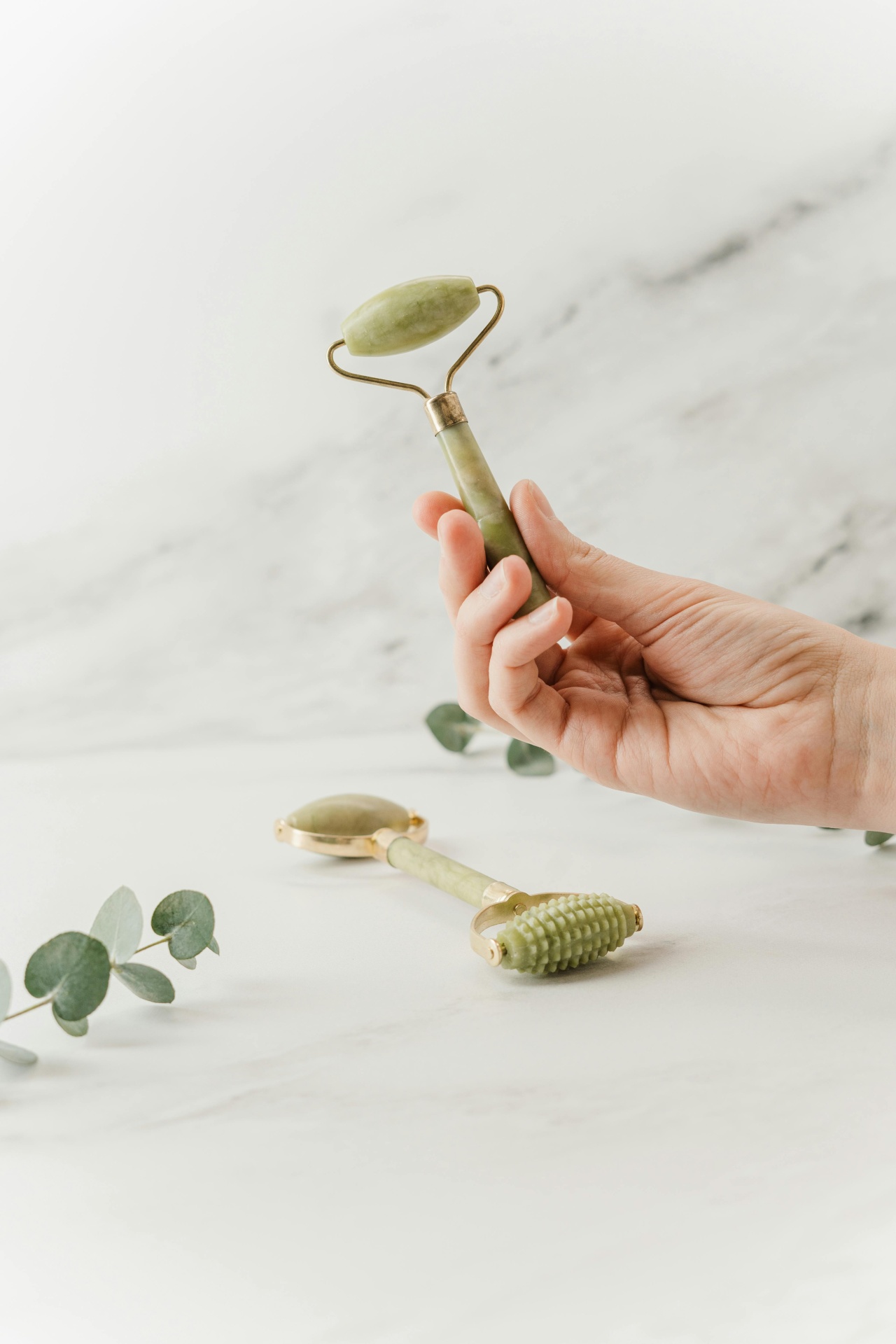
This is the comparison nobody makes but everyone needs. The three most common "pink-toned" facial rollers on the market are genuine pink jadeite, rose quartz, and green nephrite jade. They look similar enough to cause confusion, but they behave differently in practice.
| Feature | Pink Jadeite | Rose Quartz | Green Nephrite Jade |
|---|---|---|---|
| Mineral type | Pyroxene (jadeite) | Quartz (silicon dioxide) | Amphibole (nephrite) |
| Mohs hardness | 6.5-7 | 7 | 6-6.5 |
| Thermal retention | Good (stays cool 3-5 min) | Moderate (stays cool 2-4 min) | Excellent (stays cool 5-8 min) |
| Durability | Very durable, resists chips | More brittle, can chip on hard surfaces | Extremely tough, interlocking fiber structure |
| Porosity | Very low (non-porous) | Low | Very low (non-porous) |
| Typical price | $20-$60 | $10-$40 | $12-$50 |
| Best for | Aesthetics + durability combo | Sensitive skin (smoothest glide) | Longevity + cooling effect |
The main functional difference is in thermal retention. Jade's superior thermal conductivity is one of its biggest advantages over other roller materials. Green nephrite still leads here, but pink jadeite holds its own significantly better than rose quartz.
On durability, jadeite and nephrite both outperform rose quartz. Quartz has a higher Mohs hardness rating, which sounds better on paper, but its crystalline structure makes it more prone to chipping when dropped on a hard surface. Jade's interlocking fiber-like crystal structure (especially nephrite) is actually tougher in real-world use, which is why it's survived thousands of years as a carving material.
Does the Color Actually Affect the Results?
Honestly? No. The massage benefits of any facial roller come from the physical action of the stone on your skin, not from the stone's color. Lymphatic drainage, blood circulation stimulation, serum absorption improvement, and the temporary de-puffing effect are mechanical processes that work the same whether your roller is pink, green, white, or lavender.
Where color does matter is in two indirect ways:
First: durability and maintenance. Natural pink jadeite is harder and less porous than dyed alternatives. If you're choosing between a genuine pink jadeite roller and a pink-dyed glass roller at the same price, the jadeite will last longer, resist staining, and maintain its surface smoothness through hundreds of uses. A dyed glass roller might start showing wear within weeks.
Second: temperature behavior. Different minerals conduct and retain heat at slightly different rates. Jade (both nephrite and jadeite) disperses heat more efficiently than quartz, which is why jade rollers feel "colder" to the touch and maintain that cool sensation longer during use. For a thorough comparison, our jade roller vs. rose quartz roller guide covers this in detail.
How to Tell if Your Pink Jade Roller Is Real
With so many fakes on the market, here are tests you can do at home without any special equipment:
The Light Test
Hold your roller up to a bright light source (a phone flashlight works). Real pink jadeite will show internal translucency with subtle color variations, natural veining, and occasional micro-inclusions. It should look like colored glass candy, not perfectly uniform plastic. Fake pink jade (dyed glass or resin) will appear completely uniform in color, almost like a solid piece of pink plastic. No internal patterns, no depth.
The Sound Test
Gently tap the roller head against a ceramic mug or glass jar. Real jadeite produces a high-pitched, resonant chime that rings for a second or two. Glass or resin makes a dull thud or a flat click with no sustain. This is the single easiest test and takes two seconds.
The Temperature Test
Jadeite feels distinctly cold when you first pick it up and takes longer to warm up in your hand than glass or resin. If your roller feels room-temperature or warms up almost instantly, it's probably not real jade. For more detailed identification methods, our real vs. fake jade roller guide covers the full range of at-home tests.
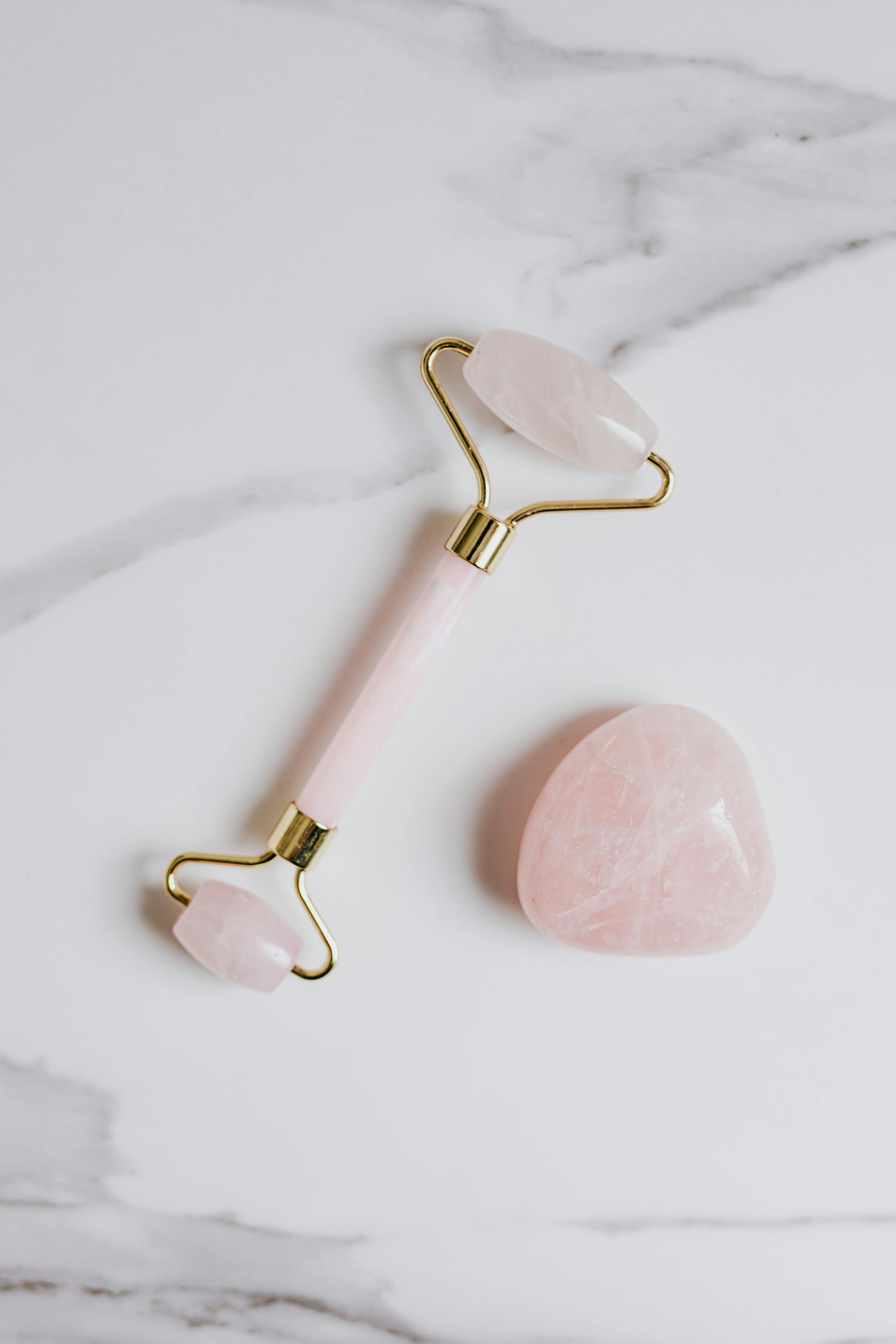
Red flag: if the pink color seems too vivid, bubblegum-like, or perfectly even across the entire stone with zero variation, you're almost certainly looking at dyed glass. Natural pink jadeite has a softer, more organic color with subtle shifts in intensity.
Who Should (and Shouldn't) Buy a Pink Jade Roller
A pink jade roller makes sense if:
- You want the durability of jade with a less common aesthetic. Green is great, but some people genuinely prefer the warmer pink tone for their vanity display or social media photos. That's a valid reason to choose jadeite over nephrite.
- You're specifically interested in jadeite. Jadeite rollers are less common than nephrite ones, and the pink variety is one of the easiest ways to find genuine jadeite at a reasonable price point.
- You want a conversation piece. Most people have seen green jade rollers. A pink one stands out, and you can actually explain the mineralogical difference to curious friends.
A pink jade roller is probably not worth it if:
- You're on a tight budget. A genuine pink jadeite roller costs more than a standard green nephrite one. For the same price, you can get a higher-quality green nephrite roller that will outperform it thermally.
- You just want the best cooling effect. Green nephrite retains cold longer than pink jadeite. If morning de-puffing is your priority, stick with the traditional green.
- You can't verify authenticity. If a listing doesn't specify "jadeite" and the price seems too good to be true, you're probably getting dyed glass. You're better off with a known-good green nephrite roller from a trusted brand on our best-of list.
Bottom line: a pink jade roller isn't a skincare upgrade over green jade or rose quartz. It's an aesthetic choice that comes with genuine mineral differences (hardness, thermal properties, durability) that matter if you're particular about your tools. If you want the prettiest roller in your collection and don't mind paying a slight premium for jadeite, go for it. If you want the most effective de-puffing tool per dollar, the classic green nephrite is still the smarter pick.