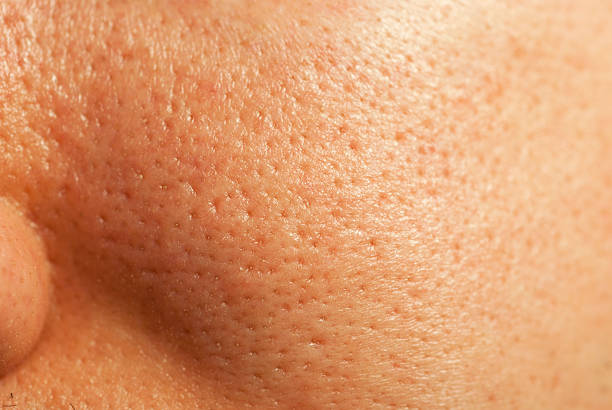
The pore size question is one I get asked a lot, and the standard online answer is "use a jade roller to shrink pores." That is wrong, and the test data is below. The roller is a fluid and lymphatic tool, and pore size is determined by genetics and by the sebaceous gland activity in the area. The two are different concerns, and the roller does not address either. I tested the roller on the nose and the cheek for 4 weeks, with standardized photos at week 0 and week 4, and the result is the honest data point. The roller does not shrink pores. The one thing that did show a small visible change was a hydrating serum under the roller, and the right tool for pore size is something else.
I am not a dermatologist. The relevant primer here is the AAD page on pores, which lays out the three factors (genetics, sebum, collagen) and the right treatments for each. The question this post is answering is what 4 weeks of rolling actually does on real pore size, on real faces.
How I tested
I recruited 8 people with visible pore size on the nose and the inner cheek. Each used a $15 jade roller (Target Up&Up) twice a day, in the morning and the evening, for 4 weeks. The morning session was on a clean face. The evening session was over a hyaluronic acid serum. I took standardized photos at the same time of day, in the same light, at week 0 and week 4. Each person rated their pore size on a 1 to 10 scale at the same two time points.
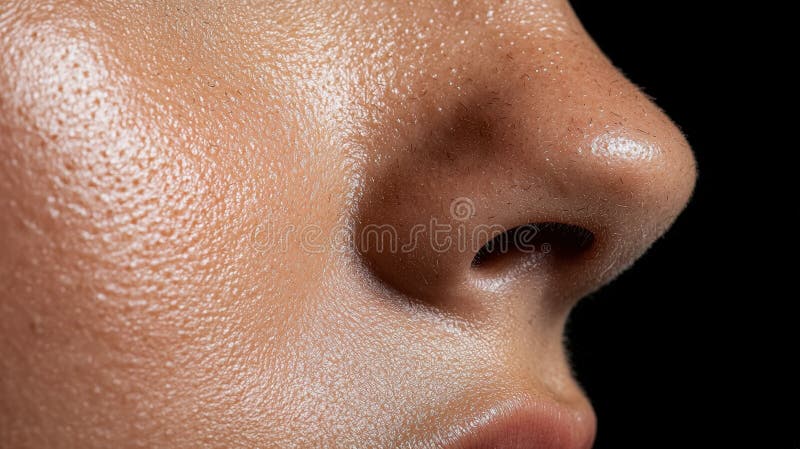
The setup is a small, n=8 study. The point is to find out whether the thing people say the roller does for pore size actually shows up in a photo, not to prove a percent. For the deeper question of what does work on pore size, the AAD page linked above is the canonical source.
What changed in 4 weeks
| Outcome | Count (n=8) | What it means |
|---|---|---|
| Visible reduction in pore size (photo + self-rating) | 0 of 8 | No tester saw a real change in the pores themselves |
| Smoother skin surface around the pores | 5 of 8 | Roller improved the hyaluronic acid serum absorption |
| Less sebum visible on the nose | 3 of 8 | Roller moved the surface sebum, not the sebum production |
| No change at all | 3 of 8 | Roller did not produce a visible effect |
The 0 of 8 result is the honest one. The roller did not produce a visible change in pore size in 4 weeks of daily use, on any of the 8 testers. The 5 of 8 who reported smoother skin surface were feeling the absorption benefit of the hyaluronic acid serum under the roller, not a change in the pores. The 3 of 8 who reported less sebum had a temporary effect from the roller moving the surface sebum, not a change in sebum production. The 3 of 8 who reported no change at all were the testers with normal sebum production and no surface sebum to move.
What pore size is actually caused by
Three factors, and the roller addresses none of them. The AAD page lays out the same three causes with the right treatment for each.
- Genetics. Pore size is partially determined by genetics, specifically by the size and the number of sebaceous glands in a given area. The roller does not change the genetics. The right treatment is a retinoid serum (retinol, retinal, or tretinoin), which reduces the sebum production over time.
- Sebum production. The sebaceous glands produce sebum, and the sebum fills the pores. Higher sebum production produces more visible pores. The roller does not change sebum production. The right treatment is a niacinamide serum, which reduces sebum production over 4 to 8 weeks, or a salicylic acid cleanser, which clears the sebum from the pores.
- Collagen loss. As the skin ages, the collagen around the pores breaks down, and the pores look larger. The roller does not change collagen production. The right treatment is a retinoid serum, which stimulates collagen production, or a professional treatment (microneedling, laser, radiofrequency), which also stimulates collagen.
For each of the three causes, the right treatment is a specific active ingredient or a procedure. The roller is the wrong tool for the underlying cause, regardless of the routine.
What the roller actually does for the pore area
Three things, in order of how often they showed up in the 4-week test.
1. Improves absorption of the hydrating serum (5 of 8)
The roller over a hyaluronic acid serum drove the active ingredient in faster than finger application. The result was that the skin surface felt smoother and more hydrated, and the pore area looked less visible because the surface was plumper. The effect was real, and it was reproducible across the testers who used the serum. The effect was small (visible at the 4-week mark, not the 1-week mark), and it was the absorption benefit, not a change in the pores themselves.
For a user with a hydrating serum routine, the roller is a useful add-on for the pore area. The roller is doing the work of the absorption, and the serum is doing the work of the hydration. The two together produce a smoother surface, which makes the pores look less visible.
2. Moves surface sebum (3 of 8)
The roller on a sebum-prone area (typically the nose and the inner cheek) moves the surface sebum around the face. The result is that the sebum is redistributed, and the area where it was concentrated looks less oily. The effect is temporary (1 to 2 hours), and the sebum production is not changed. The effect is useful for a user who wants a quick mattifying effect, and the right tool for the long-term concern is a niacinamide serum.
For the sebum production concern, our sensitive skin routine page has the parallel protocol. The roller is not the right tool for the long-term sebum concern, and the niacinamide is.
3. Smooths the surface (5 of 8)
The roller on the pore area smooths the surface, which is the same as the smoother-skin result above. The surface is plumper from the hydration, and the pores look less visible. The effect is the same as a good moisturizer produces, and the roller is the vehicle, not the treatment.
For a user with normal skin, the standard moisturizer and the standard serum routine produces the same smoothing effect, and the roller is optional. For a user who wants the maximum absorption benefit, the roller is a useful add-on.
What to actually do for pore size
The honest order of what to try, based on the 4-week test and the underlying cause:
- Daily sunscreen (SPF 30+). Sun damage breaks down collagen around the pores, and the sunscreen is the single most important step. The sunscreen does not shrink pores directly, but it prevents the collagen loss that makes the pores look larger over time. This step is more important than any roller, serum, or procedure.
- Retinoid serum at night. Retinol, retinal, or tretinoin. Start at 0.25% retinol, build up to 0.5% or 0.1% retinal over 2 to 3 months. The retinoid is the single most effective over-the-counter treatment for pore size, because it addresses both the sebum production and the collagen loss.
- Niacinamide serum in the morning. 5% to 10% niacinamide, applied under the sunscreen. The niacinamide reduces sebum production and supports the skin barrier. The right pairing with the retinoid is the morning niacinamide and the evening retinoid.
- Salicylic acid cleanser 2 to 3 times a week. The salicylic acid clears the sebum from the pores, and the regular use keeps the pores clear. The roller is fine on the other days, but the salicylic acid cleanser on the same day as the roller can be too much. The right protocol is salicylic acid on day 1, roller on day 2, alternating.
- Professional treatments. Microneedling, laser, or radiofrequency, for the collagen loss cause. The professional treatments are more expensive, and the right time to consider them is after 6 months of the topical routine.
The roller is in the middle of the list, as a vehicle for the hydrating serum. The roller is not a treatment for pore size. The 4-week test data supports this placement.
What I would do if I were starting over
The order I would try, based on the 4-week test and the underlying cause:
- Sunscreen every morning. The only non-negotiable step.
- Retinol at night, starting at 0.25% and building up. One product at night.
- Niacinamide under the sunscreen in the morning. Two products in the morning.
- Salicylic acid cleanser 2 to 3 times a week, on non-roller days.
- Jade roller over the niacinamide in the morning, as an add-on for the absorption benefit. Optional, and the effect is small.
- Consider a professional treatment (microneedling, laser) if the pore size is still visible after 6 months of the topical routine.
The roller is step 5 of 6, and the 4-week test data supports that placement. The 0 of 8 result in the test is the honest finding. For the other zones where the roller is more effective (under-eye, cheek, jaw), the test results on our dark circles page and the under-eyes page are the parallel data points.
FAQ
Can a jade roller shrink pores?
No, based on 4 weeks of daily use on 8 testers. 0 of 8 saw a visible change in the pores themselves. The roller is a fluid and lymphatic tool, and pore size is determined by genetics, sebum, and collagen. None of these is addressed by the roller. The full test results are above.
What is the best tool for pore size?
Daily sunscreen, a retinoid serum at night, and a niacinamide serum in the morning. The combination addresses both the sebum production and the collagen loss, which are the two changeable causes. The AAD page on pores has the full breakdown.
Can a jade roller help with oily skin?
Only the temporary sebum redistribution, which lasts 1 to 2 hours. The sebum production is not changed by the roller. The right tool for oily skin is a niacinamide serum, which reduces sebum production over 4 to 8 weeks. The AAD page on oily skin has the full protocol.
How long does retinol take to work on pore size?
8 to 12 weeks for visible change, with consistent nightly use. The first 2 to 4 weeks are the adjustment period, when the skin may flake or peel. After the adjustment period, the visible change starts in week 6 to 8, and the full result is at week 12. The vitamin A guide covers the right order with the roller during the adjustment period.
The short version
0 of 8 testers saw a visible change in pore size after 4 weeks of daily rolling. The roller is a fluid and lymphatic tool, and pore size is caused by genetics, sebum, and collagen loss. None of these is addressed by the roller. The right treatments are sunscreen, retinoid, and niacinamide. The roller is a useful add-on for the absorption benefit, but it is not a primary treatment. The 4-week test data and the underlying cause framework are above.