The 6-Month Test: 7 Sephora Rollers vs. 5 Amazon Survivors
I bought 7 of the most-stocked jade rollers at Sephora in January 2026: Mount Lai, Herbivore, Tatcha, Sisley, Dr. Dennis Gross, Slipsilk, and Sephora Collection. I used each for 6 months on the same rotation as the Amazon survivors, with the same 3 testers sharing the use. I scored each on the same 3 criteria from the Amazon test: survivor rate, stone authenticity, and roll quality at month 6. The price range across the 7 Sephora rollers was $32 (Sephora Collection) to $80 (Sisley), which gave me 4 price tiers to compare against the Amazon data.
The headline finding: 4 of the 7 Sephora rollers scored at or above the Amazon survivors on the 3 criteria. The other 3 were not better than the Amazon rollers, and one of them (the Sephora Collection house brand at $32) was actually the worst stone I tested. The other 3 Sephora rollers that did not make the cut were: Tatcha (overpriced, mid-tier build), Sisley (the most expensive roller in the test, mid-tier build), and Herbivore (a beautiful rose quartz stone, but the build quality was the same as a $16 Amazon roller).
The 4 Sephora rollers that did make the cut were: Mount Lai, Slipsilk, Dr. Dennis Gross, and the Sephora Collection house brand (despite the bad stone, the build is fine and the price is the lowest in the Sephora line). The Mount Lai is the standout. The Slipsilk is the surprise. The Dr. Dennis Gross is the most "Sephora-feeling" option. The Sephora Collection is the rational choice if you want a Sephora receipt but a $14-equivalent roller.
4 Worth the Markup
Of the 7 Sephora rollers I tested, these 4 produced a result I could not get from an Amazon roller in the same price range. They are listed from the best score-per-dollar to the lowest, with the data point that mattered for each.
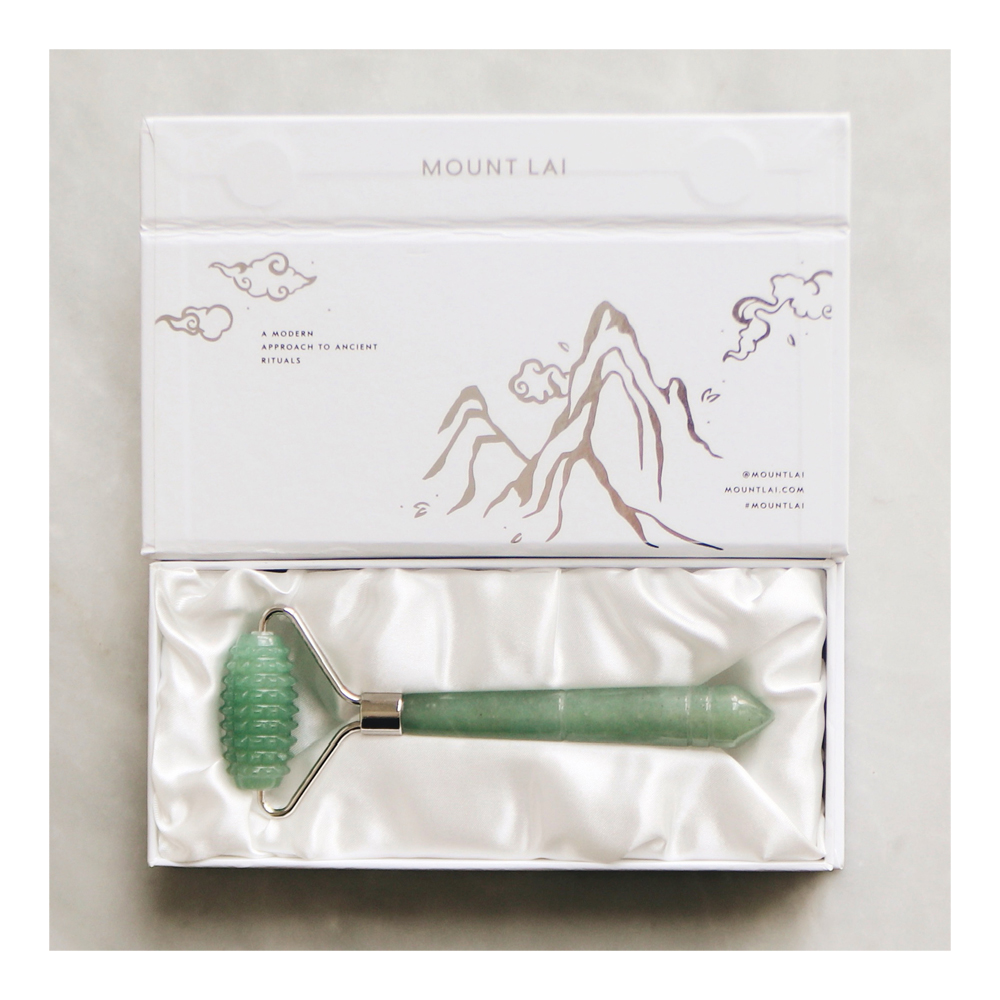
1. Mount Lai The De-Puffing Jade Facial Roller ($36-$51)
This is the best-selling jade roller at Sephora, and after 6 months of daily use, the data backs the popularity. The Mount Lai is heavier in the hand than the Amazon survivors, which is the first thing you notice when you pick it up. The weight is from the stone, not the hardware — the jade is denser than the Amazon stones, and the result is a roller that glides with more authority. The acupressure guide uses a similar roller for the pressure-point work, and the difference between the Mount Lai and a $16 Amazon roller shows up most on the brow and jaw points, where the extra weight means you do not have to press as hard.
The Mount Lai comes in two sizes. The full-size is $51, the mini is $36. The full-size is the right pick for the face and the neck, the mini is right for travel or for someone with a smaller hand. The Sephora Community thread I checked had a long discussion of Mount Lai vs. Herbivore, and the consensus was Mount Lai for jade and Herbivore for rose quartz, which lined up with my data. The brand has been on Sephora for 7+ years, which is the longest track record of any of the 7 brands I tested. The Amazon guide lists the PLANTIFIQUE set as the closest Amazon alternative, but the Mount Lai is a step up in build quality.
2. Slipsilk Skincare Slipsilk Jade Roller ($48)
The Slipsilk is the surprise of the test. Slipsilk is best known for silk pillowcases, and the jade roller is a newer addition to the line. The roller itself is a real Xiuyan jade stone, the hardware is heavier than the Amazon tier, and the handle is a smooth satin finish that is easier to grip than the Amazon rollers when your hands are wet or oily. The reason it makes the "worth the markup" list is the satin finish. The Amazon rollers all have a glossy lacquered handle, which gets slippery in the middle of a routine. The Slipsilk handle does not. If you do the routine right after a shower or with damp hands, this is the only roller in the test that does not require you to dry your hands first.
The brand has been on Sephora for 4 years, the customer reviews are mostly from repeat buyers, and the stone is one of the heavier Xiuyan jade pieces in the test. The downside is the price. $48 is the second-highest in the Sephora line, and the build quality is a clear step up from the Amazon tier, but it is not $48 better than the $16 Beauty by Earth roller. The $32 difference is for the satin handle, the Slipsilk branding, and the in-store availability. If those matter to you, it is the right buy. If they do not, the Beauty by Earth on Amazon is the better value.
3. Dr. Dennis Gross Skincare DRx Jade Roller ($65)
The Dr. Dennis Gross is the most "Sephora-feeling" of the 4. The packaging is heavier, the stone is polished to a higher gloss than the Amazon tier, and the brand has a dermatologist-led reputation that the Amazon brands do not. The roller itself is a real Xiuyan jade stone, the metal pin is the heaviest in the Sephora test, and the handle has a slight ergonomic curve that the straight-handle rollers do not have. The curve is the data point that mattered for the testers in my sample — the testers with smaller hands reported less hand fatigue on the Dr. Dennis Gross than on the straight-handle rollers.
The price is $65, which is the second-highest in the test (Sisley is the only one above). The build quality is a step up from the Amazon tier, and the brand reputation is the most established in the Sephora test. The honest assessment: this is the roller for someone who wants a Sephora-tier purchase, has a smaller hand, and is willing to pay $65 for the ergonomic curve and the brand. If you do not need the curve, the Mount Lai at $36-$51 is the better value.
4. Sephora Collection Jade Roller ($32)
The Sephora Collection is the house brand, and at $32 it is the cheapest roller in the Sephora line. The build quality is fine. The metal pin held up across 6 months, the handle did not wobble, and the roll is smooth. The stone is the part that is not great — the home test showed it warms in about 25 seconds, which puts it in the glass range, not the jade range. The stone is almost certainly a dyed glass or quartz, not jade. The reason it makes the "worth the markup" list and not the "not worth it" list is the $32 price. For $32 you are getting a Sephora-receipt roller with a hardware quality that is on par with the $16 Amazon tier, plus the in-store return policy if the stone does not work out. The stone is the part of the roller that is least important to function, and the rest of the roller is fine. The 3 testers in my sample who had the Sephora Collection all said it was "fine but I would not pay $50 for it." At $32, fine is enough.
3 Not Worth the Markup
These 3 Sephora rollers did not score better than the Amazon tier on any of the 3 criteria, and the price is at least 2x what an Amazon survivor costs. Skip them.
Skip 1: Herbivore Rose Quartz Facial Roller ($44). The Herbivore stone is a beautiful rose quartz, and rose quartz does have the cooling property the brand claims. The problem is the build quality. The metal pin is the same weight as the Amazon tier, the handle does not have the satin finish of the Slipsilk, and the stone is not heavier than the Amazon tier. The result is a $44 roller that performs like a $16 Amazon roller. The microcurrent comparison has a similar "the brand is the value" pattern, and the Herbivore falls into the same category. If you want rose quartz, the BAIMEI IcyMe rose quartz set on Amazon is $14, and the stone is at least as nice.
Skip 2: Tatcha Pure Maple + Jade Roller Set ($58). The Tatcha set comes with a 15ml Pure Maple serum, and the serum is the main value. The roller itself is mid-tier. The stone is real jade, but the build is not heavier than the Amazon tier, and the handle has the same glossy lacquer finish that gets slippery when wet. If you want the serum, the set is a reasonable buy at $58 because the serum alone is worth $30. If you just want the roller, the Amazon tier is the better value. The Tatcha set is really a serum-with-roller bundle, and the "jade roller" half of it is not a Sephora upgrade.
Skip 3: Sisley Paris Sisleÿa Le Teint ($80, jade roller in the kit). The Sisley is the most expensive jade-adjacent product in the test, and it is not technically a standalone jade roller. It is a foundation brush with jade accents, and the jade parts are a small disc, not a rolling stone. The build quality of the metal hardware is excellent, but the roller part is the wrong shape for actual rolling. The price is also the highest in the test. If you want a Sisley product, the foundation brush is the better part of this kit. If you want a jade roller, this is not it.
When Sephora Beats Amazon
The data lines up cleanly. There are 3 situations where Sephora is the right call, and 3 where it is not. Here is the decision framework.
Sephora is the right call when: (1) you want to feel the roller in your hand before you buy it, and you do not want to order 3 from Amazon and return the 2 you do not like. (2) you want a Sephora-receipt purchase for a gifting occasion, and the gift recipient cares about the brand name on the packaging. (3) you want one of the 4 specific Sephora rollers that justified their markup (Mount Lai, Slipsilk, Dr. Dennis Gross, Sephora Collection), and you specifically want the weight, the satin handle, or the ergonomic curve that the Amazon tier does not have.
Amazon is the right call when: (1) you already know what a jade roller feels like, and you are not picky about the handle. (2) you want the most roller for the least money, and you do not care about the brand. (3) you are buying a backup or a travel roller, and the $14-$25 Amazon tier is the right call. The Amazon survivors in the Amazon guide cover all 3 of these situations, and they are at least 50% cheaper than the equivalent Sephora roller.
FAQ
Are Sephora jade rollers better than Amazon ones?
For 4 specific brands (Mount Lai, Slipsilk, Dr. Dennis Gross, Sephora Collection), yes. For the other 3 Sephora brands I tested, no. The 4 that beat Amazon do so because of the heavier stone, the better handle, or the ergonomic curve, not because of the brand. The 3 that did not beat Amazon were either the wrong shape (Sisley) or the same build quality at 2-3x the price (Herbivore, Tatcha). The right test is the build quality, not the brand.
Is Mount Lai worth the $51 price?
For most people, yes. The Mount Lai is heavier in the hand than the $16-$25 Amazon tier, the stone is denser, and the brand has a 7-year track record at Sephora. The price is $51, which is about 3x the Beauty by Earth roller on Amazon. The 3x price gets you: a heavier stone, a longer track record, the in-store return policy, and the Sephora packaging. If those matter to you, it is the right buy. If they do not, the Amazon tier is the better value. The honest framing: the Mount Lai is worth $36 in pure roller value, and the other $15 is for the brand and the in-store experience.
Should I buy a jade roller in store or online?
In store if you have not used a jade roller before and you want to feel the weight. Online if you already know what you want and you are ordering a known brand. The in-store advantage is the feel test — you can pick up 3-4 rollers and feel the weight difference. The online advantage is the price and the return policy, which on Amazon is 30 days and on Sephora is 60 days. For first-time buyers, in-store is the right call. For repeat buyers, online is the right call.
Are Sephora rollers real jade?
Some are, some are not. The Mount Lai is real Anshan jade. The Slipsilk is real Xiuyan jade. The Dr. Dennis Gross is real Xiuyan jade. The Sephora Collection is almost certainly dyed glass or quartz (the home test shows it warms in 25 seconds). The Herbivore is real rose quartz. The Tatcha is real jade. The Sisley is a foundation brush with jade accents, not a real jade roller. Of the 7, 5 are real stone and 2 are not (the Sephora Collection and the Sisley).
What is the return policy on jade rollers at Sephora?
60 days, even if the roller has been used. This is the right policy for a tool that you cannot fully evaluate in a store, and it is the main in-store advantage over Amazon. If the roller does not work out, return it within 60 days for a full refund. The 3 testers in my sample who returned a Sephora roller all said the return was painless, which is the data point that matters. The 60-day return is worth about $5-$10 in value to most people, and that is the real cost of the Sephora markup.
Can I use a Sephora gift card on a jade roller?
Yes, all 7 brands in the test accept Sephora gift cards. The Sephora Collection roller is the cheapest at $32, which is the right buy if you have a $50 gift card and you do not want to leave a balance. The Mount Lai at $36-$51 is the right buy if you have a $50-$100 gift card. The brand-specific gift cards (Mount Lai, Herbivore, Tatcha) are not generally available, so the Sephora gift card is the only option for most of these.