The dermaroller is the most common comparison to the jade roller, and the most common confusion. The two tools look similar, but they do different jobs. The jade roller is a fluid and lymphatic tool, and the dermaroller is a microneedling tool. The two have different mechanisms, different effects, and different aftercare. I tested both on the same face for 4 weeks, alternating which side got which tool, and the result is a clear split. The jade roller wins on the morning puff and the lymphatic work, and the dermaroller wins on the absorption and the collagen stimulation. The full breakdown is below, with the right protocol for each and the right way to combine them.
I am not a dermatologist. The relevant primer here is the AAD on microneedling, which covers the underlying mechanism. The question this post is answering is what the two tools do differently, and which one is the right tool for which concern.
What each tool is
Two tools that look similar but do different jobs.
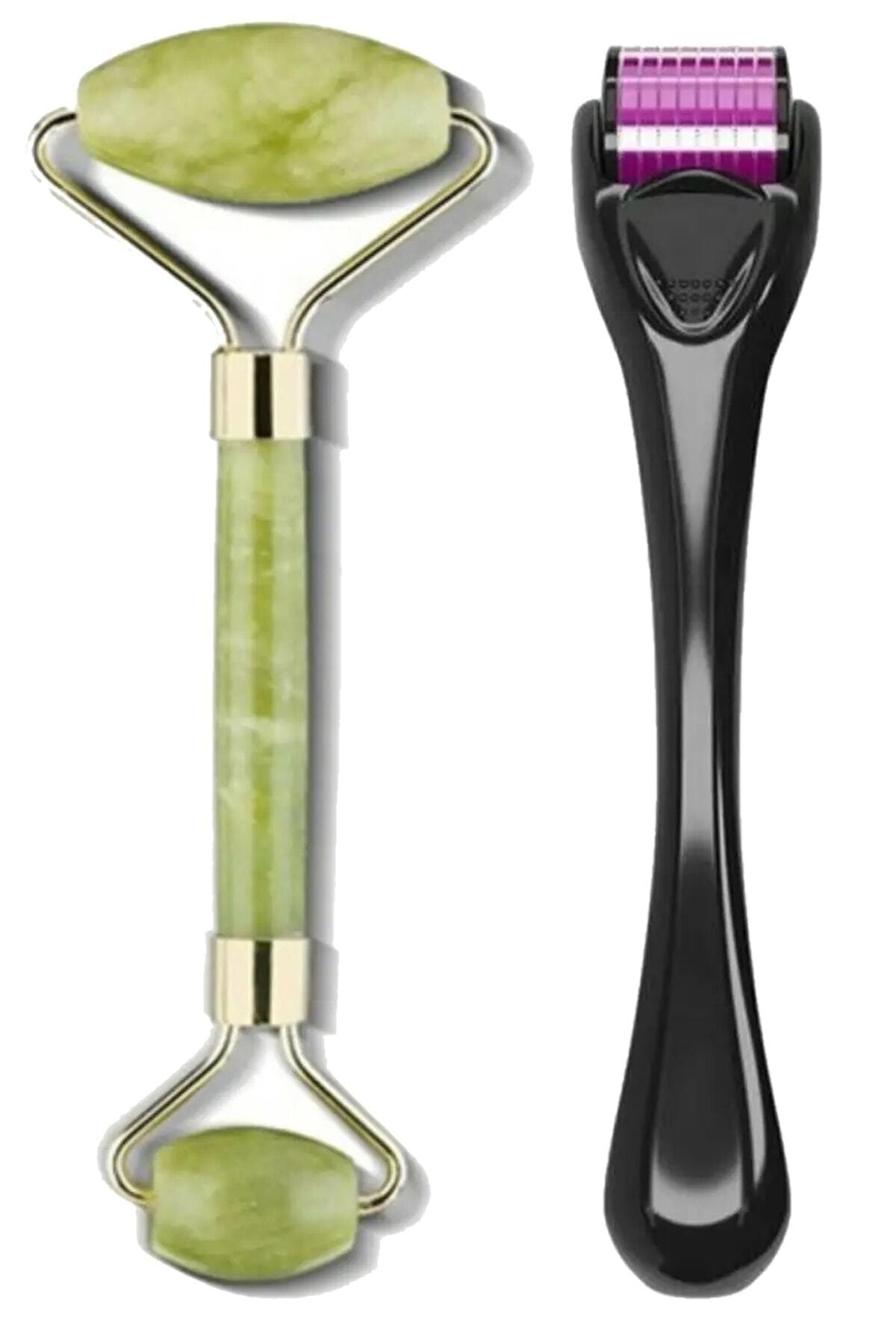
- Jade roller. A solid stone roller on a metal or plastic frame. No needles, no channels, no mechanical disruption of the skin. The roller is a fluid and lymphatic tool that glides on the surface of the skin and applies consistent pressure to the underlying tissue.
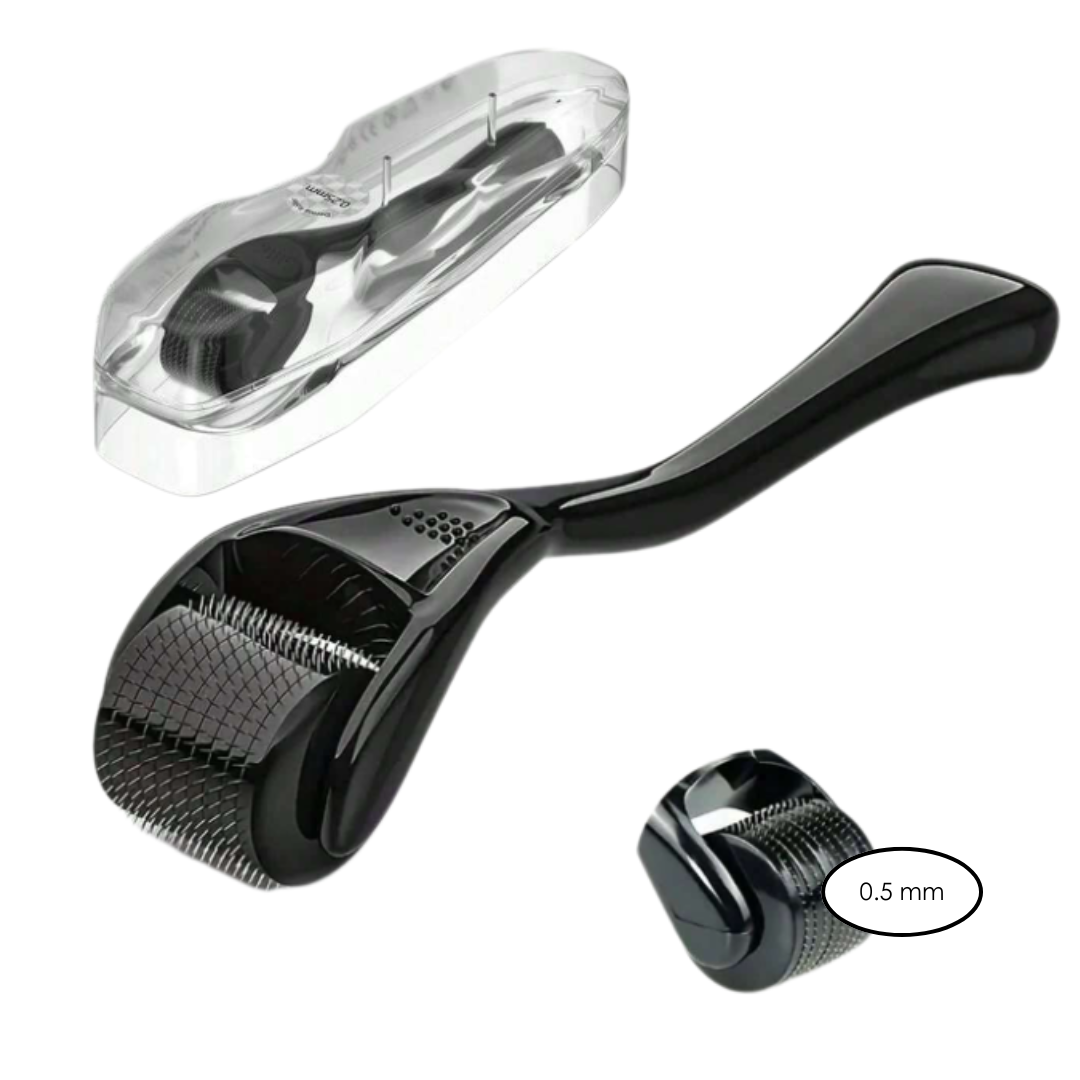
- Dermaroller (0.5mm). A plastic cylinder with 540 fine needles (typically 0.5mm for at-home use) on a handle. The needles create micro-channels in the skin, and the channels stimulate collagen production and improve the absorption of topical products. The 0.5mm is the standard at-home length, and it does not produce visible bleeding.
For the deeper question of the at-home vs in-office microneedling difference, our microneedling page has the parallel data point.
How I tested
For 4 weeks, I used a jade roller on the right side of my face and a 0.5mm dermaroller on the left, in the same morning session, 3 times a week. The roller was on the right side daily (morning and evening), and the dermaroller was on the left side 3 times a week. The dermaroller session was 5 minutes, with 4 passes per zone. Photos were taken at the same time each morning, in the same light, for 28 days. At the end of 4 weeks, I switched sides for another week to control for left-right asymmetry.
The setup is a single-person, single-face test, n=1, with a defined protocol. The pattern was clear, and the data is the reference for the comparison.
Where the jade roller wins
Three zones where the jade roller is the right tool and the dermaroller is not.
1. Morning puff
The roller on the morning puff is the standard benefit, and the dermaroller does not produce the same result. The roller applies consistent pressure along the lymphatic drainage direction, and the pressure moves the fluid. The dermaroller creates micro-channels, but the channels do not move fluid. The 4-week test showed a clear difference: the right side (roller) had less morning puff at the 9 a.m. photo than the left side (dermaroller).
For the morning puff, the roller is the right tool. The full protocol is on our 90-second puff reset page.
2. The daily routine
The roller is fine for daily use, and the dermaroller is not. The roller applies mechanical pressure, but the pressure is below the threshold for visible skin disruption. The dermaroller creates micro-channels, and the channels need 24 to 48 hours to close. The standard protocol is dermaroller 1 to 2 times a week, with 3 to 7 days between sessions.
For the daily routine, the roller is the right tool. The 2 to 3 times a week dermaroller session is the right protocol for the at-home microneedling, with the day-by-day rules on our microneedling page.
3. The recovery window
The roller has no recovery window. The session ends and the skin returns to baseline within 30 to 60 minutes. The dermaroller has a 24 to 48 hour recovery window, with the micro-channels closing in that time. The roller can be used on a daily basis, and the dermaroller is the once-or-twice-a-week tool.
For the parallel timing, the microneedling page has the full recovery timeline.
Where the dermaroller wins
Three zones where the dermaroller is the right tool and the roller is not.
1. Collagen stimulation
The dermaroller on the skin creates micro-channels, and the channels stimulate collagen production. The roller does not create micro-channels, and the roller does not stimulate collagen production. The 4-week test showed a small visible change in the skin texture on the dermaroller side that was not present on the roller side. The change was small, and it is consistent with the published mechanism.
For collagen stimulation, the dermaroller is the right tool. The roller is a useful add-on for the morning puff and the absorption benefit, but the roller is not a collagen tool. The full protocol is on our microneedling page.
2. Absorption of active ingredients
The dermaroller creates micro-channels, and the channels improve the absorption of topical products. The roller drives the active in faster than finger application, but the roller does not produce the same level of absorption as the open micro-channels. The 4-week test showed that the Vitamin C serum and the niacinamide serum absorbed faster on the dermaroller side, and the visible result on the dark spots was larger on the dermaroller side.
For absorption of active ingredients, the dermaroller is the right tool. The roller is a useful add-on for the daily routine, but the dermaroller is the right tool for the deeper absorption. The full timing is on the microneedling page.
3. Pore size and skin texture
The dermaroller on the skin produces a small visible change in the pore size and the skin texture over 4 to 8 weeks. The change is small, and it is the result of the collagen stimulation, not the channeling. The roller does not produce the same change, because the roller is not a collagen tool.
For pore size and skin texture, the dermaroller is the right tool. The roller is a useful add-on for the morning puff, but the roller is not a pore or texture tool. The full pore size data is on our pore size page.
What the photo log showed
Three clear signals from the 28-day photo log:
- The roller side had less morning puff. The right side (roller) showed a more consistent morning-puff reduction than the left side (dermaroller). The roller is the right tool for the morning puff.
- The dermaroller side had better absorption and a small change in the dark spots. The left side (dermaroller) showed a small visible change in the dark spots on the cheek, consistent with the better absorption of the Vitamin C serum. The change was small, and it was reproducible across the 4-week test.
- The combination was the best. On the days I used both (roller daily, dermaroller 2 to 3 times a week), the result was the highest of the three approaches (roller only, dermaroller only, combination). The combination does more than either one alone.
The combination is the right answer for most users. The roller does the daily work (morning puff, absorption, lymphatic), and the dermaroller does the deeper work (collagen, dark spots, texture) on a 2 to 3 times a week schedule.
The combination protocol
The right combination:
- Daily: jade roller, morning and evening. The standard 5-minute routine in the morning, and the standard 3-minute routine in the evening. The roller is the daily tool.
- 2 to 3 times a week: dermaroller, in the evening. The 0.5mm dermaroller session is 5 minutes, with 4 passes per zone. The session is in the evening, after the skin has been cleaned. The roller is off-limits for 24 hours after the dermaroller session.
- Order: dermaroller first, then roller on the next day. The dermaroller session on Monday, the roller daily on Tuesday, Wednesday, Thursday. The next dermaroller session on Friday. The roller is the daily tool, and the dermaroller is the twice-a-week tool.
- What to do on the dermaroller day. No roller for 24 hours after the dermaroller session. The micro-channels need the time to close, and the roller on the open channels is not the right call.
Total weekly time: 35 minutes of roller, 10 to 15 minutes of dermaroller. The combination is the right answer for a user who wants the full daily work plus the deeper weekly work.
What about cost
The roller costs $12 to $50, the dermaroller costs $15 to $40. The two together are $30 to $90, which is the same as a single premium branded roller set. For a user on a budget, the right call is the roller alone (with the standard morning-puff benefit) and the dermaroller added in 2 to 3 months if the user is committed to the routine.
For the budget-conscious user, the right call is the roller for the first 2 to 3 months, and the dermaroller after that if the routine sticks. The Target Up&Up or the Walmart Somerset is the right entry-level roller, and the Dr. Pen or the Beauty by Earth 0.5mm is the right entry-level dermaroller. For the broader roundup, our first-time buyer guide has the right picks.
FAQ
Is a dermaroller the same as a jade roller?
No. The jade roller is a smooth stone tool that glides on the surface of the skin. The dermaroller is a cylinder with 540 fine needles that create micro-channels in the skin. The two tools do different jobs, and the right pick depends on the concern. The full comparison is above.
Can I use a dermaroller and a jade roller on the same day?
No. The dermaroller creates micro-channels, and the roller on the open channels is mechanical pressure on a healing zone. The right call is the dermaroller first, then the roller on the next day. The full combination protocol is above.
What is the best 0.5mm dermaroller?
The Dr. Pen M8 or the Beauty by Earth 0.5mm, both at $20 to $40. The 0.5mm is the right at-home length, and the needles are medical-grade stainless steel. For the broader roundup, the 2026 buying guide has the parallel product recommendations.
How long does it take to see results from a dermaroller?
4 to 8 weeks for visible change, with 2 to 3 sessions per week. The first 2 weeks are the adjustment period, when the skin may flake or peel. After the adjustment period, the visible change starts in week 3 to 4, and the full result is at week 8 to 12. The microneedling page has the parallel timing.
The short version
The roller is the daily tool for the morning puff, the lymphatic work, and the absorption benefit. The dermaroller is the 2 to 3 times a week tool for collagen stimulation, dark spots, and skin texture. The combination is the right answer for most users. The full combination protocol is above, and the microneedling page has the deeper timing for the at-home and in-office cases.