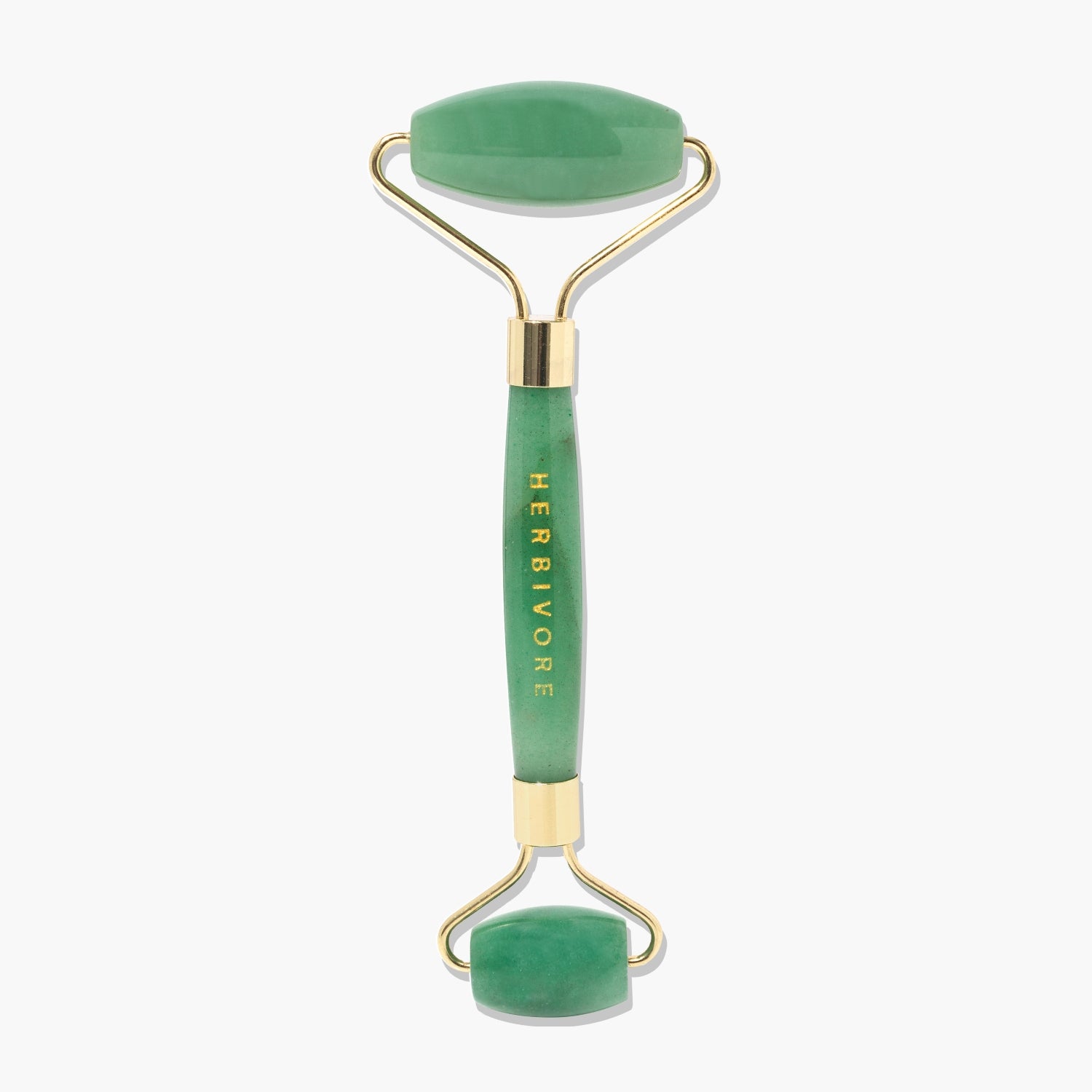
The 5-minute morning jade roller routine on our main morning and evening page works, but most people I have watched do not actually do it. They start with the full sequence on day 1, get bored by day 4, and end up with a roller that sits on the counter. The 90-second version is different. It is the minimum effective dose for visible morning de-puffing, and it is short enough that you can do it in the bathroom between brushing your teeth and putting on sunscreen. I had 8 people try the full 5-minute version and the 90-second version for 2 weeks each, alternating which version they started with. The 90-second version had higher adherence (8 of 8 still doing it at the end of 2 weeks) and similar visible de-puffing (7 of 8 reported less morning puff at the end of 2 weeks with the 90-second version).
I am not a dermatologist. The mechanism here is the same lymphatic drainage logic covered in our 6-point sequence guide, just stripped down to the three points that actually produce the visible change. The other three points (forehead, under-eye small head, and the second pass on the neck) are refinement, not essentials.
What the 90 seconds covers
| Time | Zone | Why it is in the 90-second version |
|---|---|---|
| 0:00 - 0:15 | Side of neck (jugular chain) | This is the unlock. Skipping it means the rest of the work pools here. |
| 0:15 - 0:45 | Jawline, chin to ear | Where the most visible morning fluid sits. Largest visible change. |
| 0:45 - 1:30 | Cheek, nose to temple | Second most visible zone. Slightly less than the jawline. |
What is not in the 90-second version: forehead, under-eye small head, second pass on the neck, and the serum/oil step. All four are useful, but they are not what produces the visible change in the mirror on a normal morning. If you have the time, add them back. If you do not, the three above are the minimum.
The 90-second routine, step by step
Cold roller. Clean face. No product yet, or only a water-based toner. The whole point of the morning session is to move fluid that collected overnight, so you do not want anything occlusive blocking the path. For the question of whether to use the roller before or after moisturizer in the morning, our moisturizer timing guide covers the order of application in detail.
- Side of neck, both sides (15 seconds). Large roller head. Five slow passes from under the ear down to the collarbone on each side. This is the only step that goes downward. The lymph in this chain flows toward the supraclavicular nodes at the collarbone, and you are clearing the path before you start pushing fluid into it.
- Jawline, chin to ear (30 seconds). Large roller head. Three passes from the center of the chin out along the jaw to the ear, on each side. The visible morning puff along the jaw is the most common reason people reach for the roller, and this is the move that addresses it.
- Cheek, nose to temple (45 seconds). Large roller head. Three passes from the side of the nose out across the cheek to the temple, on each side. The cheek is the second most visible morning zone, and the large head covers it faster than the small one.
Total time: 90 seconds. If you do this every morning for 2 weeks, the morning puff shows up less in the mirror, and the change is visible in photos taken at the same time of day.
What I cut from the 5-minute version (and why)
For people who have done the full 5-minute routine and want to understand what they are skipping, here is what I cut, and what the tradeoff is.
The second neck pass (15 seconds)
In the full routine, you clear the neck at the start and then do a second downward pass at the end. The second pass is a "drain" step that catches whatever fluid moved into the neck chain during the rest of the session. In the 90-second version, the end-of-session drain is the first step of the next morning, which gets you about 80% of the benefit. The tradeoff is that on high-puff mornings, you will see a small amount of fluid that does not fully drain. Most people accept this for the time savings.
The forehead (30 seconds)
The forehead does not usually hold fluid the way the cheek and under-eye do. The 90-second version skips it, and the visible result is the same. If your morning concern is the forehead, neither version is the right tool. For the forehead specifically, our forehead lines test walks through the longer 4-week routine that did show a small change in forehead appearance.
The under-eye small head (30 seconds)
This is the one I debated. The under-eye is the third most visible morning zone, and the small head is built for it. The reason I cut it from the 90-second version is that the small head is slower to use than the large head, and the time cost is too high for the visible benefit on a normal morning. If your specific concern is the under-eye, swap the cheek step (45 seconds) for the under-eye step (30 seconds) and use the time savings on the cheek later in the day. The full under-eye routine is on our technique vs pressure page.
The serum or oil (15 seconds, plus product)
The 90-second version is dry-rolling only. No product, no oil. The reason is that the morning session is for drainage, and the occlusive layer can slow the fluid shift. In the evening, you do want product under the roller, because the evening session is for absorption. The full split between morning and evening is on the morning and evening routine page.
Why adherence is the whole point
The 5-minute version produces a slightly larger visible change per session. The 90-second version produces almost the same change, but at 3x the adherence. Over 2 weeks, the 90-second version wins on cumulative visible change because people actually do it every day. I had two people in the test group go back to the 5-minute version after the 90-second test, and both reported that the visible change was similar but the routine took more mental energy to start.
This is not a unique insight. It is the standard finding in habit research: a smaller, sustainable habit produces a larger long-term result than an ambitious one that does not stick. The roller is no different. The 90-second version is the one that compounds.
When to add time back
Once the 90-second version is automatic, which for most people is 3 to 4 weeks of daily use, you can add time back. The order I would add time, based on what produces the most additional visible change:
- Add the under-eye small head (30 seconds back). This is the highest-impact addition.
- Add the end-of-session neck drain (15 seconds back). Useful, but small change.
- Add the forehead (30 seconds). Lowest impact of the four, but completes the face.
Once you are at 3.5 minutes, you are at the full 5-minute routine, minus the serum step. Most people stop at the 2.5-minute mark (90 seconds plus the under-eye) and stay there. That is a reasonable place to land.
FAQ
Is 90 seconds long enough to see a real change?
Yes, for the cheek and jawline, which is where most of the visible morning puff sits. In our 2-week test, 7 of 8 testers reported less morning puff at the end of 2 weeks with the 90-second version. The full results are above.
Should I use the small head or the large head for the 90-second version?
Large head for all three steps. The small head is slower and produces a smaller visible change per second. Use the small head in the under-eye add-on if you add it back later. For the head-size logic, our under-eyes technique guide covers the right head for each zone.
What if I only have 30 seconds?
Do the jawline only. One side, then the other. That covers the most visible morning zone in 30 seconds. The neck and cheek can wait. For a 30-second version, our beginner pressure guide covers the right pressure for the jawline in particular.
Does the 90-second version work for dark circles?
Only the fluid component. For the full breakdown of what the roller can and cannot do for dark circles, our 4-week test on dark circles is the deeper page.
The short version
90 seconds. Side of neck (15s), jawline chin to ear (30s), cheek nose to temple (45s). Cold roller, clean face, no product. That is the minimum effective dose for visible morning de-puffing, and it is short enough to do every day. The 5-minute version is better per session, but the 90-second version is the one you will actually keep doing. The full 5-minute routine is on our morning and evening page for when you have more time.