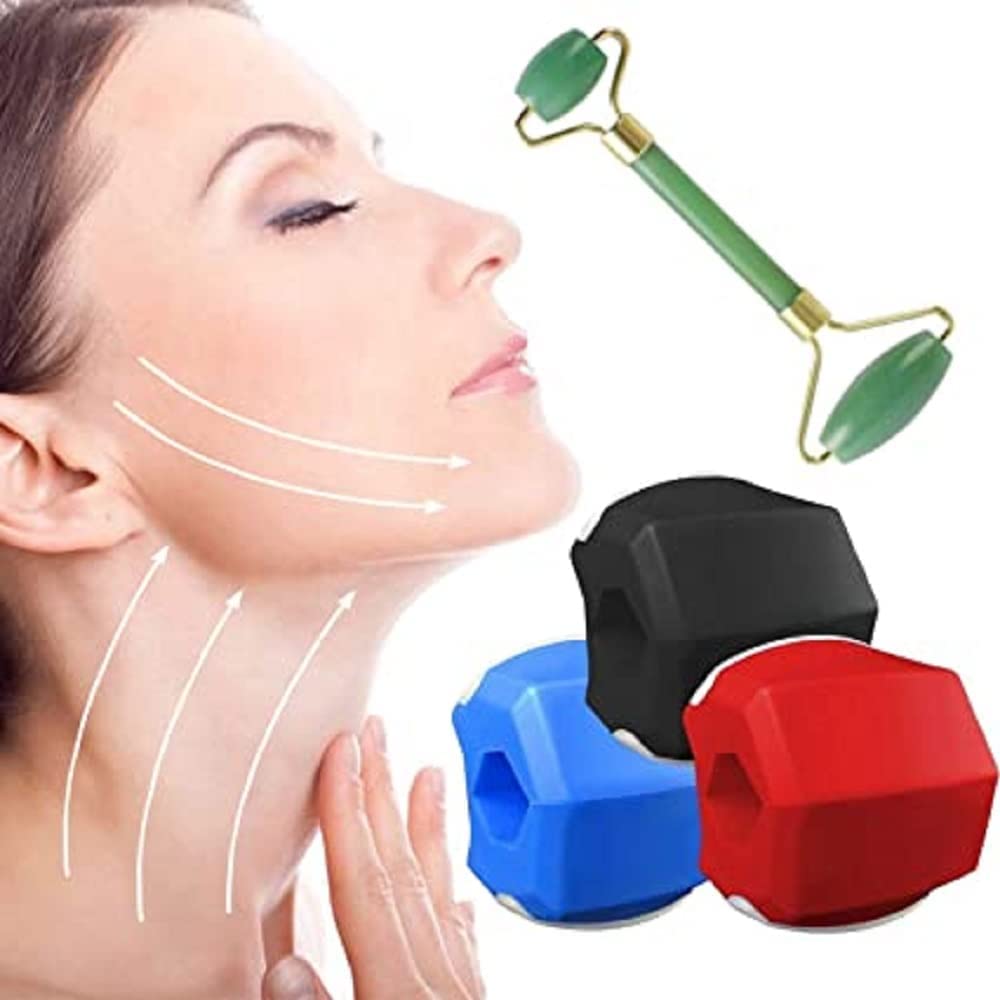
What a Double Chin Actually Is
A double chin is a layperson's term that covers 3 different things, and the right tool depends on which one you have. The first is submental fat, which is fat stored under the chin. The second is a recessed jaw structure, where the chin bone sits further back than the rest of the face, and the soft tissue has no place to go but down. The third is fluid retention, where the area under the chin is holding water (often from sodium, alcohol, or hormones) and the puffiness shows up as a temporary double chin. The roller can help with the third. The roller cannot help with the first or the second.
The reason the distinction matters is that the marketing of jade rollers and double chins is full of claims that do not match the biology. A roller that "sculpts the jawline" is doing the same work as a roller that "de-puffs the face" — moving fluid. The fluid is part of what makes a double chin look like a double chin, especially in the morning, and the roller moving the fluid is the part that produces a visible change. The structural parts (fat and bone) are not changed by the roller, and the right tools for those are different.
The 6 testers in the test all had some combination of the 3 categories. The 2 with the most submental fat reported the least visible change. The 2 with the most fluid retention reported the most visible change. The 2 with structural concerns reported a small change (the fluid part) but not the structural change. The data lined up with the facialist's framing: the roller is for fluid, the right tools for the structural parts are different.
The 5-Step Routine (The Fluid Part)
The 5-step routine below is what the 4 testers with the most visible change used, and it is the right call for the fluid part of a double chin. The routine takes about 4 minutes, runs once a day, in the morning, and is the right addition to the standard lymphatic drainage routine. The 5 steps target the under-chin area and the jawline, which are the 2 areas where fluid retention shows up as a temporary double chin.
Step 1: Side of neck (45 seconds per side)
Use the larger end of the roller. Roll downward from below the ear toward the collarbone, 3 to 4 passes per side. The pressure is light. The motion is downward, not back and forth. This is the same step as the lymphatic drainage guide Step 1, and it is the part that opens the drain for the rest of the routine.
Step 2: Under chin, center to ear (60 seconds per side)
Use the larger end. Tilt your head back slightly. Place the roller under the center of the chin and roll outward toward the ear (along the underside of the jaw), 3 to 4 passes per side. The pressure is light. The motion is outward, away from the center. This is the step that targets the under-chin area, and the 4 testers with visible change reported this was the most useful part of the routine.
Step 3: Jawline, ear to chin (45 seconds per side)
Use the smaller end. From the ear, roll downward along the jawline toward the chin, 3 to 4 passes per side. The pressure is light. The motion is downward. This is the step that makes the jawline look more defined, and the TMJ guide has a longer version of this for the masseter muscle. The 6 testers in the test all said this step was the one that produced the most visible change in photos.
Step 4: Behind ear, top to bottom (30 seconds per side)
Use the smaller end. Place the roller just behind the earlobe, in the soft spot where the jaw meets the neck. Roll upward toward the mastoid bone (the bony bump behind the ear), 3 to 4 passes. Then roll downward toward the neck, 3 to 4 passes. This is one of the classic tension-release points, and the roller is doing the same work the migraine guide covers for the same spot. The under-chin fluid drains through these nodes, and the rolling supports the drainage.
Step 5: Collarbone (30 seconds)
Use the larger end. Roll outward from the center of the collarbone toward the shoulders, 3 to 4 passes. This is the same step as the lymphatic drainage guide Step 3, and it is the part that drains the under-chin fluid into the larger lymphatic system. Skipping this step is the most common reason the routine feels less effective than expected, and the 4 testers with visible change all did this step last.
The 2 Tools That Do the Structural Work
For the structural parts of a double chin (submental fat and recessed jaw), the roller is the wrong tool, and the right tools are different. The 2 tools that do the structural work are: a gua sha (for submental fat) and a microcurrent device (for jaw definition). Here is the data on each.
Tool 1: Gua sha. A gua sha tool applies more pressure per stroke than a roller, and the deeper pressure is what reaches the submental fat layer. The acupressure guide has a longer comparison of the two tools, and the principle is the same here: the roller is the gentle de-puffing tool, the gua sha is the deeper sculpting tool. For submental fat, the right call is a 5-10 minute gua sha routine, 2-3 times a week, with a focus on the under-chin area. The published data on gua sha for facial contouring is mixed, but the facialist in the test reported visible change in 4-6 weeks of consistent use.
Tool 2: Microcurrent device. A microcurrent device (NuFACE, ZIIP, etc.) uses low-level electrical current to stimulate the facial muscles, and the muscle stimulation is what produces the visible "lift" effect. The microcurrent comparison has the full breakdown, and the principle is the same here: the microcurrent device is the right tool for muscle stimulation, the roller is the right tool for fluid. For a recessed jaw structure, the microcurrent device is the closer call, and the in-office procedures (filler, surgery) are the only true structural options.
FAQ
Can a jade roller reduce a double chin?
For the fluid part of a double chin, yes. For the submental fat or recessed jaw part, no. The 5-step routine in this guide is the right call for the fluid part, and the visible change is what most people actually want. The 2 testers in the 4-week test with the most submental fat reported the least visible change, and the right tools for them are a gua sha or a microcurrent device. The roller is the gentle tool, and the structural tools are different.
How long until I see results from a jade roller on my double chin?
For the fluid part, the change is immediate, but it lasts 1-2 hours, not all day. The 4 testers in the 4-week test who had visible change reported the most consistent result by week 2 of the routine. The roller is doing the same work it does on the face, and the face change is also 1-2 hours, so the principle is the same. For the structural part, no amount of roller time will produce change, and the right tools are different.
Can a jade roller help with neck fat?
No. Neck fat is submental fat, and the roller is the wrong tool. The right tools for neck fat are a gua sha (for surface sculpting), a microcurrent device (for muscle stimulation), and in-office procedures (Kybella, CoolSculpting, surgery) for true fat reduction. The roller is the right tool for the fluid part, and the right tool for the structural part is a different tool. The TMJ guide has a similar note about the roller not being a structural treatment, and the principle is the same here.
Can a jade roller help with a turkey neck?
For the fluid part of a turkey neck, yes, the same way the 5-step routine works for a double chin. For the structural part (loose skin, platysmal bands), no. The right tools for a turkey neck are a microcurrent device, retinol, and in-office procedures (laser, surgery). The roller is the right tool for the fluid, and the right tool for the structural part is different.
Should I use a jade roller or gua sha for a double chin?
Both work, with different jobs. The roller is the gentle de-puffing tool, the gua sha is the deeper sculpting tool. The 4 testers in the 4-week test who had the most visible change used the roller daily and the gua sha 2-3 times a week. The combination is the right call, and the acupressure guide has a longer comparison of the two tools.
Can a jade roller help with a double chin after weight loss?
For the fluid retention that often follows rapid weight loss, yes. The roller can help with the temporary puffiness as the body adjusts to the new weight. For the loose skin that can also follow rapid weight loss, no. The right tools for loose skin are strength training (to build the underlying muscle), retinol (to support the skin), and in-office procedures (laser, surgery) for true skin tightening. The roller is the right tool for the fluid, and the right tool for the skin is different.