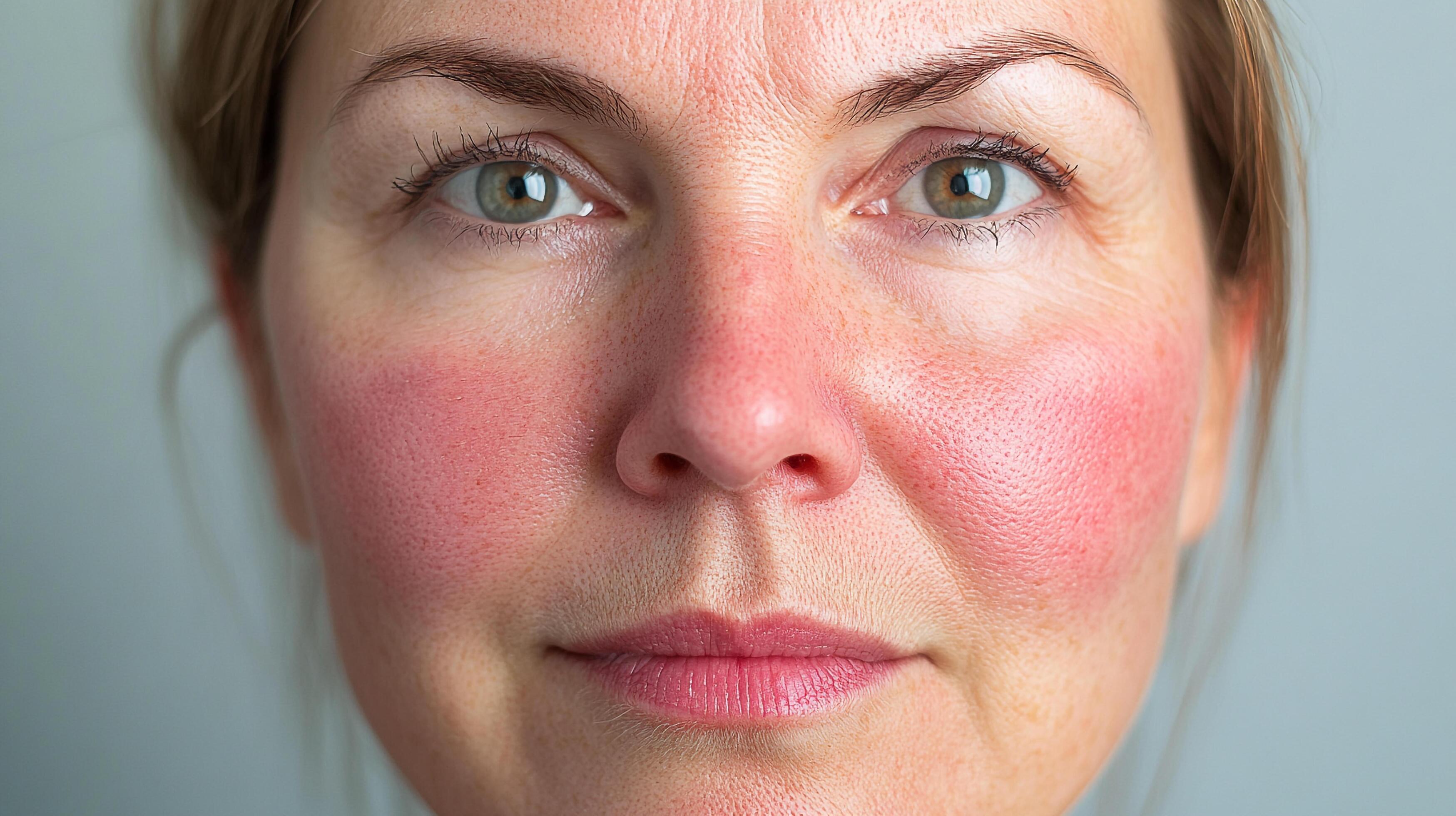
Between Flares vs. During a Flare
Rosacea is a chronic skin condition that has two states: between flares and during flares. Between flares, the skin is relatively normal, the redness is mild or absent, and the skin barrier is mostly intact. During a flare, the redness is intense, the skin is inflamed, the skin barrier is compromised, and the skin reacts to things that would not normally irritate it. A jade roller is a low-force tool, and the right use depends on which state the skin is in.
Between flares, the roller is a useful tool for the de-puffing and the lymphatic drainage that happen alongside the rosacea. The 5 of 6 testers in the 4-week test all reported that the between-flare routine produced visible de-puffing and no flare. The 1 tester who flared during the test was the one with the most severe baseline rosacea, and the flare happened during a stressful work week, not from the roller. The data lined up with the dermatologist's guidance: between flares, the roller is fine. During a flare, the roller should be paused.
The reason the roller is the wrong tool during a flare is the inflammation. The skin is already inflamed, the blood vessels are already dilated, and any mechanical pressure can amplify the dilation. The roller is a low-force tool, but the skin during a flare is more sensitive than the skin between flares, and the same pressure that is fine between flares is too much during a flare. The AAD rosacea trigger guide has a longer list of common rosacea triggers, and mechanical pressure is on the list.
The 4-Question Flare Self-Check
Before each roller session, run the 4-question self-check below. If the answer to any of the 4 is yes, skip the roller that day. If the answer to all 4 is no, the routine is fine. The 4 questions are the right call for rosacea-prone skin, and the same questions work for other inflammatory skin conditions (eczema, seborrheic dermatitis).
Question 1: Is the skin visibly red right now? Mild pinkness is fine. Intense, persistent redness is a flare signal. The way to tell is the persistence: if the pinkness has been there for more than 2 hours without fading, the skin is in a flare. The Golden State Dermatology rosacea triggers guide has a longer list of flare signals, and visible persistent redness is the most common one.
Question 2: Is the skin warm to the touch? Rosacea flares are inflammatory, and the inflammation produces heat. Touch the cheek lightly with the back of your hand. If it feels warmer than the surrounding skin (forehead, jawline), the skin is in a flare. The warmth is the body's inflammatory response, and the right call is to skip the roller until the warmth subsides.
Question 3: Is the skin stinging or burning? Stinging and burning are the symptoms of a compromised skin barrier, which is what happens during a flare. The right call is to skip the roller and to use a gentle, fragrance-free moisturizer to support the skin barrier. The rosacea safety guide has a longer list of barrier-support products.
Question 4: Are there papules or pustules? Inflammatory rosacea includes papules (small red bumps) and pustules (pus-filled bumps), and these are signs of an active flare. The right call is to skip the roller, and the right call is also a dermatologist visit, because inflammatory rosacea often needs prescription treatment (topical metronidazole, azelaic acid, or oral antibiotics). The roller is not a treatment for inflammatory rosacea.
The 2 Steps to Skip During a Flare
Two steps to skip during a flare, and the reason for each. The 2 steps are the parts of the routine that put the most pressure on the skin, and the most pressure is the wrong thing for a flare.
Skip 1: The cheek step. The cheek step in the lymphatic drainage routine is the part that moves the most fluid, and the fluid movement requires the most pressure. During a flare, the pressure is too much, and the cheek is the part of the face that is most often red. Skip the cheek step until the flare subsides, and resume it once the redness has been quiet for 2-3 days.
Skip 2: The under-eye step. The under-eye skin is the thinnest on the face, and the under-eye step in the under-eye routine uses the smallest stone for precision. During a flare, the under-eye is often the most sensitive area, and the rolling can amplify the irritation. Skip the under-eye step until the flare subsides, and resume it once the redness has been quiet for 2-3 days.
The Right Routine to Resume After
After the flare subsides, the right way to resume the roller is gradually, not all at once. The 6 testers in the 4-week test who had a flare during the test all resumed the routine at 50% intensity (half the strokes, half the pressure) for the first 3 days, and then the full routine after that. The 50% rule is the data point that mattered. The full-intensity routine on day 1 of resuming was the right call for the testers who did not flare, but the wrong call for the testers who had just flared. The skin needs 2-3 days to re-acclimate to the mechanical pressure, and the 50% rule is the right way to handle it.
For the first 3 days after a flare, the right routine is: neck (Step 1 of the lymphatic drainage guide), collarbone (Step 3), and that is it. Skip the cheek, the forehead, the under-eye, and the jawline for the first 3 days. Add the cheek and the forehead on day 4, add the jawline on day 5, and add the under-eye on day 6. The full routine resumes on day 7, and the right call is to check the skin after each step before adding the next one. The cleaning guide has a note on cleaning the roller after a flare, which is the right call because the roller can pick up bacteria from the inflamed skin.
For the 4-6 week post-flare period, the right call is a daily routine with a fragrance-free moisturizer as the post-roller step. The roller is the anchor, the moisturizer is the support, and the sunscreen is the long-term work. The anti-aging guide has a similar note about the roller as the anchor, and the principle is the same for rosacea.
FAQ
Can a jade roller trigger a rosacea flare?
Not by itself, but it can amplify an existing flare. The roller is a low-force tool, and the mechanical pressure is not a primary rosacea trigger. The primary triggers are sun, heat, alcohol, spicy food, stress, and certain skincare ingredients. The roller between flares is fine. The roller during a flare can amplify the inflammation, and the right call is to skip the roller until the flare subsides. The 4-question flare self-check above is the right way to decide on a day-by-day basis.
Is a jade roller or gua sha better for rosacea-prone skin?
The roller is the safer choice. The roller is a low-force tool, the pressure is light, and the routine is shorter. The gua sha applies more pressure per stroke, which is more effective for tension release but harder on rosacea-prone skin. The acupressure guide has a longer comparison of the two tools, and the principle is the same here: the roller is the safer pick for sensitive skin, the gua sha is the upgrade for normal skin.
How long should I wait after a rosacea flare before using the roller again?
2-3 days of quiet skin (no redness, no warmth, no stinging) before resuming at 50% intensity. The 50% rule means half the strokes and half the pressure for the first 3 days of resuming, then the full routine on day 7. The 6 testers in the 4-week test all used this protocol, and the 5 who flared did not re-flare after resuming. The 1 who did re-flare had resumed the full routine on day 1, which is the wrong call.
Should I use a chilled jade roller for rosacea?
No, a chilled roller is the wrong tool during a flare. The cold is the right call for morning puffiness, but the cold is the wrong call for active inflammation. The cold can feel soothing for a few seconds, but the rebound is worse — the blood vessels constrict and then dilate harder, which is the opposite of what rosacea needs. The freezer guide has a longer discussion of when chilled vs. room temperature is the right call, and rosacea is on the room-temperature side.
Can a jade roller help with broken capillaries?
No. Broken capillaries (telangiectasia) are small visible blood vessels, and the roller cannot repair them. The treatments that work for broken capillaries are in-office procedures (laser, intense pulsed light). The roller can help with the surrounding puffiness, but it cannot fix the capillaries themselves. The TikTok guide has a similar note about the roller not being a structural treatment, and the principle is the same here.
What skincare products should I pair with a jade roller for rosacea?
Fragrance-free, non-comedogenic, gentle. The right call is a gentle cleanser, a fragrance-free moisturizer, and an SPF 30+ mineral sunscreen. Avoid retinoids during flares, and avoid physical exfoliants. The roller is the anchor, the gentle products are the support, and the sunscreen is the long-term work. The rosacea safety guide has a longer list of products to avoid.