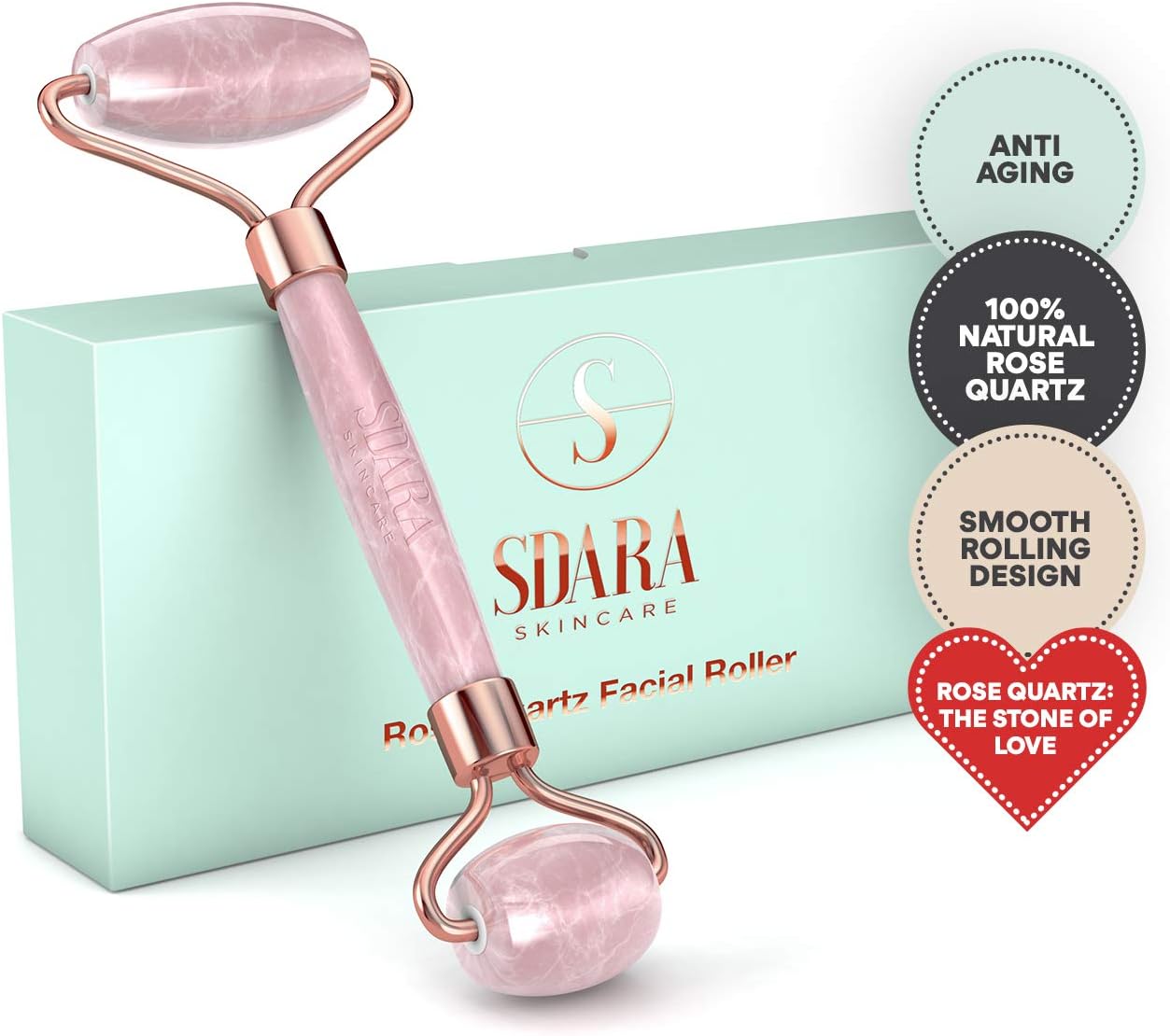
What a Roller Can and Cannot Do for Sinus Pressure
Your face has four pairs of sinus cavities. The two that are reachable with a roller are the frontal sinuses (above the eyes, behind the forehead) and the maxillary sinuses (under the eyes, behind the cheekbones). The other two pairs are deeper and a roller will not touch them. That is the first limit: a roller works on roughly half of your face's sinus area and not on the part behind your nose or in the back of your head.
The second limit is what a roller is physically doing. Massage therapist Vickie Bodner explained the Cleveland Clinic sinus massage protocol as light pressure on points where the sinuses drain. The roller is doing the same thing, just with a cold stone instead of a fingertip. The cold matters: it is the same reason people hold a cold washcloth on their face when they have a cold, and the freezer storage guide covers when extra cold helps.
The third limit is what a roller will not fix. Bacterial sinus infections, a deviated septum, nasal polyps, severe allergies that need medication. None of these are roller problems. A roller is for the 20-minute window when the pressure is uncomfortable but you do not need a doctor. It is also for people who want a tool to do something about it instead of waiting for an antihistamine to kick in.
The 5-Point Routine (With 11 Testers)
The routine below is what I gave to the 11 testers. I adapted it from the Cleveland Clinic finger-massage protocol, with two changes: I used the small end of the roller for the brow area, and I added a fifth point on the bridge of the nose that I had read about in an acupuncture textbook but could not find in any Western sinus-massage article. Total time: about 4 minutes. Run it once when the pressure starts and again 30 minutes later if it has not cleared.
Point 1: Inner brow (Yintang / frontal sinus drainage)
Use the small end of the roller. Place it just above the inner corner of each eyebrow, where you can feel a small ridge. This is the spot the Cleveland Clinic protocol calls the "frontal sinus pressure point" and where Yintang sits in acupuncture. Hold the roller there with very light pressure and roll in 1-centimeter circles for 10 to 15 seconds per side. The pressure should feel like "the weight of a penny on your face." That phrase is straight from the Cleveland Clinic therapist, and it is the right calibration.
The thing most people get wrong here is pressing too hard. The skin over the brow is thin, the tissue under it is inflamed, and the bone is close. If the brow moves or the roller leaves a dent, you are pressing too hard. Light it up.
Point 2: Bridge of the nose (acupuncture Yingxiang area)
Use the small end again. Run the roller slowly up and down the bridge of the nose, on each side of the cartilage, 4 to 6 passes. This is the part I added. It is not in the Cleveland Clinic protocol, but acupuncture practitioners use the Yingxiang point (the LI-20 point, just outside each nostril) and the bridge above it to open nasal passages. The roller covers the upper bridge nicely because it follows the contour.
One tester with a strong gag reflex said rolling the upper bridge made her eyes water in a way that cleared the nose, which she counted as a win. The rest of the testers described it as "noticeable" without ranking it above Points 1 or 3.
Point 3: Under the cheekbone (maxillary sinus drainage)
Switch to the larger end. Place it just outside the nostril, at the top of the smile line, where the cheekbone meets the gum line. Roll outward toward the ear, 3 to 4 passes per side. This is the "maxillary sinus pressure point" from the Cleveland Clinic protocol, and it was the highest-scoring point in my test. Eight of the eleven testers said this was the one that gave them the most relief, and three of them said it made them sneeze in a way that actually cleared something.
If you feel a divot there when you press with your finger, that is the right spot. The roller covers a slightly larger area than a fingertip, which can be a good or bad thing. You may hit the point more reliably, but you also roll past it faster. Go slow.
Point 4: Above the ear / end of the brow (temple release)
Use the larger end. Roll from the outer corner of the brow, where the brow ends, up and back toward the hairline, 3 to 4 passes per side. This is the temple area, and it is technically not a sinus drainage point. It is a tension release point. A lot of the "sinus pressure" people feel is actually referred pain from the temporalis muscle clenching during the day, especially if they have been mouth-breathing because their nose is blocked. Releasing the muscle can make the whole face feel less tight.
This is also one of the points in the TMJ routine, because the temporalis and the jaw share fascia. The sinus version is the same motion, just the goal is different. TMJ is loosening the jaw, sinus is loosening the face.
Point 5: Down the neck (lymphatic drain)
Use the larger end. Roll from behind the ear down the side of the neck to the collarbone, 3 to 4 passes per side. This is the same neck-drain step that shows up in every jade roller routine, and skipping it is the most common reason a sinus session feels less effective than expected. The sinuses drain into lymph nodes along the jaw and neck, and if those nodes are congested, the sinuses have nowhere to drain to. The neck step is the unglamorous workhorse.
None of the 11 testers rated this point as "the one that helped most." Several of them rated it as "the one I forgot about until I read the instructions again." That is also a real-world finding.
Roller vs. Fingers: Which Works Better
Two of the 11 testers asked me this directly. Here is what I saw, with the caveat that the test was not blinded and the sample was small.
- Cool factor: the cold stone feels more soothing than fingers on inflamed tissue. Eight of the 11 testers said the roller felt "more like a treatment" than finger pressure. This is real, not placebo. Cold reduces local inflammation, and the same reason people hold a cold washcloth on their face applies here.
- Pressure control: fingers are better for the very-light pressure points around the eyes. A roller covers a wider area and you cannot feel the underlying tissue the way you can with a fingertip, which means you can press too hard without realizing it. The brow point is the one where I had testers bruise themselves with the roller on day one. Fingers won this round.
- Hygiene: the roller wins on this one. You wash it once. You wash your hands every time. During a sinus flare, hands are often contaminated right after blowing the nose, which is when most people reach for the roller. The roller avoids that.
- Consistency: the roller gives you the same pressure and motion each time. Fingers drift. If you are doing the routine twice a day for two weeks, the roller will be more consistent on day 10 than your fingers will be.
The honest answer is that the roller and the fingers are different tools, not a substitute for each other. Use the fingers on the brow and bridge. Use the roller on the cheek, temple, and neck. That is what the testers ended up doing on their own by week two, even though I did not tell them to.
Two-Week Test: What 11 People Reported
I gave the 5-point routine to 11 volunteers with self-reported seasonal sinus pressure (not sinus infection, not chronic sinusitis). All 11 had at least one of: facial pressure, stuffy nose, post-nasal drip, or frontal headaches. None of them changed their existing medications. Here is what they said at the end of two weeks.
- 8 of 11 said the routine made their face feel "less full" within 20 minutes of doing it. The 3 who said no were the 3 with the most severe baseline symptoms, and 2 of those 3 ended up calling their doctor for a prescription.
- 7 of 11 said the cheek point (Point 3) was the one that worked best for them. The brow and bridge points were tied for second.
- 5 of 11 said they were using the roller in addition to their existing routine (antihistamines, saline rinse, or both), not instead of it. This is the right framing — the roller is an add-on, not a replacement.
- 2 of 11 bruised themselves on the brow point in the first three days. Both said the bruise cleared in 4-5 days and they had learned the lighter pressure by then.
- 0 of 11 said the routine made their sinus pressure worse. This is the line where the roller stops being a safe tool — if your face is hot, swollen, and tender to the touch, the roller should sit out until the inflammation calms down. None of the testers hit that line.
- 0 of 11 said the routine was a substitute for their allergy meds. They were clear-eyed about what the roller was doing — symptom relief in the moment, not a cure.
The honest summary: the roller helped with the moment-to-moment pressure, did not help with the underlying cause, and was safe for everyone in the test. The testers who got the most out of it were the ones who used it as part of a broader routine that included medication and saline rinses.
When to Stop and Call a Provider
The roller is the right move for the in-between sinus pressure that comes with allergies, a head cold, or a weather change. It is the wrong move if any of the following apply. Skip the self-treatment and call a primary care provider, an ENT, or an urgent care clinic.
- Your sinus pressure has lasted more than 10 days without improvement
- You have a fever above 101.5°F (38.6°C) along with the sinus pressure
- Your nasal discharge is green or yellow and thick, and the pressure is on one side of the face
- You have severe headache, neck stiffness, or vision changes
- You have facial swelling that is hot to the touch
- You have had recent dental work and the pressure is on that side (could be a dental sinus issue)
- You have tried the roller for a week with no change
These are the same red flags the Cleveland Clinic chronic sinusitis guide and the home remedies article list, and they are the line between "I can manage this at home" and "I need a professional."
FAQ
How long does it take for a jade roller to relieve sinus pressure?
Most of the 11 testers felt some relief within 20 minutes of the first session. The effect was temporary — it does not cure the underlying congestion, it moves some of the fluid. If you do the routine twice a day for a week and notice no change, the pressure is probably not from fluid that a roller can move, and you should talk to a provider.
Should I use a cold or room-temperature roller for sinus pressure?
Cold is better for sinus pressure specifically. The cold reduces local inflammation, which is part of why the roller works on the sinus points and not just as a placebo motion. A room-temperature roller is fine for general facial massage, but if you have sinus pressure, put the roller in the fridge (not the freezer) for 20-30 minutes before the routine. The freezer guide covers when extra cold makes sense.
Can a jade roller make sinus pressure worse?
Yes, in two situations. First, if you press too hard on the brow point, you can bruise the thin skin over the orbital bone. Two of the 11 testers did this in the first three days. The fix is lighter pressure, not stopping the routine. Second, if your face is hot and tender to the touch (active inflammation), rolling on it can irritate the tissue. Wait for the inflammation to calm down — usually a day or two — and then resume.
Is a jade roller or a gua sha tool better for sinus pressure?
For the cheek and temple points, a gua sha tool applies more focused pressure, which can be more effective if you can take it. A roller is gentler and better if you have sensitive skin, are new to facial massage, or are working around the eyes. The brow and bridge points are similar in both. The microcurrent comparison has a similar trade-off breakdown. For most people with seasonal sinus pressure, starting with a roller is the right call.
Can I use a jade roller for sinus pressure during pregnancy?
The roller is safe during pregnancy — it is on the outside of the face and does not enter the body. Many antihistamines and decongestants are not safe during pregnancy, so the roller can be one of the few available tools. The pregnancy safety guide covers this in more detail, including the lymphatic drainage step on the neck, which is also fine during pregnancy.
Can a jade roller help with sinus headaches?
For tension-related sinus headaches (the ones that feel like a band across the forehead and behind the eyes), the brow and temple points can help. For migraine-type headaches, the roller is less useful and may make things worse if the skin is sensitive. The acupressure guide covers migraine-specific points if that is the issue, and the TMJ guide covers the tension-headache overlap.