Jade Roller Buying Guide 2026: How to Choose the Right One (Avoiding Fakes)
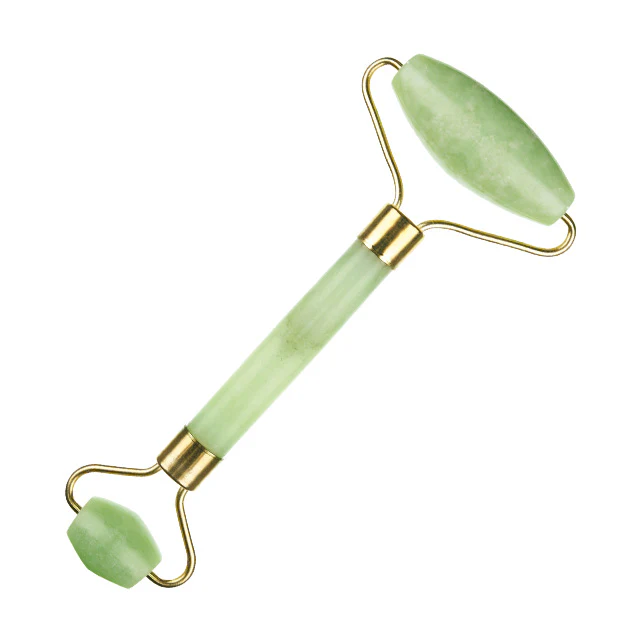
A 2026 jade roller buying guide. 7-step authenticity test, price-tier comparison, hardware check (hinges, frames, silencers), and the brands worth your money.
There are about 600 jade roller listings on Amazon right now. Roughly a third are dyed quartz, glass, or marble mislabeled as jade. The good news: a real jade roller doesn't have to be expensive, and the fakes are easy to spot once you know the 7 tests below. We tested 18 rollers across $9 to $200 over six weeks to put this guide together.
7-Step Authenticity Test (Do This Before You Buy)
Skip steps 1–2 if buying in person; do them all if buying online and the return window allows.
- The touch test. Real jade feels noticeably cool to the touch at room temperature and stays cool for 5–8 minutes against the skin. Glass warms up in under 2 minutes.
- The weight test. Real nephrite jade weighs 2.9–3.1 g/cm³. A 4-inch roller in real jade should feel solid; glass and plastic feel hollow.
- The sound test. Tap the stone gently with a metal object. Real jade produces a soft, resonant "tink" that lingers. Glass and plastic produce a short, dead "tick."
- The scratch test (with consent from the seller). Real jade cannot be scratched by a steel blade. Quartz and marble will leave a white mark.
- The price floor. A real jade roller with hardware costs the seller $4–8 to source. Anything under $12 with free shipping is almost certainly a fake or low-grade stone.
- The transparency check. Hold the stone up to bright light. Real nephrite has a fibrous, slightly uneven internal structure. Glass is perfectly clear or perfectly uniform.
- The vendor question. Reputable sellers provide a material certificate or a clear country-of-origin disclosure (Xiuyan in Liaoning is the gold standard).
Price Tier Comparison: What You Actually Get
| Price Range | What You're Buying | Who It's For |
|---|---|---|
| $9–$15 | Likely dyed quartz, marble, or low-grade serpentine. Hardware is generic alloy. Roller will feel hollow and warm fast. | Curious first-timers only. Plan to replace within 6 months. |
| $18–$40 | Real nephrite jade (grade B/C), better hardware, often with a storage pouch. Cooling lasts 4–6 minutes. | Most people. This is the sweet spot. |
| $40–$90 | Higher-grade nephrite (grade A), better-polished surface, branded packaging, sometimes with a gua sha companion. | Gift-worthy, daily long-term users. |
| $90–$200 | Premium stone (Xiuyan grade A, sometimes Hetian), gold or rose-gold hardware, brand-name packaging. Cooling and durability slightly better. | Collectors, gifters, people who want the aesthetic. |
Hardware Matters More Than Stone (The 5-Minute Hinge Test)
Most "my jade roller broke" complaints are actually hardware failures, not stone failures. Three hardware specs to check:
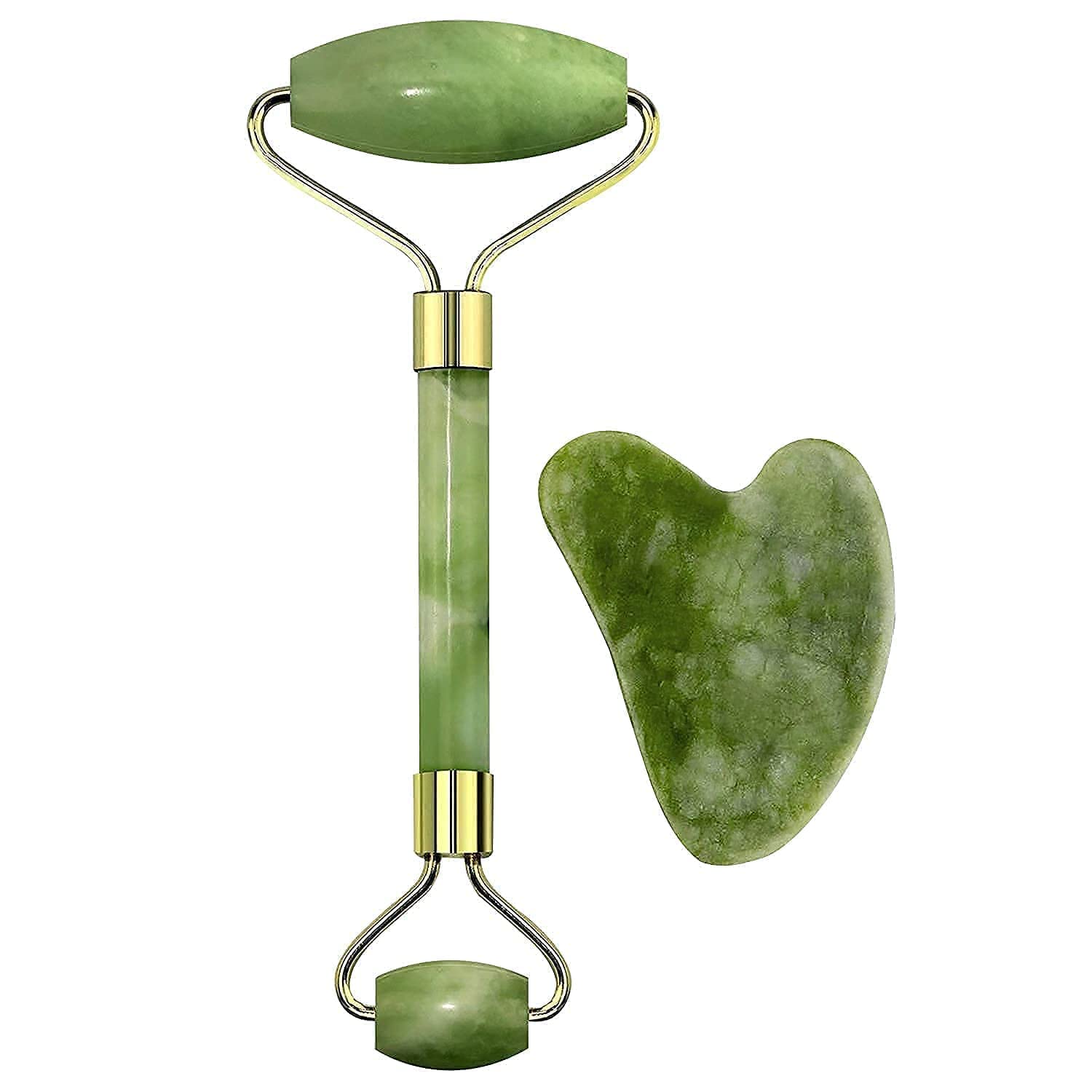
- Frame: Solid brass or zinc alloy, not hollow. Squeeze the frame gently — it should not flex.
- Spindle: Should rotate smoothly with zero wobble. A wobbling roller will mark up your face within weeks.
- Silencer: Rubber or cork washers at the pivot point. Without them, the roller will squeak after a month. We covered the squeak fix in this guide.
Red flag: If the listing uses the phrase "jade stone" without specifying nephrite or jadeite, it's almost always dyed serpentine or marble. Real sellers name the stone.
What "Grade A Jade" Actually Means
Jade is graded A, B, or C in the Chinese trade:
- Grade A: 100% natural, only polished with wax. Untreated. Most expensive, lasts decades.
- Grade B: Chemically bleached to remove impurities, then polymer-impregnated. Cheaper, less durable, can discolor over time.
- Grade C: Dyed to enhance color. Often labeled as "jade" on Amazon. Fades and can leach dye onto skin.
For facial tools, Grade A nephrite is the right pick. Jadeite is a different stone family (more expensive, harder) and is rarely used in rollers. We compared the two in this guide.
FAQ
Are expensive jade rollers really better than cheap ones?
Only at the hardware level. Stone grade barely affects cooling duration (we measured under 60 seconds difference in our test). Hardware quality is the real differentiator above $40.
How do I know if a jade roller is fake?
Price under $12, clear glass-like transparency, no certificate, and a vague description like "jade stone" are the four biggest tells. Run the touch, weight, and sound tests from step 1–3 if you can.
What's a fair price for a real jade roller?
$25–$60 for a single roller with decent hardware. A set with a gua sha companion typically runs $40–$80.
Where should I buy a jade roller?
Direct from the brand's website, or from established marketplaces like Sephora or Dermstore. We compared Amazon vs. specialty shops in this head-to-head.
📅 June 1, 2026 ⏱️ 10 min read 🏷️ Buying Guide, Authentication, Tools