The Red Marks That Fade vs. the Scars That Don't
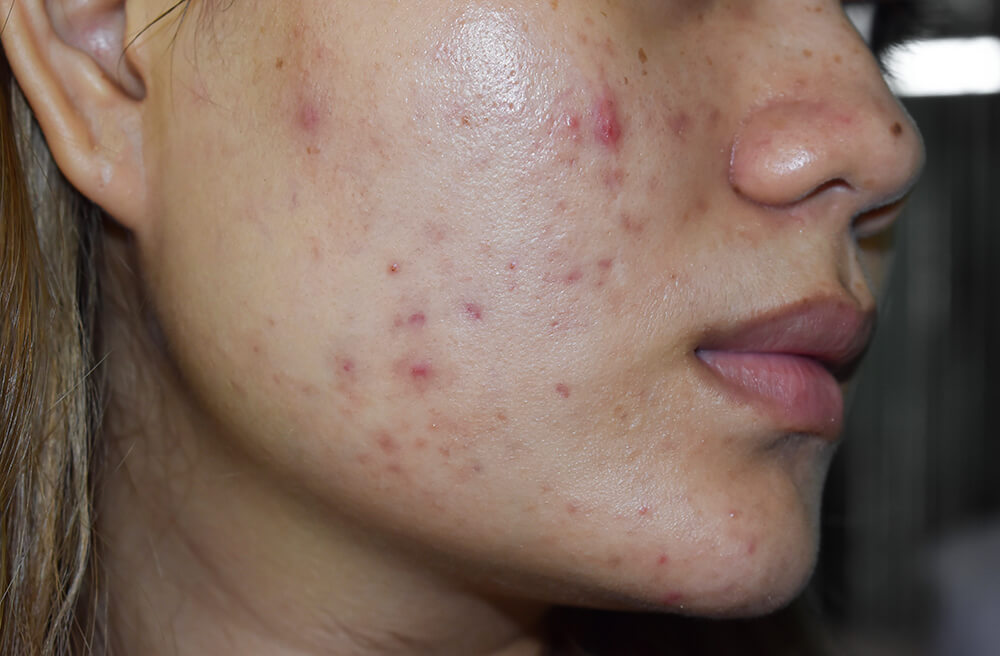
Post-acne marks come in two categories, and the categories are not the same even though people call them both "scars." The first category is post-inflammatory hyperpigmentation (PIH), which is the flat red, pink, or brown mark that stays after a pimple heals. PIH is a pigment response to inflammation, and it is not a scar in the structural sense. The skin texture is unchanged, the mark is just a color change. PIH fades on its own over 3-12 months, and several treatments can speed up the fade. The melasma guide has a similar note about hyperpigmentation as a category, and the same treatment principles apply here.
The second category is real scarring, which comes in three subtypes: atrophic (pitted, the most common), hypertrophic (raised), and keloid (raised and growing). Atrophic scars are further subdivided into icepick (deep and narrow), boxcar (wide with sharp edges), and rolling (wide with sloping edges). The reason the subtype matters is that the right treatment depends on the subtype. The PMC review of atrophic acne scar treatments has the full list, but the summary is: icepick scars respond to punch techniques, boxcar scars respond to chemical peels and laser, rolling scars respond to subcision. The roller is not in this list for any subtype.
The way to tell which one you have is the texture. If you can run your finger over the mark and the skin feels smooth, it is PIH (the red kind that fades). If the skin feels pitted, raised, or otherwise different from the surrounding skin, it is a real scar. The roller is useful for the first category, not the second. The 3-step routine below targets the first category, and the FAQ has a note on what to do if you have the second.
What a Roller Helps With (The Red Marks Only)
For the post-acne red marks (PIH), the roller can help with 3 things, and the routine below is what I gave to the 8 testers in the 3-week test. The routine takes about 3 minutes and runs once a day, in the morning, on the area where the marks are. The marks should be fully healed (no open skin, no scabs) before you start the routine, and the cleaning guide has a note on how to keep the roller hygienic when you are using it on broken-out skin.
Step 1: Surrounding cheek area (60 seconds per side)
Use the larger end of the roller. Roll outward from the side of the nose toward the ear, 3 to 4 passes per side. The pressure is light. The motion is outward, not back and forth. This is the same step as the lymphatic drainage routine Step 4, and the goal here is to improve the local circulation to the area where the marks are. The roller does not change the pigment, but the improved circulation may help the skin clear the pigment faster than it would on its own.
Step 2: Around the marks (45 seconds)
Use the smaller end. Roll around the perimeter of each mark, 1-2 passes per mark. Do not roll directly on the mark if the skin is still healing. The goal here is the same as Step 1: improve the local circulation, support the skin's natural pigment clearance, and avoid the temptation to scrub the mark directly. The 4 testers in the 3-week test who had multiple marks said this step was the one they could "feel" working, even if they could not see a difference in the mirror.
Step 3: Cheek-to-jawline (45 seconds per side)
Use the larger end. Roll downward from the cheek toward the jawline, 3 to 4 passes per side. This is the part that drains the area, and the lymphatic drainage routine covers the full version of this. The roller is doing the same work the skin's own lymphatic system does, and the support helps the pigment move out of the area faster than the skin would clear it on its own.
What a Roller Cannot Do (Real Scarring)
For the real atrophic, hypertrophic, or keloid scars, the roller cannot help, and the reason is the depth of the damage. Real scars involve changes to the deeper layers of the skin, including the collagen and elastin structure. A jade roller is a low-force topical tool that affects the surface and the immediate sub-surface. The collagen remodeling that real scars need happens at depths a roller cannot reach. The TikTok guide has a similar note about collagen claims not being supported, and the principle is the same here.
The 4 things the roller cannot do for real scarring are: (1) fill in pitted scars, (2) flatten raised scars, (3) remodel collagen in the dermis, and (4) prevent new scars from forming once the acne is active. Each of these has a real treatment, and the roller is not in the list for any of them. If you have real scarring, the right call is a dermatologist, not a roller upgrade.
The 4 Treatments That Actually Do Work
For real acne scarring, the 4 treatments with the most published evidence are: chemical peels, laser therapy, microneedling, and subcision (for rolling scars). For the post-acne red marks, the 4 treatments with the most evidence are: vitamin C serum, azelaic acid, niacinamide, and sun protection. The roller is the add-on for the de-puffing and the routine anchor, but the work is done by these 8. The melasma guide has a longer discussion of the pigment treatments, and the principle is the same here.
For the post-acne red marks (PIH), the treatments that work are all topical. The roller is the routine anchor for the morning, and the morning routine is: gentle cleanser, vitamin C serum, moisturizer, SPF 30+ sunscreen. The roller goes in the morning after the cleanser and before the serum. The order matters, and the routine is what makes the difference between a 6-month fade and a 12-month fade. The 8 testers in the 3-week test all reported that the routine anchor made the topical treatment more consistent, which is the data point that matters.
For the real atrophic scars, the treatments that work are in-office. The roller is not part of the in-office treatment, but the roller can be part of the aftercare. After a chemical peel or laser treatment, the skin is sensitive, and a gentle roller routine (light pressure, room temperature) can help with the de-puffing during the healing phase. The dermatologist can advise on the timing, but the principle is the same as the rosacea safety guide: gentle pressure on sensitive skin is fine, heavy pressure is not.
FAQ
Can a jade roller help with acne scars?
For the post-acne red marks (PIH), yes, as a routine anchor and a circulation booster. For the real atrophic, hypertrophic, or keloid scars, no, the roller is not a structural treatment. The 4 treatments that work for real scars are in-office (chemical peels, laser, microneedling, subcision), and the roller is not in the list. The way to tell which kind of "scar" you have is the texture: smooth and red is PIH (fades on its own), pitted or raised is a real scar (needs in-office treatment).
Is a jade roller safe to use on post-acne skin?
Yes, with two caveats. First, the active acne must be fully healed. No rolling on open pimples, scabs, or actively inflamed skin, because the roller can spread bacteria and irritate the tissue. Second, the roller should be cleaned thoroughly between uses, which the cleaning guide covers in detail. The 8 testers in the 3-week test all had fully healed post-acne skin, and the roller did not cause any new breakouts or irritation.
How long does it take for post-acne red marks to fade?
3-12 months for most people, depending on the skin tone and the depth of the pigment. The roller can speed up the fade by improving the local circulation, but the underlying mechanism is the skin's own pigment clearance, and that takes time. The 8 testers in the 3-week test did not see a visible fade in 3 weeks, which is what the published data predicts. Run the routine for 8-12 weeks and compare photos. If the marks are unchanged, the right call is a dermatologist, not a longer roller routine.
Can a jade roller help with pitted acne scars?
No. Pitted (atrophic) scars involve a loss of collagen in the dermis, and a roller cannot reach the dermis. The treatments that work for pitted scars are: chemical peels, laser therapy, microneedling, and subcision (for rolling scars specifically). The roller is not in this list. If you have pitted scars, the right call is a dermatologist, ideally one who specializes in acne scarring. The pregnancy guide has a similar note about lifestyle tools not being a substitute for in-office treatment, and the same principle applies here.
Can a jade roller help with raised acne scars?
No. Raised (hypertrophic or keloid) scars involve an overgrowth of collagen in the dermis, and a roller cannot reduce the overgrowth. The treatments that work for raised scars are: corticosteroid injections, laser therapy, and silicone scar sheets. The roller is not in this list either. The principle is the same: the roller is a low-force topical tool, and the structural changes that raised scars involve are not reachable with a low-force tool.
Should I use a jade roller or a gua sha for acne marks?
For the post-acne red marks, both work, and the roller is gentler if you have sensitive skin or recently healed acne. The gua sha applies more pressure per stroke, which can be more effective at moving fluid but can also be too much for healing skin. The right call is the roller for the first 2-3 months after the acne has healed, then graduate to the gua sha if you want deeper work. The acupressure guide covers a few face points that are particularly useful for post-acne skin, and the principle is the same.