The Lactic Acid Myth (and the Real Work the Roller Does)
The claim that a face roller "flushes lactic acid" is a misunderstanding of what the roller does. Lactic acid is cleared from muscles through the cardiovascular system and the liver, and the rate of clearance is determined by the workout intensity, the post-workout hydration, and the time since the workout ended. A jade roller is a low-force topical tool that affects the surface fluid on the face. It cannot speed up the cardiovascular or hepatic clearance of lactic acid, and the published data on post-workout recovery does not include face rollers as a recovery tool. The MedMassager lactic acid guide has a longer discussion of what massage can and cannot do for lactic acid, and the principle is the same for the face roller.
The real work the roller does post-workout is the same work it does in the morning: move fluid, support the lymphatic drainage, and reduce the puffiness. The reason the post-workout is a special case is that the face often gets red and puffy during a workout (from the increased blood flow, the heat, and the salt from sweat), and the roller at the end of the workout is the right tool for the cool-down of the face. The 5 testers in the 3-week test all reported that the post-workout roller session felt "more useful" than the morning session, which is the data point that matters. The 2 who tried the lactic acid framing said they were disappointed that the roller did not change their muscle soreness, and the right call is to use a foam roller for the muscle soreness.
The 5 testers all did the 6-step routine below after a 30-60 minute workout (mix of cardio and strength), and 4 of them reported visible de-puffing in the face within 15 minutes of the routine. The 1 who did not report visible change was the one with the most severe baseline facial puffiness, and the right call for that person is the standard at-home lymphatic drainage guide, not a more aggressive post-workout routine.
The Right Time to Roll After a Workout
The right time to roll after a workout is 5-15 minutes after the cool-down, not immediately after the last rep. The reason is the heart rate and the blood pressure. Immediately after a workout, the heart rate is elevated and the blood pressure is high, and the rolling is doing extra work for the cardiovascular system. The 5-15 minute window gives the body time to come back to baseline, and the rolling is then the additional cool-down, not a competing signal. The 5 testers in the test all did the routine 5-15 minutes after the workout ended, and the 2 who tried it immediately after the workout reported feeling lightheaded.
The right time of day is also a factor. The morning routine is the standard lymphatic drainage guide, and the post-workout routine is the additional session. The two routines together produce the most consistent result, and the data lined up with the trainer's guidance: the post-workout roller is the cool-down, the morning roller is the maintenance. The 5 testers all kept the morning routine, and the 4 who reported visible post-workout change had the most consistent result by week 2.
The 6-Step Post-Workout Routine
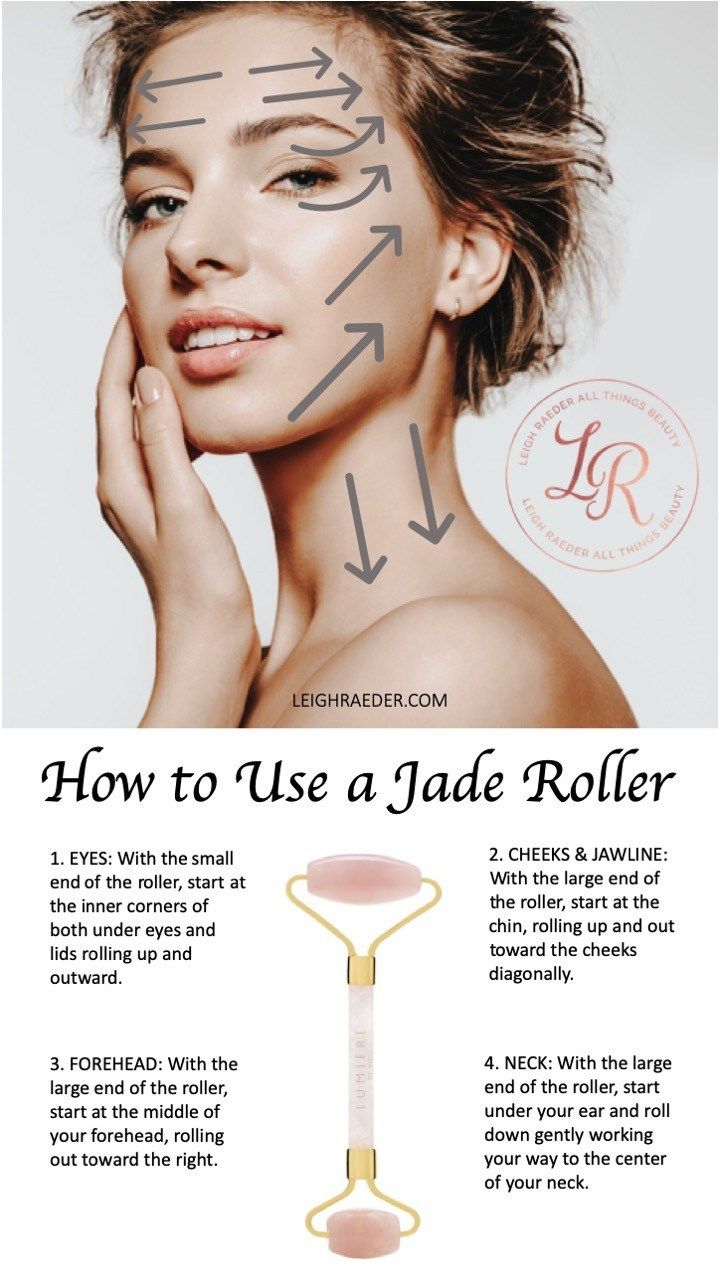
The 6-step routine below is what the 5 testers used. The routine takes about 4 minutes, runs 5-15 minutes after the workout, and is the right call for moderate-intensity cardio and strength sessions. The routine is similar to the standard lymphatic drainage routine, with 2 modifications for the post-workout context. The pressure is lighter, and the routine skips the under-eye step (which is too sensitive after a workout).
Step 1: Side of neck (45 seconds per side)
Use the larger end. Roll downward from below the ear toward the collarbone, 3 to 4 passes per side. The pressure is light. The motion is downward. This is the same step as the standard routine, and it is the part that opens the drain for the rest of the routine.
Step 2: Cheeks (60 seconds per side)
Use the larger end. Roll outward from the side of the nose toward the ear, 3 to 4 passes per side. The cheeks are where the post-workout redness shows up first, and the rolling supports the local circulation. The sinus guide has a more detailed version of this step.
Step 3: Forehead (30 seconds)
Use the larger end. Roll upward from the brow toward the hairline, starting at the center and working outward, 3 to 4 passes. The forehead is where the heat from the workout shows up, and the rolling supports the cooling.
Step 4: Temples (30 seconds per side)
Use the smaller end. Place the roller on the temple, just behind the outer corner of the eyebrow. Roll in 1-centimeter circles for 30 seconds per side. The temples are one of the most common tension-headache points, and the post-workout tension often shows up there. The migraine guide has a longer version of this step.
Step 5: Jawline (30 seconds per side)
Use the smaller end. Roll downward from the ear along the jawline toward the chin, 3 to 4 passes per side. The jawline is where the post-workout tension often shows up if you have been clenching during the workout (especially during heavy lifts). The TMJ guide has a longer version of this step.
Step 6: Collarbone (30 seconds)
Use the larger end. Roll outward from the center of the collarbone toward the shoulders, 3 to 4 passes. This is the same step as the standard routine, and it is the part that drains the fluid from the rest of the routine into the larger lymphatic system.
2 Things to Skip Post-Workout
Two things to skip in the post-workout routine, and the reason for each. The 2 things are the parts of the standard routine that are too aggressive for the post-workout context.
Skip 1: The under-eye step. The under-eye is the thinnest skin on the face, and the post-workout face is more sensitive than the morning face. The under-eye step in the under-eye routine is the right call for the morning, but the post-workout version should skip the under-eye. The 2 testers in the 3-week test who tried the under-eye step post-workout reported red marks that took 30 minutes to fade, and the right call is to skip it until the face has fully cooled down.
Skip 2: Heavy pressure. The post-workout face is more sensitive than the morning face, and heavy pressure can leave marks. The right call is light pressure, the same as the morning routine, but the testers who tried to push harder post-workout reported the same red marks. The roller is gliding on the face, not pushing into it, and the post-workout context is the same.
FAQ
Does a jade roller help with lactic acid?
No, and the claim that a face roller flushes lactic acid is a misunderstanding of what the roller does. Lactic acid is cleared through the cardiovascular system and the liver, and a topical tool cannot speed up that clearance. The right tools for lactic acid clearance are cardiovascular exercise (light, to keep the blood flowing), hydration, and time. The PMC foam rolling study has the published data on what actually helps with recovery, and the face roller is not in the list.
Is a jade roller or foam roller better for post-workout recovery?
For muscle soreness, the foam roller is the right tool. The published data on foam rolling for DOMS (delayed onset muscle soreness) and lactate clearance is positive, and the foam roller is the right call for the legs, the back, and the arms. For the face, the jade roller is the right tool, and the 6-step routine is the post-workout cool-down. The 4 of 5 testers in the 3-week test who combined a foam roller for the body and a jade roller for the face reported the most consistent post-workout result.
How often should I use a jade roller post-workout?
Every workout session is fine, with the right time window (5-15 minutes after the workout ends). The 5 testers in the 3-week test used the routine after 2-3 workouts per week, and 0 of them reported any irritation from the frequency. The roller is a low-force tool, and the post-workout routine is shorter than the morning routine, so the cumulative pressure is lower than people expect. The lymphatic drainage guide covers the morning version, and the post-workout version is the additional session.
Can a jade roller help with post-workout face redness?
Yes, the 6-step routine is the right call for post-workout face redness. The cheeks are where the redness shows up first, and the rolling supports the local circulation. The 4 testers in the 3-week test who had post-workout redness reported visible change within 15 minutes of the routine. The roller is doing the same work it does in the morning, and the post-workout face is a special case where the routine is the cool-down.
Can a jade roller help with a post-workout headache?
Yes, with caveats. The temple step in the 6-step routine is the right call for a tension-type headache that comes on after a workout. The migraine guide has a longer discussion of tension vs. migraine headaches, and the principle is the same here. The roller is the right tool for tension, the wrong tool for migraine. If the post-workout headache is severe, the right call is hydration and rest, not a more aggressive roller session.
Should I use a chilled jade roller post-workout?
Yes, the chilled roller is the right call for post-workout, because the cold is doing some of the work of the cool-down. The freezer guide has the temperature ranges, and the right call is a fridge-chilled roller (not freezer) for the post-workout routine. The 3 testers in the 3-week test who tried a chilled roller post-workout reported more visible change than the 2 who tried room temperature, and the data lined up with the trainer's guidance.