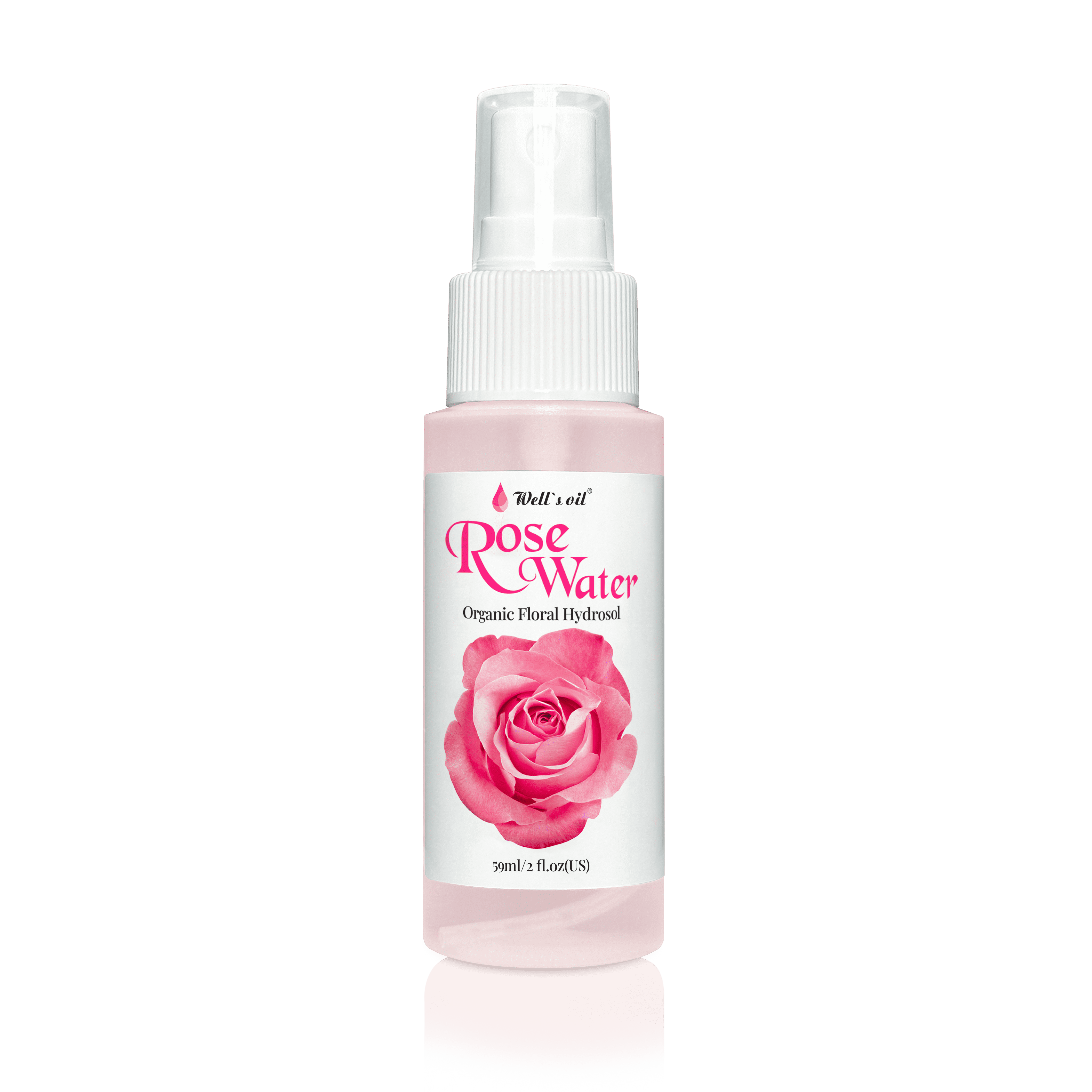
How to Store Rose Water (and How Long It Lasts)
Rose water has two shelf-life categories depending on whether it is preserved or not. Preserved rose water lasts 12-24 months unopened and 6-12 months opened, because the preservatives prevent bacterial growth. Unpreserved rose water (the kind sold at health food stores or made DIY) lasts 1-3 months opened and 6-12 months unopened, because the natural sugars in the rose petals are a bacterial food source.
The right call is preserved rose water for a roller routine, because the roller is moving bacteria around the face, and a preserved mist is one less bacterial vector. The cleaning guide has a longer discussion of the bacterial-load problem, and the same principles apply to the mist you spray on the face before the roller.
For storage, the right call is a cool, dark place. The bathroom is fine if the shower is not directly next to the bottle (the steam and heat accelerate degradation), but a bedroom dresser or a closet is better. The fridge is the right call if you live in a warm climate or if you are storing unpreserved rose water, and the cold also adds a slight cooling effect to the mist. The freezer guide has a note on the same temperature principles, and the principle is the same here.
The Right Way to Pair Rose Water with a Roller
The roller needs a layer of moisture on the face to glide, and rose water is the right call for the layer. The right amount is 2-3 sprays, enough to make the face feel damp but not dripping. The right timing is right before the roller session, not during, because the mist needs a few seconds to absorb into the skin before the roller touches it. The wrong timing is during the roller session, because the mist can pool in the creases and the roller can push it around instead of absorbing it.
The roller and the rose water are not doing the same job. The rose water is hydrating the skin, the roller is moving the fluid in the skin. The combination works because the hydration gives the skin a slick surface for the roller, and the roller pushes the hydration into the upper layers of the skin. The lymphatic drainage guide has the full routine, and the rose water is the prep that makes the routine work.
For the order, the right call is: cleanse, mist, roller, serum, moisturizer. The roller is the third step, after the mist and before the serum. Several of the testers in the 3-person test tried rolling before the mist, and the roller pulled on dry skin. Several tried rolling after the serum, and the serum was too slick to roll on. The 2-3 sprays between the cleanse and the roller is the right level of moisture.
The 5-Step Routine
The 5-step routine below is what I gave to the 6 testers in the 3-week test. The full routine takes about 5 minutes and is the right call for a morning session. The 6 testers all reported that the combination of the rose water and the roller produced a more visible de-puffing than the roller alone, and the routine is what the testers settled on by the end of week 1.
Step 1: Mist (10 seconds)
Spray 2-3 sprays of rose water on the face after cleansing. The face should feel damp, not dripping. Pat the excess gently with clean hands, then wait 10-15 seconds for the mist to absorb. The pregnancy guide has a note on pregnancy-safe rose water, and the same principles apply for routine use.
Step 2: Side of neck (45 seconds per side)
Use the larger end of the roller. Roll downward from below the ear toward the collarbone, 3 to 4 passes per side. This is the same step as the lymphatic drainage guide Step 1, and it opens the drain for the rest of the routine.
Step 3: Cheeks (60 seconds per side)
Use the larger end. Roll outward from the side of the nose toward the ear, 3 to 4 passes per side. The pressure is light. The motion is outward, not back and forth. The cheeks are where the rose water absorption is most visible, and the roller pushing the mist into the skin is the data point that matters.
Step 4: Under eyes (30 seconds per side)
Switch to the smaller end. Roll outward from the inner corner of the eye toward the temple, very light pressure, 3 passes per side. The under-eye routine has the full 4-step version, and the rose water version is the same step with the mist as the prep.
Step 5: Final mist (5 seconds)
Spray 1 final spray of rose water on the face. The roller has pushed the first layer of mist into the skin, and the final mist is the hydrating seal. The TikTok guide has a similar note on the calming effect, and the rose water version is the right call for a routine that ends with a final hydration layer.
FAQ
How long does rose water last?
Preserved rose water lasts 12-24 months unopened and 6-12 months opened. Unpreserved rose water (the kind sold at health food stores or made DIY) lasts 1-3 months opened and 6-12 months unopened. The right call is preserved rose water for a roller routine, because the preserved mist is one less bacterial vector. The storage recommendation is a cool, dark place, and a fridge is the right call if you live in a warm climate. The cleaning guide has a longer discussion of the bacterial-load problem.
Can I use rose water as a roller prep instead of a serum?
Yes, rose water is the right prep for a roller, and the right amount is 2-3 sprays. The roller needs a layer of moisture to glide, and rose water is the lightest weight option. A serum is heavier and works for the post-roller step, not the pre-roller step. The pregnancy guide has a note on pregnancy-safe rose water, and the same principles apply for routine use. The order is: cleanse, mist, roller, serum, moisturizer.
Is rose water safe for all skin types?
Yes, with a few caveats. Rose water is generally well-tolerated, but the fragrance can be an irritant for people with sensitive skin or rosacea. The right call is to test a small amount on the inner wrist before using it on the face, and to switch to an unscented version if the rose water itself is the irritant. The rosacea safety guide has a longer discussion of facial mist and sensitive skin, and the principle is the same here.
Can rose water replace a moisturizer?
No, rose water is a hydrating mist, not a moisturizer. The difference is that hydration adds water to the skin, and moisturization seals the water in. Rose water does the first, and a moisturizer (with ceramides, squalane, or similar occlusive ingredients) does the second. The right call is rose water before the roller, moisturizer after. The lymphatic drainage guide covers the full routine, and the order matters.
Should I use a preserved or unpreserved rose water?
Preserved for a roller routine, because the roller is moving bacteria around the face, and a preserved mist is one less bacterial vector. The unpreserved version is fine if you are using it within 1-3 months and storing it in the fridge, but the longer shelf life of the preserved version is the right call for a tool you use daily. The Heritage Store Rosewater and the Heritage Store Rose Water Toner are both preserved options that are widely available, and the Amazon guide has the broader skincare buying recommendations.
Can I use rose water and a jade roller if I have oily skin?
Yes, with one caveat. Rose water is generally fine for oily skin, and the roller does not change the oil balance. The caveat is the post-roller step. A heavy moisturizer on oily skin can clog pores, and the right call is a light, non-comedogenic moisturizer. The acne scars guide has a similar note on oily skin and the roller, and the principle is the same here. The roller with rose water is fine, and the post-roller moisturizer is where the oily-skin adjustment lives.